

Alabama
Change
Furnaces built a city. Footsteps changed its history.
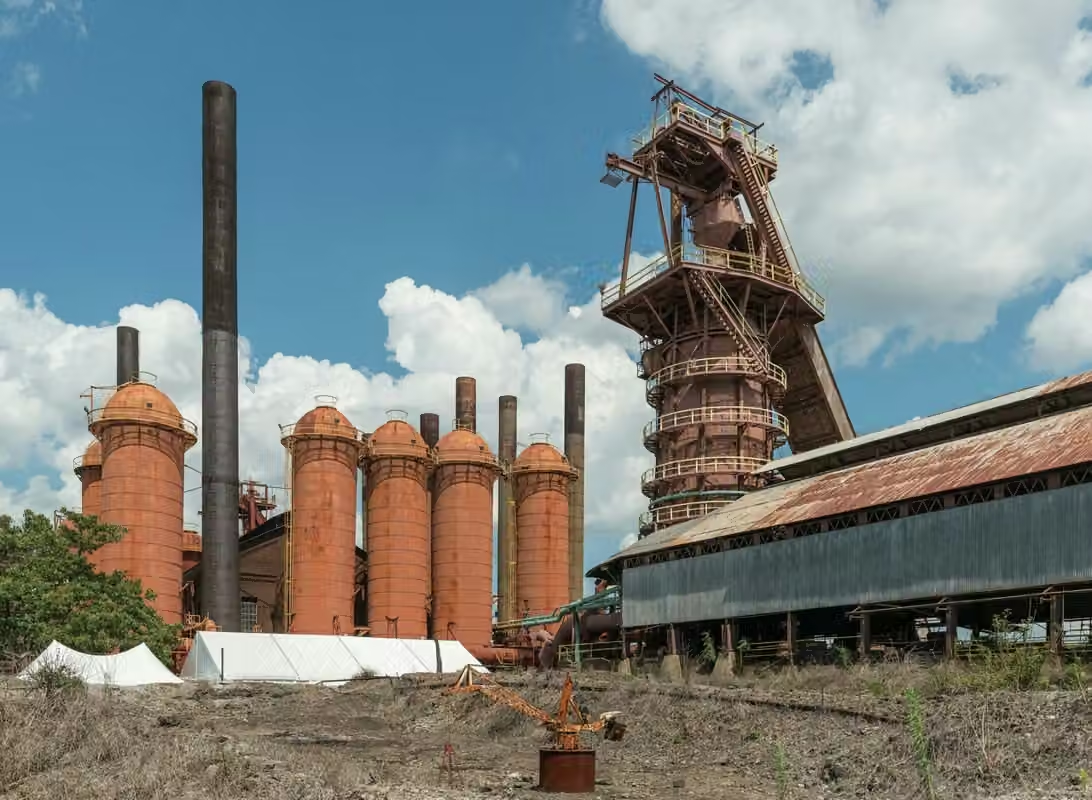
From Birmingham to Huntsville, then down to Mobile Bay
Ore, railroads, and the making of an industrial city.
Founded in 1871, Birmingham grew around ironmaking. Nearby deposits of iron ore, coal, and limestone supplied the furnaces, while railroads linked raw materials and factories to distant markets. Industry transformed life in the valley.
Sloss Furnaces began production in 1882 and changed over time as equipment was replaced and operations mechanized. The surviving buildings and machinery date from several periods; they are not an untouched version of the original works. Pipes, furnaces, and power equipment reveal how production evolved.
Workers’ experiences belong to this history as much as the machinery. Dangerous conditions and racial segregation in jobs and compensation were part of the industrial system. Understanding the furnaces means asking who worked here, how the technology functioned, and how people were treated.
The furnaces stopped. Their history lives on.
Sloss later became a museum and public venue, with metal arts, exhibitions, and education bringing new activity to the old works. Preserving an industrial site does more than save impressive machinery: it creates a place to examine the relationship between labor and a city’s growth.
The long march toward equality.
Alabama is central to the history of the American civil rights movement. Its streets, churches, bridges and memorials preserve the struggles of residents, organizers and students for equal rights.
These places hold more than a general sense of an era. The exclusion, violence and resistance that occurred here involved particular people, dates and demands, and helped shape the rules of public life that followed.
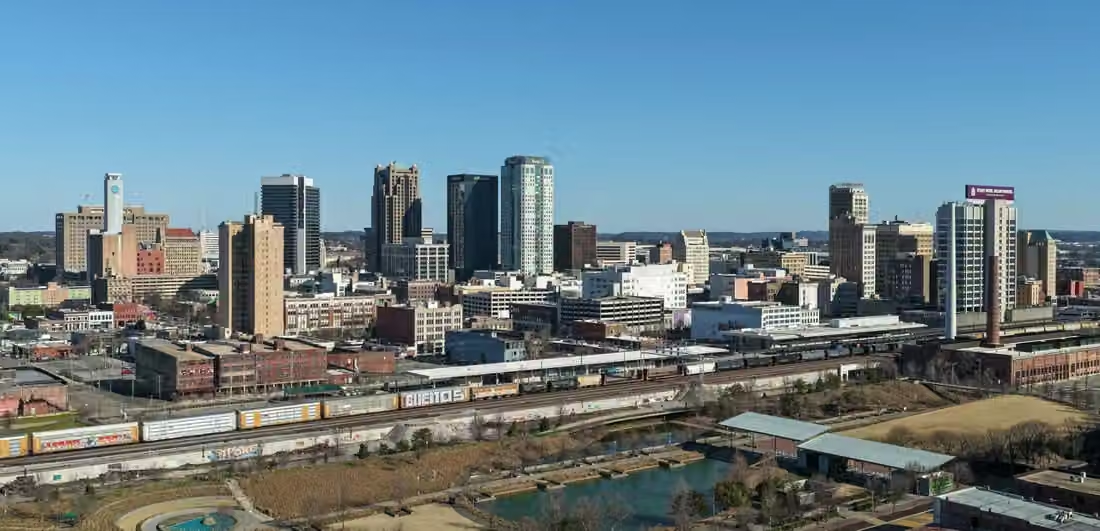
Birmingham: a movement the world could not ignore
Images of peaceful demonstrators attacked with police dogs and high-pressure fire hoses reached audiences around the world. On September 15, a bombing at the Sixteenth Street Baptist Church killed four Black girls. An important gathering place during the movement, the church remains a place of remembrance and historical learning.
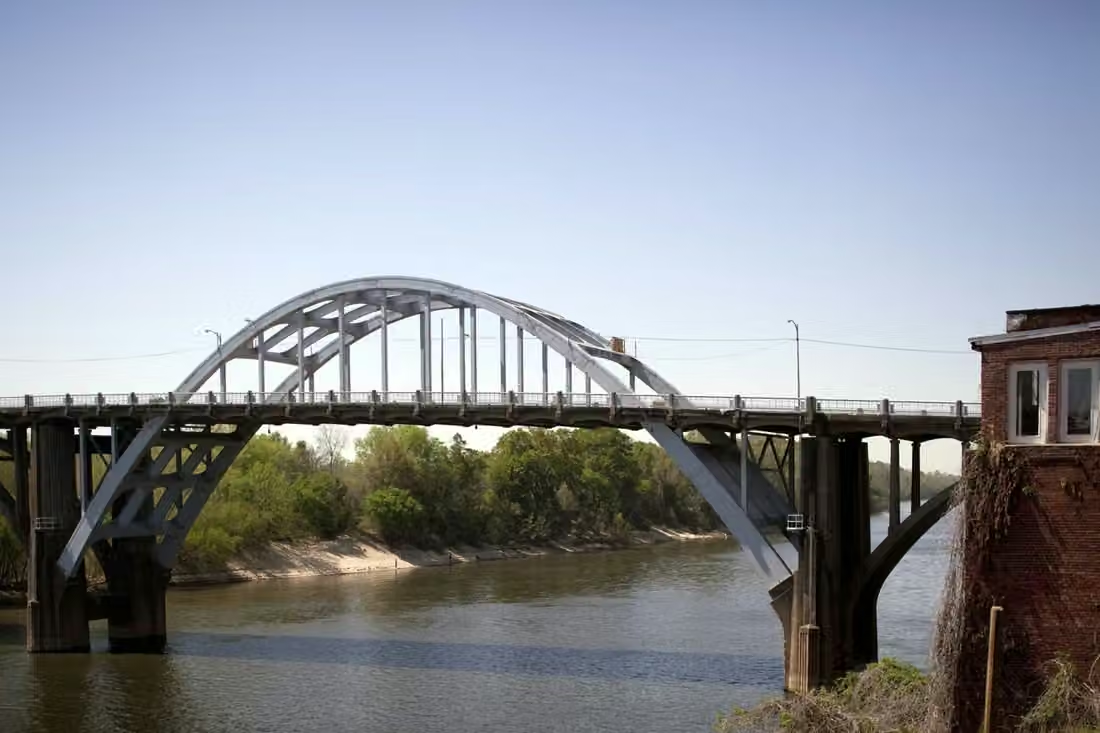
Selma: making the right to vote a reality
On March 7, protesters walking over the bridge experienced violent attacks from state police and other authorities, an event known as "Bloody Sunday." Subsequent marches eventually reached Montgomery, pushing the voting rights issue into a national focus.
From city streets to the state capital
The route of the Selma to Montgomery marches was approximately 54 miles, or about 87 kilometers. Documents preserved by the National Archives record the connection between this action and the Voting Rights Act of 1965. The distance can be measured, but the cost of the struggle for rights cannot be expressed in miles.
Reaching space begins on the ground.
In northern Alabama, Huntsville works on another scale: propulsion, structures, testing and complex engineering systems support missions far beyond the ground.
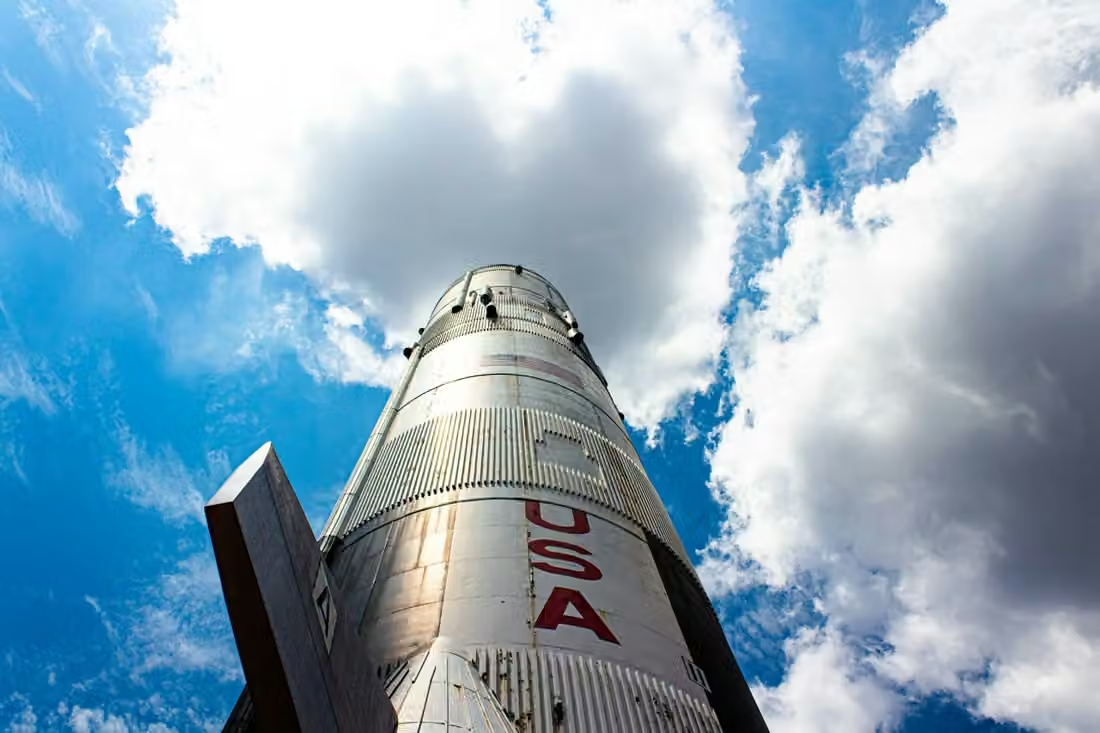
Behind every rocket, a world of engineering.
The Marshall Space Flight Center was established in Huntsville in 1960 and participated in major projects such as the Saturn series rockets. Aerospace missions relied on a large amount of work from different professions, with test facilities, manufacturing personnel, and data analysis being equally important.
This capability did not end with the Apollo era. In January 2026, NASA introduced ground testing activities for space nuclear propulsion; such engineering development and testing validation are necessary processes before a new technology can reach application.
Technology also takes root through years of skilled work and cooperation. Suppliers must understand specifications, quality standards and delivery requirements, while specialists continue to learn through the projects they undertake.
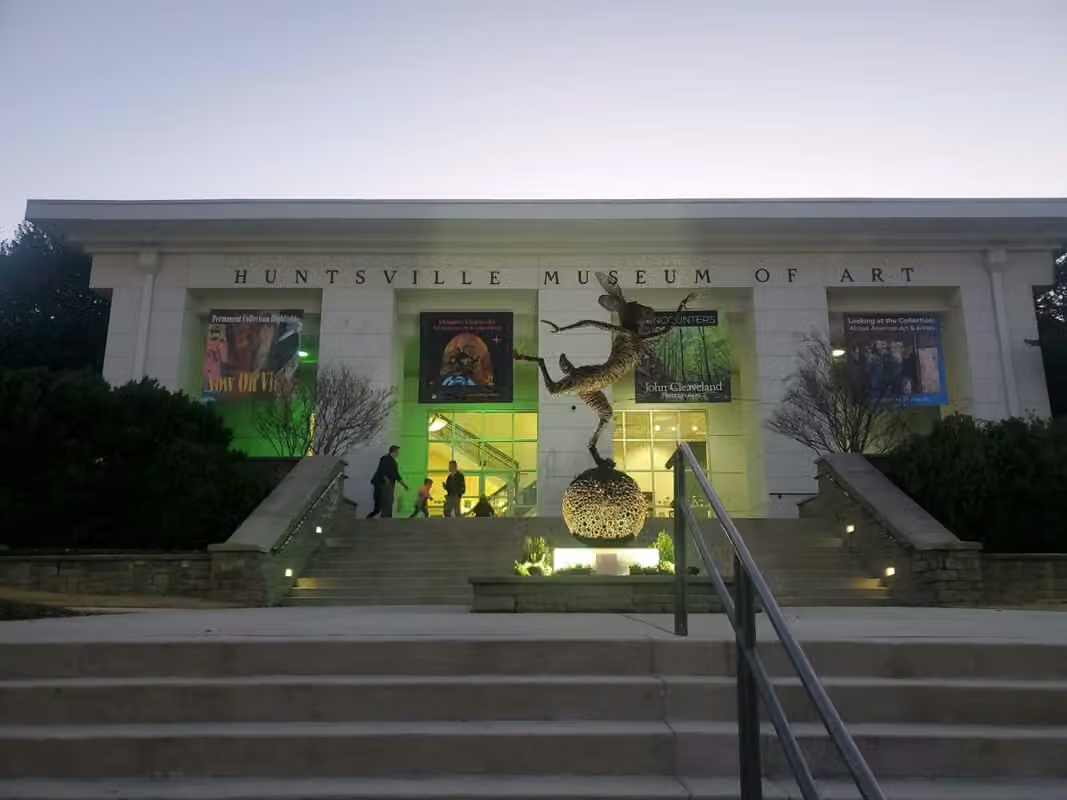
An engineering city with a life beyond the laboratory.
Huntsville is not just a lab town. The city's cultural venues, parks, and community services, along with engineering jobs, make up the local lifestyle. For businesses, attracting talent also involves the environment needed for living, commuting, and family.
Automobiles and aircraft: different paths of growth.
Total merchandise exports in 2025, reported by the state Department of Commerce
The size of an industry—and the forces changing it.
The state Department of Commerce’s May 2026 report put 2025 exports about 12% below the previous year. Transportation equipment was the largest category, at approximately $11.4 billion. Within it, automobile exports fell nearly 23%, while aerospace products rose about 12%.
These changes indicate that firms in advanced manufacturing may face different market conditions. Automotive suppliers need to focus on model and customer orders, while aerospace companies must incorporate certification, technical requirements, and longer project cycles into their operations.
Winning an order is only the beginning.
To become an approved supplier, a manufacturer generally needs to demonstrate reliable production, quality traceability and on-time delivery. State export figures show the scale of activity, but cannot replace research into individual customers, purchasing processes and supplier requirements.
The company, the factory, and the place of business.
Setting up a company and conducting actual business operations are separate but related matters. Each involves different registrations, taxes, and business permits depending on the activities; they should be organized based on the actual activities rather than just the registered name.
Industries & establishments · 2023
The work that keeps communities running.
Manufacturing, healthcare and retail provide different kinds of local employment. Huntsville’s engineering projects, Birmingham’s urban services and coastal logistics each have their own focus. Statewide annual figures provide context for closer regional comparisons.
The state recorded 105,720 employer establishments and 1,822,666 paid employees. A single company may operate several stores, offices, or factories, so establishments are not a count of registered companies.
U.S. Census Bureau, 2023 County Business Patterns. The series primarily covers private, nonfarm establishments with paid employees. Employment is measured for the pay period that includes March 12. The 2023 release was the latest in this series available when checked; it is not a measure of current monthly employment.
Trade: Alabama Department of Commerce export report, May 29, 2026. Values are rounded as in the report. Industry increases and decreases refer to the stated categories, not business profits or new orders.
Where the rivers reach the wider world.
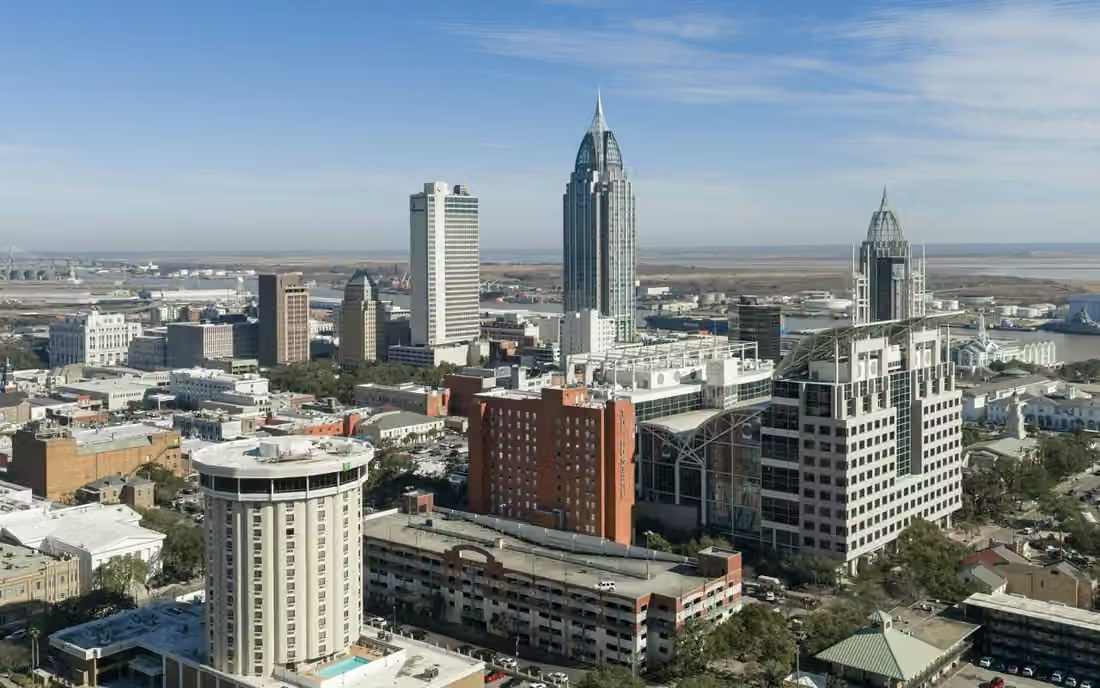
Channel depth after modernization: approximately 15.24 meters.
On October 13, 2025, the Alabama Port Authority announced the completion of the Mobile Harbor modernization project. A deeper channel expanded the port’s capacity to handle large vessels, strengthening the connection between waterborne trade and manufacturing within the state.
Channel depth describes infrastructure, not cargo volume. Logistics also depends on sailing schedules, cargo types, terminals, and connections to road and rail. For exporters, a port is one link in the journey from factory to customer.
Port Information: Alabama Port Authority, Project Completion Announcement on October 13, 2025.
One state. Two very different waterscapes.
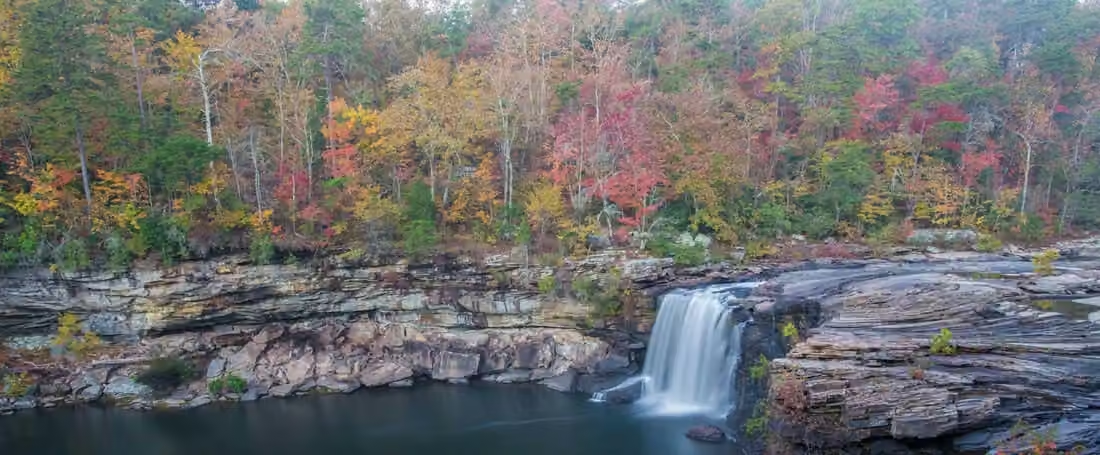
In the uplands, water cuts through stone.
The Little River Canyon is located at the intersection of Dekalb and Cherokee counties in the northeast. The canyon, cliffs, and forest create a landscape different from that of the southern coast. The protected area, established in 1992, preserves this river environment.
Mountain rivers change with rainfall and the seasons. Sightseeing, walking and specialized water activities require different conditions; a photograph of calm water cannot describe an entire river.
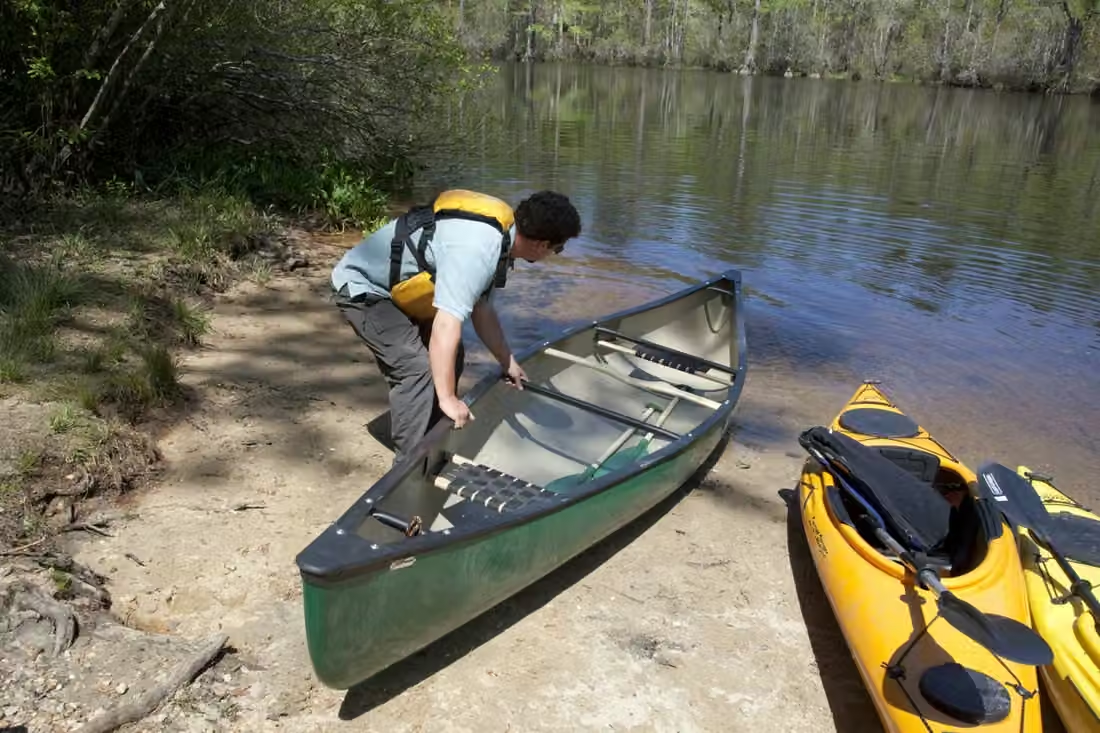
In the lowlands, water finds a thousand paths.
The Mobile–Tensaw Delta is a network of rivers, wetlands, and connecting waterways. Freshwater runoff meets the coastal environment here, supporting fish and wildlife while shaping how people travel through and use the water.
This natural environment is adjacent to the city life of Mobile. To know coastal Alabama, one must place the port, communities, and wetlands in the same local landscape view, rather than just the bay side.
A small town with a remarkable sound.
Local recording studios attract singers and producers and rely on skilled session musicians to shape their works. The exchange between soul, rhythm and blues, and rock leaves an impact beyond the city's size.
In 1969, several musicians who had previously worked at FAME Studios left their positions to open their own recording studio in Sheffield. At the heart of this entrepreneurial story was a professional synergy and unique playing experience that had already been formed.
Music shows another aspect of the local industry: a scene where creation, recording, and a network of talent can build in a relatively small community. A studio doesn't have to be grand; it can connect listeners far away.
A softer note after a powerful history.
In 1959, camellia became the state flower of Alabama. Layered petals and deep green leaves slowly unfolding in the illustration add a page about the garden to the topic of factories, bridges, and rockets.
The beauty of Alabama is not one-dimensional. It encompasses the rugged northern cliffs and southern swamps, cultural venues in its cities, and the everyday work of its people.

An editorial feature by STATE.REPORT. Image creators and licenses are credited below.
Sources & further reading
U.S. Census Bureau: state population estimates for July 1, 2025.
Sloss Furnaces: minerals, technology, workers’ lives and heritage preservation.
National Park Service: the 1963 protests and Birmingham’s civil rights sites.
National Park Service: the 1963 church bombing and the four girls who were killed.
National Archives: the 1965 Selma marches and the Voting Rights Act.
National Park Service: the Edmund Pettus Bridge and the attack on peaceful demonstrators.
NASA: the center’s establishment in 1960 and its aerospace engineering history.
NASA: ground testing and engineering development reported in 2026.
National Park Service: canyon landscapes and protected areas in northeastern Alabama.
Alabama Department of Conservation and Natural Resources: rivers, wetlands and aquatic environments.
Studio: Session musicians, musical collaborations, and a founding history in 1969.
Alabama Department of Archives and History: State Flower, State Bird, and State Symbols.
Image credits & licenses
Little River Canyon National Park,Gaylesville,AL.jpg · Richard A. Weaver · CC BY-SA 4.0。
Birmingham, Alabama.jpg · Quintin Soloviev · CC BY 4.0。
Huntsville Art Museum - front façade and stairs 2023.jpg · American Diabetio · CC BY-SA 4.0。
Mobile, Alabama skyline.jpg · Quintin Soloviev · CC BY 4.0。
Edmund Pettus Bridge 03.jpg · Carol M. Highsmith · Public domain。
Sloss Furnaces, Birmingham AL, Cowper Stoves and Blast Furnace, West view 20160714 1.jpg · DXR · CC BY-SA 4.0。
Saturn V 1-1 Replica, US Space and Rocket Center, Huntsville, AL.jpg · Naomi Persephone Amethyst · CC BY-SA 4.0。
Captain Michael Dorie, who runs the 5 Rivers Delta Safaris can navigate the complex waterways of the Mobile-Tensaw Delta. A canoe trip up the Mobile Delta which consists of approximately 20,323 acres LCCN2010638014.tif · Carol M. Highsmith · Public domain。