

Sonoran Desert · Metropolitan cities · Northern plateau
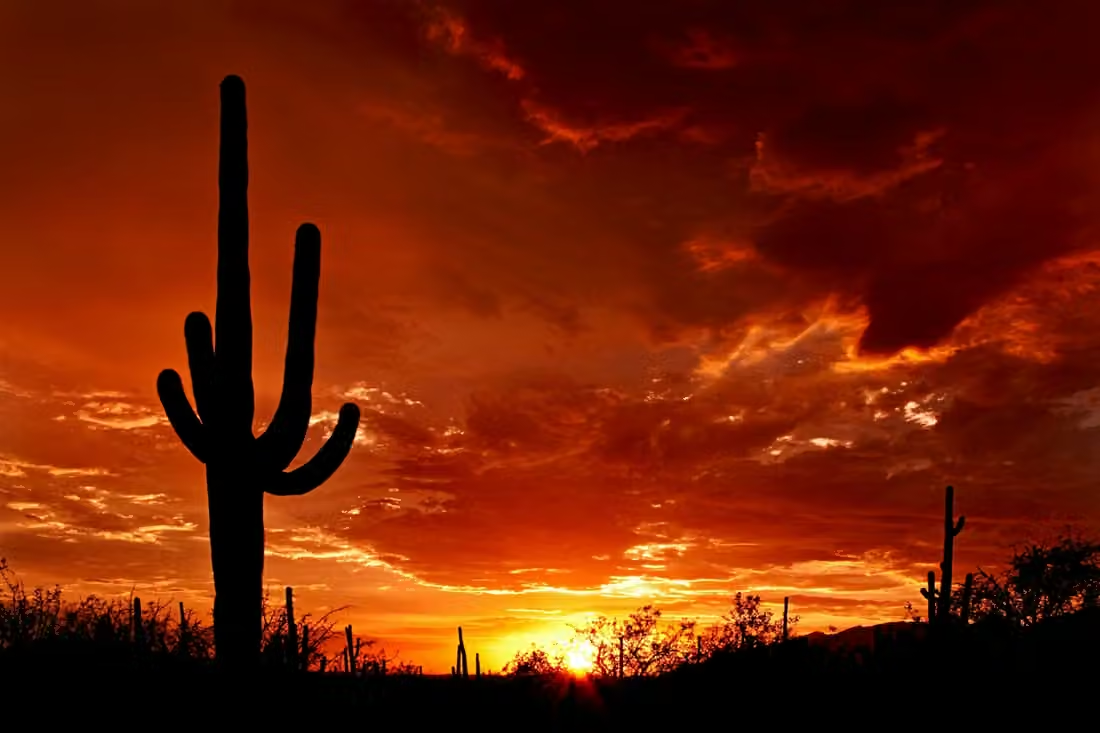
Time takes shape in the desert sun.
The saguaro’s tall, branching arms form one of Arizona’s most familiar silhouettes. Yet they do not represent the whole state: the southern Sonoran Desert, northern plateau and high-elevation forests have very different temperatures, rainfall, snow and vegetation.
In the Saguaro National Park, the same plant grows at different speeds depending on rainfall, soil, and location. Its height cannot be precisely converted into age; some plants develop branches after growing for many years, while others remain single-stemmed.
This slow growth means that a desert has its own scale. Recognizing the local natural environment is not just about witnessing a breathtaking sunset; it also involves understanding where the water comes from, how the seasons change, and how plants endure prolonged heat.
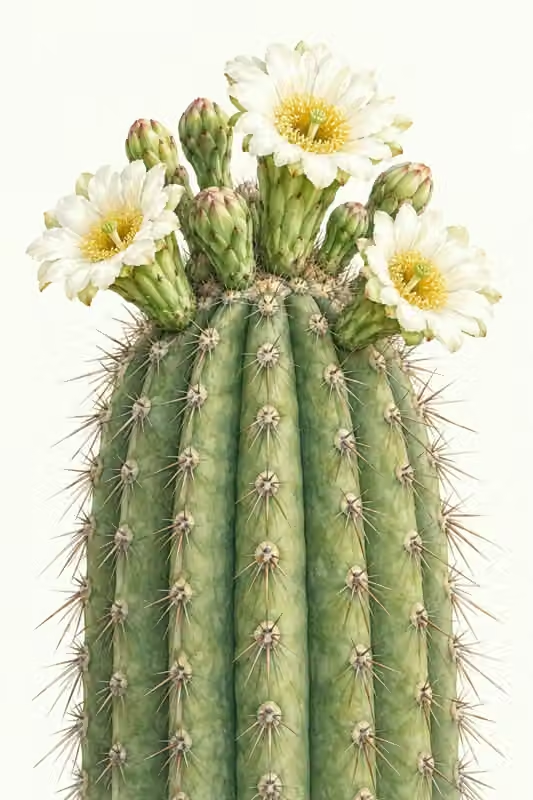
A brief bloom. A long life.
White flowers bloom at night, closing the next day, with birds, insects, and bats participating in pollination. The state flower represents a fleeting moment in the cactus life cycle and is also connected to a local tradition of fruit harvesting that persists to this day.
One cactus, many homes.
A saguaro’s pleated surface expands and contracts as its water reserves change. Shallow, spreading roots absorb rain, and the plant gradually draws on this stored water during dry periods. Its form is a visible response to the desert’s irregular rainfall.
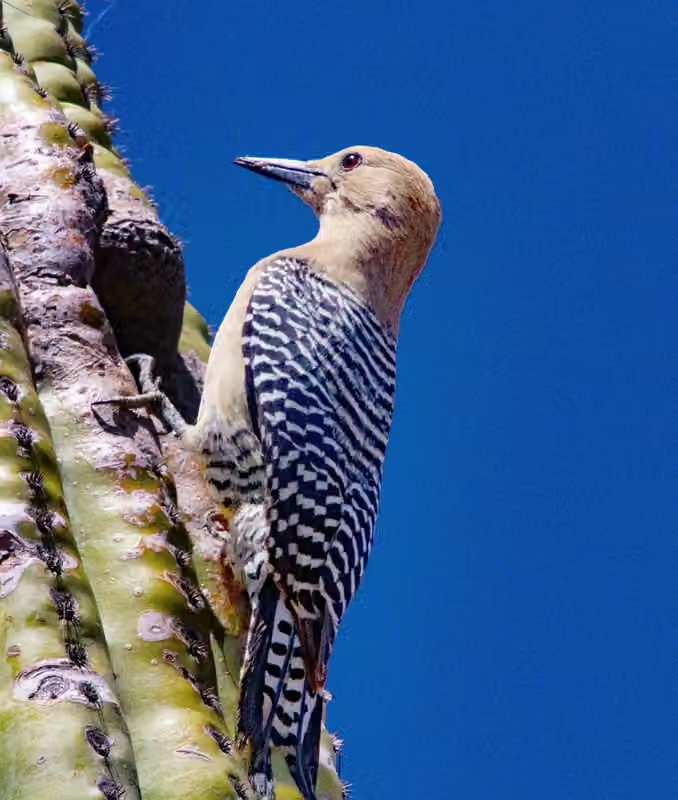
Life begins with a nesting place
Gila woodpeckers and other birds excavate nest cavities inside saguaros. When the original occupants leave, other birds may move in. Larger nests can rest between the arms, so a single cactus supports several kinds of animal life.
Mature fruits also provide food and water. Flowers, fruits, seeds, and nests create a continuous connection with surrounding animals, not just isolated plants in the desert.
When rain comes, the desert changes.
The summer monsoon brings rainfall to the Sonoran Desert. The water preserved in the mountain pools is especially important for amphibians and other wildlife. Plant growth and fruit maturation, as well as animal activity, are all tied to the presence and duration of water; the same valley can have very different appearances at different times of the year.
Read the story in the rock.
Gorges are not a static backdrop but a visible slice of Earth's history.
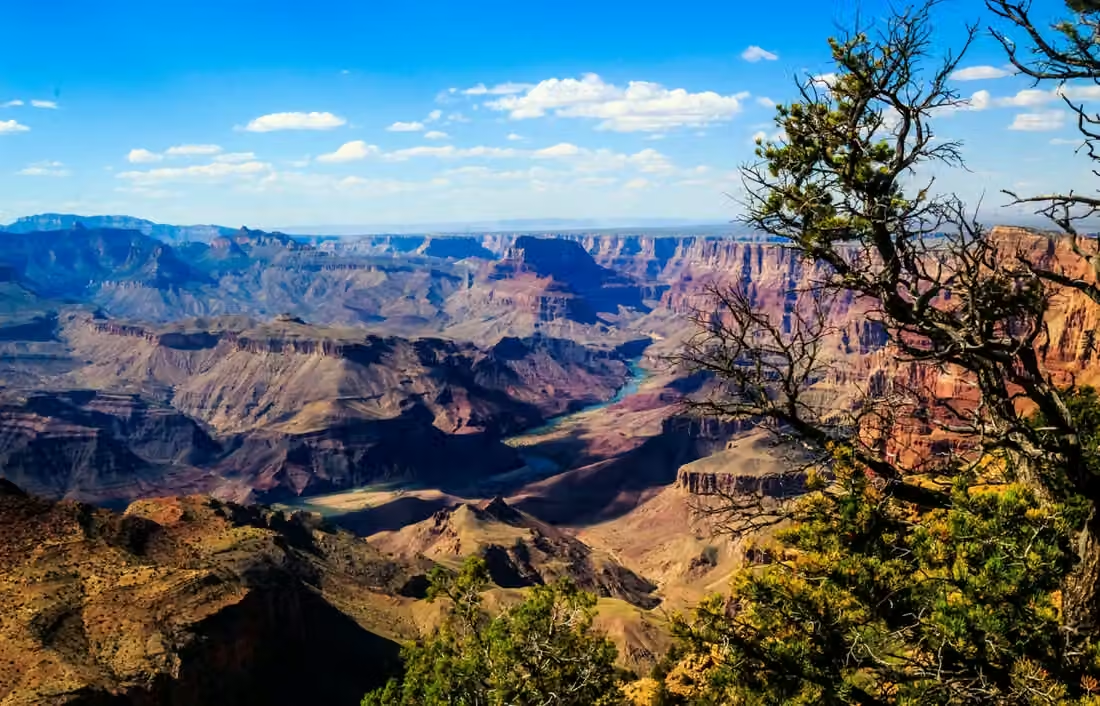
Many ages in a single cliff.
Sedimentation, rock formation, movements of the Earth’s crust and erosion all contributed to today’s landscape. Looking down the cliffs reveals layers of different ages, formed in different environments. Missing layers also record intervals of geological time.
Water cuts the plateau and connects distant places.
The Colorado River flows through the depths of the canyon. The sheer walls and riverbed require an understanding of uplift of highlands and long erosion processes, and cannot be attributed solely to a particular moment in the canyon's history.
People have always been part of this landscape.
The Grand Canyon maintains deep ties with 11 related Native American tribes. For the Havasupai and Hualapai, among others, it is a home of cultural and spiritual significance. The cultural exhibits in the Desert View area invite tribal artists to share their traditional and contemporary crafts, allowing visitors to hear the stories from within their communities.
Where does a desert city find its water?
Mountain precipitation, rivers, reservoirs, and water distribution facilities connect distant sources of water to the immediate neighborhoods.
Water treatment and municipal distribution facilities
Residential Use · Public Services · Commercial and Industrial UseThe City of Phoenix’s April 2026 water briefing lists the Salt River, Verde River, Colorado River, and groundwater among its sources. Supply depends on several systems and long-term management; conditions on one distant river do not directly describe water service in every neighborhood.
Water is also a matter of urban planning. Homes, public spaces, and industrial facilities use it differently, and both network coverage and existing infrastructure matter. Understanding a desert city means looking beyond its expanding buildings to the systems that sustain daily life.
Water supply relationships diagram. Not a map and does not indicate the proportion of each water source.
A manufacturing metropolis on the desert horizon.
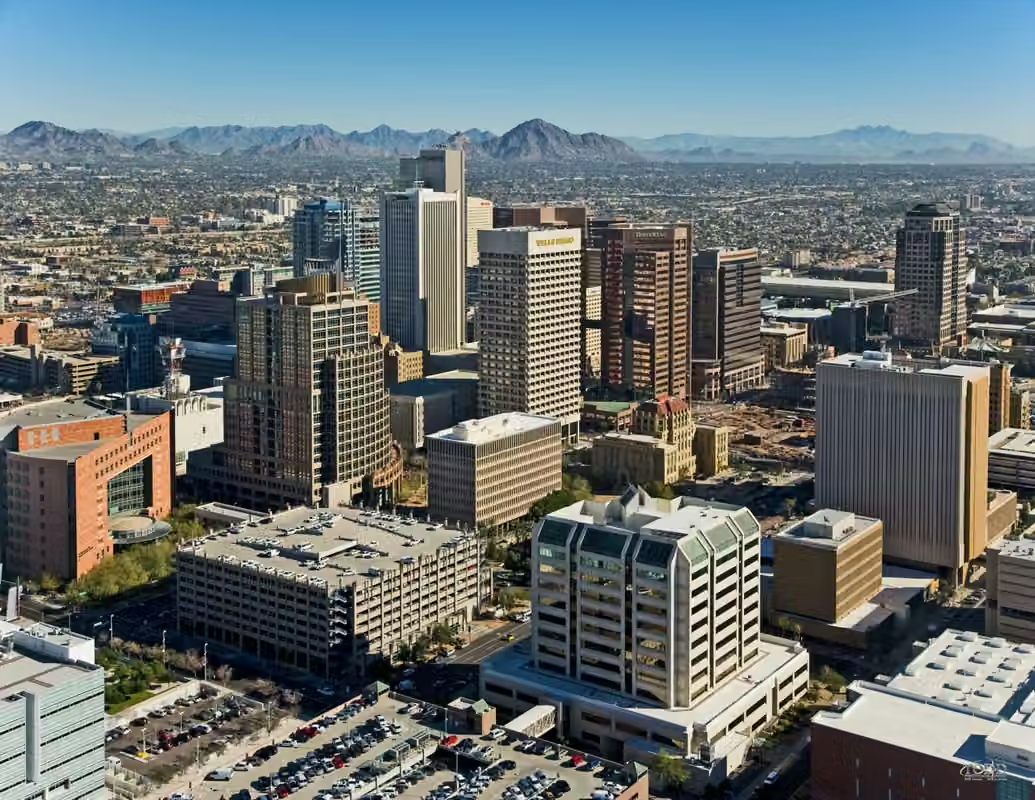
Phoenix is the state capital and part of a broader metropolitan area. Manufacturing facilities, residential zones, distribution warehouses, and commercial services are distributed along transportation networks, and the activities of businesses often extend beyond municipal boundaries.
The demand spurred by advanced manufacturing extends beyond the production line. Equipment installation, cleanroom maintenance, material supply, and technical training all need to align with the construction and startup phases of a factory. For suppliers, specific project progress is closer to actual orders than macro investment totals.
TSMC’s announced additional investment in Arizona
Arizona Commerce Authority announcement, July 16, 2026. The figure is an announced investment plan, not investment completed or revenue earned during the period. Construction and production begin in stages.
Announcing investment, building a plant, and starting production.
According to a July 2026 announcement, TSMC began mass production of its first factory in Arizona by the end of 2024. The production stage involves long-term arrangements for equipment, materials, maintenance, and personnel.
The same announcement said the second factory building was complete, with volume production planned for 2027. A completed building does not mean a fully operational production line: equipment installation and production readiness follow their own schedules.
In July 2026, additional investments were announced, involving further expansion plans. The planned amounts indicate the scale of the projects, and should not be directly interpreted as annual output, procurement amounts, or realized employment.
A factory needs more than a building.
Power, water supply, industrial premises, and commuting conditions all affect production arrangements. Services such as equipment or engineering work typically require the technical requirements of the client, site management, responsibilities for delivery, and the process of acceptance to be clearly defined.
Within Arizona, semiconductor equipment services, aerospace components and irrigated agriculture serve very different customers. Project-based work depends on certification and lasting partnerships, while services for residents rely more on nearby communities and practical travel distances.
A city that studies light—and lives in the sun.
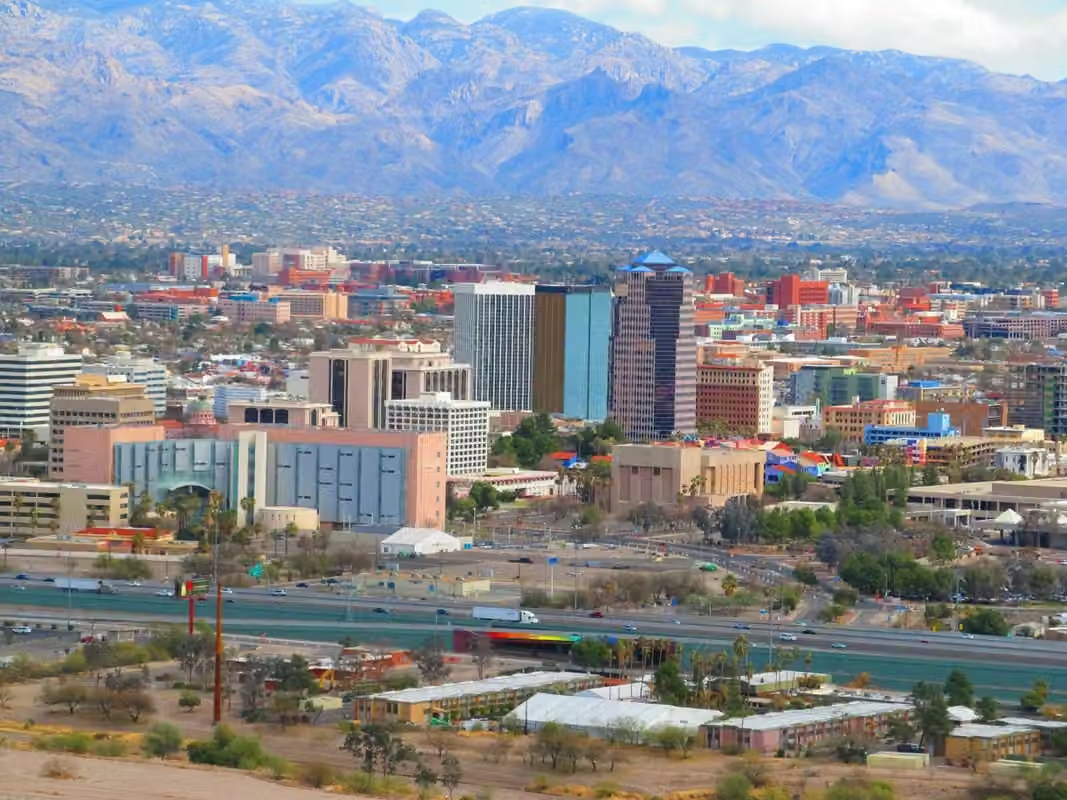
Between the university and industry
Tucson’s optics research has strong local ties. Industry partnership programs at the University of Arizona’s College of Optical Sciences connect businesses with research teams and students, while bringing practical applications into education and training.
These connections depend on particular people and institutions. Research priorities, experimental facilities, skilled staff, and the path from discovery to product reveal more about the place than a broad label such as “technology city.”
Between the desert and the neighborhood
Saguaro National Park, near Tucson, lies within the traditional homeland of the Tohono O’odham. Seasonal fruit harvesting continues a living relationship between the community and the cactus. This protected landscape also holds a human history.
The research institutions, aviation-related businesses, residential communities, and surrounding mountains collectively form today's Tucson. Life there cannot be understood solely from tourist photos nor can it be summarized by any single industry.
Light the city. Keep the stars.
Departing from the low-altitude desert to the north, the climate, forests, and urban history of Arizona reveal another side.
The world’s first International Dark Sky City
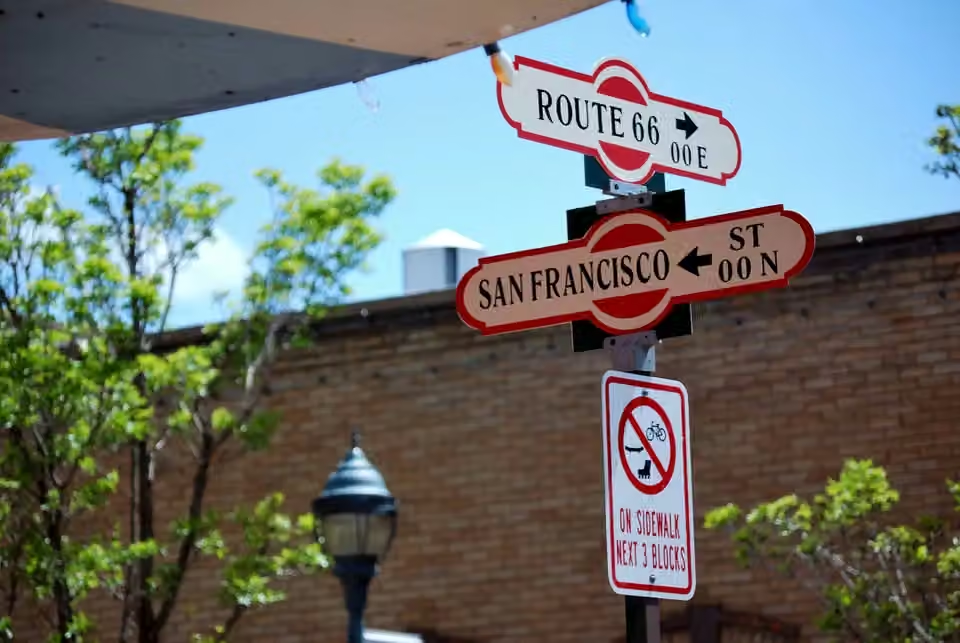
Flagstaff received this designation in 2001. The city government notes that the protection of the night sky dates back to outdoor lighting management in 1958; today, lighting design remains a part of the city's daily management.
Dark Sky Protection is not about turning cities into places without lights, but rather about arranging more appropriate lighting in the balance between public safety, daily needs, and the quality of the night sky. In this way, the night sky becomes a resource that requires common stewardship.
From city streets to the observatory
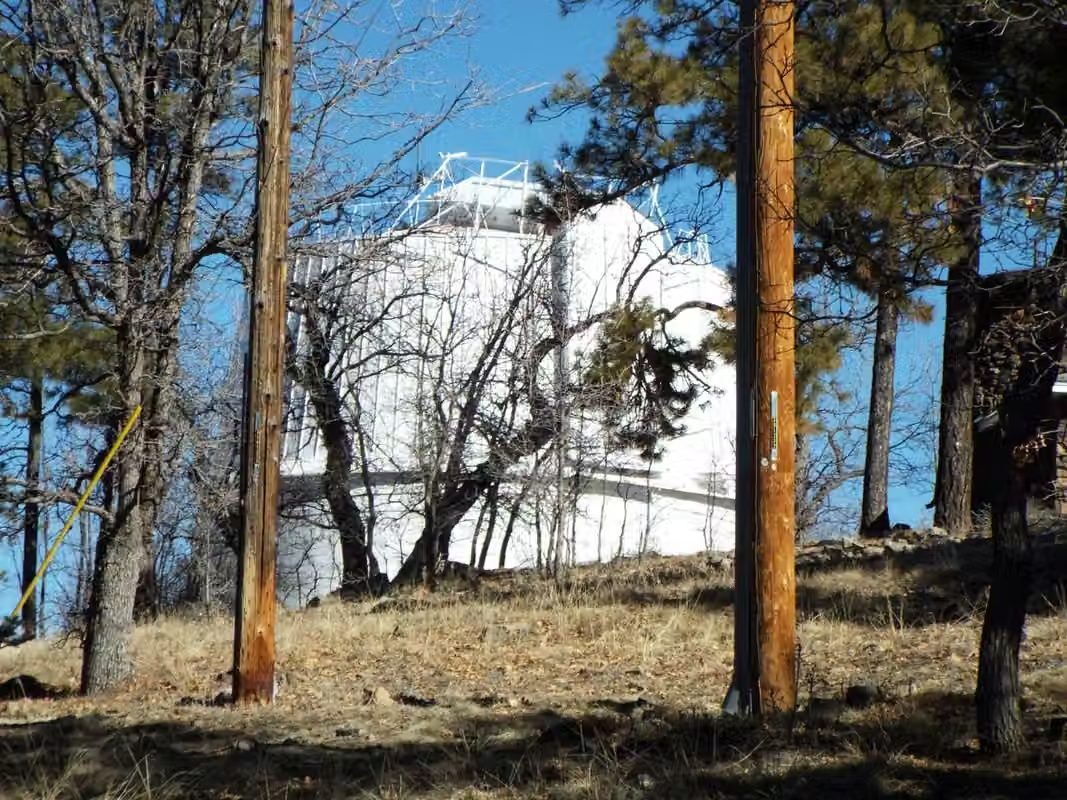
The university, historic district, surrounding forest, and astronomical research shape this highland city. Lowell Observatory preserves historical instruments related to the discovery of Pluto: in 1930, Clyde Tombaugh used a specialized astronomical photographic telescope to discover Pluto.
Revisiting these devices, one sees not just a discovery, but a long-term observation, recording, and comparison. Urban areas and research institutions have influenced each other, and protecting the night sky is one way this connection continues.
The winter, traffic, and outdoor activities in northern plateau are also different from those in the southern urban zone. Geographic differences within a state will ultimately manifest in the details of how residents travel, community services are provided, and businesses are scheduled.
Beyond the factories, the communities they serve.
The expansion of manufacturing offers opportunities for and services in technology and engineering; urban residents also need healthcare, stores, restaurants, and repair. Both demands coexist, and cannot be summarized by any single large investment.
Industries & establishments · 2023
The work that keeps communities running.
The industries with the largest workforce emphasized the importance of urban daily services. Semiconductors and aerospace are notable industries, while healthcare, retail, and dining connect with a broader resident life.
The state recorded 162,845 employer establishments and 2,890,429 paid employees. A single company may operate several stores, offices, or factories, so establishments are not a count of registered companies.
U.S. Census Bureau, 2023 County Business Patterns. The series primarily covers private, nonfarm establishments with paid employees. Employment is measured for the pay period that includes March 12. The 2023 release was the latest in this series available when checked; it is not a measure of current monthly employment.
When checking a potential business partner, confirm its full legal name, state of registration and actual operating location. A factory, a brand and the entity signing a contract may be different organizations. Read registration records alongside project documents, relevant credentials and evidence of signing authority.
An editorial feature by STATE.REPORT. Image creators and licenses are credited below.
Sources & further reading
U.S. Census Bureau: state population estimates for July 1, 2025.
National Park Service: Growth Rate, Flowering Period, and Desert Environment.
National Park Service: Pollination observations, flowering observations, and cultural connections to the Tohono O'Odham people.
National Park Service: Sedimentation, uplift, erosion, and geological records.
National Park Service: The Native American cultures that maintain a cultural connection to the canyon.
National Park Service: Water structures, nests, and food relationships.
National Park Service: Night activities, shade, and high temperatures.
National Park Service: Monsoon rains, rock pools, and mountain streams.
City of Phoenix: water supply and drought preparedness, April 2026.
University of Arizona: the College of Optical Sciences and industry partnerships.
City of Flagstaff: the history of its dark-sky designation and public lighting.
Lowell Observatory: Historical Instruments and the 1930 Discovery.
National Park Service: Tribal Affiliations and Traditional, Contemporary Crafts.
Image credits & licenses
Saguaro Sunset.jpg · Saguaro Pictures · CC BY 3.0。
Downtown Phoenix Aerial Looking Northeast.jpg · DPPed · CC BY-SA 3.0。
View of Tucson from Sentinel Peak 2.jpg · John Diebolt · Public domain。
Downtown Flagstaff (7177849494).jpg · Christopher Amrich from Agawam, United States · CC BY-SA 2.0。
Canyon River Tree (165872763).jpeg · Lennart Sikkema · CC BY 3.0。
Gila Woodpecker outside nest.jpg · Mwinog2777 · CC BY-SA 4.0。
Flagstaff-Lowell Observatory-1894-The Clark Telescope Dome on Mars Hill.jpg · Marine 69-71 · CC BY-SA 4.0。