

Colorado
Into the mountains, closer to life.
Follow the changing elevation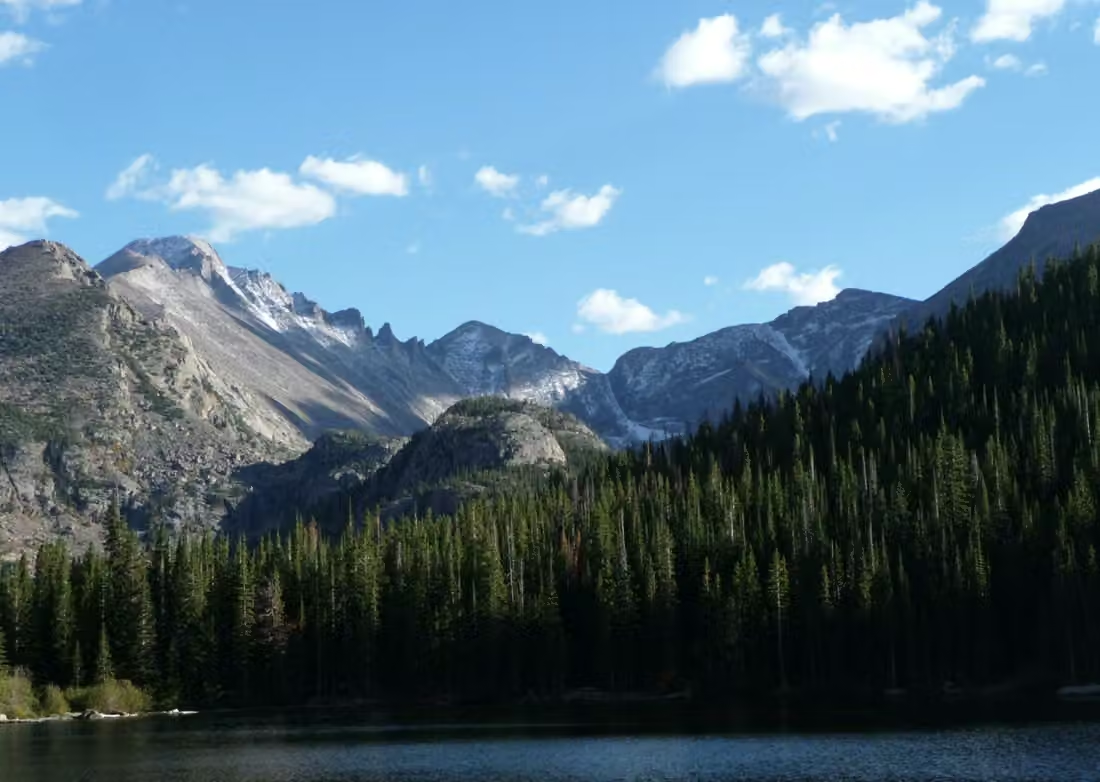
As you climb, watch the landscape change.
Forests, meadows, and river valleys
At Rocky Mountain National Park, elevation and aspect work together to affect water and vegetation. Different forests, meadows, and streams are adjacent, and changes in scenery often begin on the ground and extend to distant mountain peaks when observed along the path.
Approaching the tree line
The growing season becomes shorter at higher elevations, and the impact of wind and snow on trees and plants is more pronounced. Trails between lakes and forests show that mountain ecosystems are not neatly layered but interweave with terrain and climate.
Life close to the ground
Above the tree line, alpine tundra endures strong winds and low temperatures. Plants often grow close to the ground. These apparently open slopes are delicate, intricate habitats; even the low vegetation beside a road deserves a closer look.
One mountain range, waters flowing worlds apart.
Headwaters of the Colorado River
The waters of Rocky Mountain National Park on the west side flow into the upper Colorado River. Seasonal changes in mountain water flow occur due to winter snowfall and spring meltwater, as well as summer rainfall. Mountains seemingly far away are connected to lands further downstream.
Toward the Mississippi basin
The eastern side of the park stream belongs to the Mississippi River system. The watershed acts as a boundary for water flow direction and also separates climatic differences: the orientation of the slopes, wind, and precipitation create different ecological appearances on either side.
For example, the watershed on either side of Rocky Mountain National Park is illustrated. The middle graphic represents a ridge line for reference, not actual elevation or distances.
Mountains on the horizon. City life at your feet.
Colorado's daily life is not just about ski slopes and hiking trails. The state capital Denver and its surrounding urban areas are also centers for work, transportation, and commercial services.
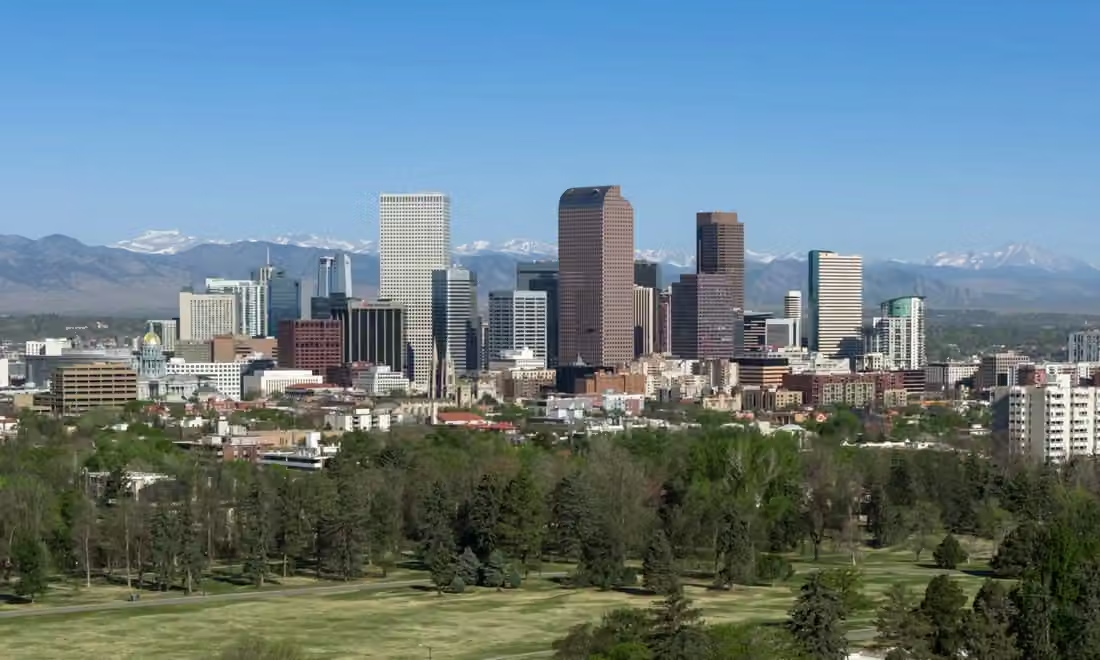
The airport, headquarters, and financial and professional services keep Denver connected to both state and external markets. City customers, mountain destinations, and the eastern plains have different needs, and the scope of services for businesses cannot be understood solely along municipal boundaries.
Mountain lodging, equipment rentals, and outdoor services vary based on the season and weather; urban offices, hospitals, stores, and conference activities have their own annual rhythm. Observing them separately reveals the specific characteristics of the operational locations.
Two eras meet at Denver’s Union Station.
Denver Union Station’s central building dates to 1914, while its wings retain portions of the 1881 station. Together, these different periods form the building seen today, keeping the city’s railroad connections visible within the neighborhood.
The significance of a hub goes beyond just arrival. It brings passengers, commuters, local businesses, and urban public spaces into contact. Denver's urban lifestyle is interconnected with a broader region through these daily movements.
Research and neighborhood life at the foot of the mountains.
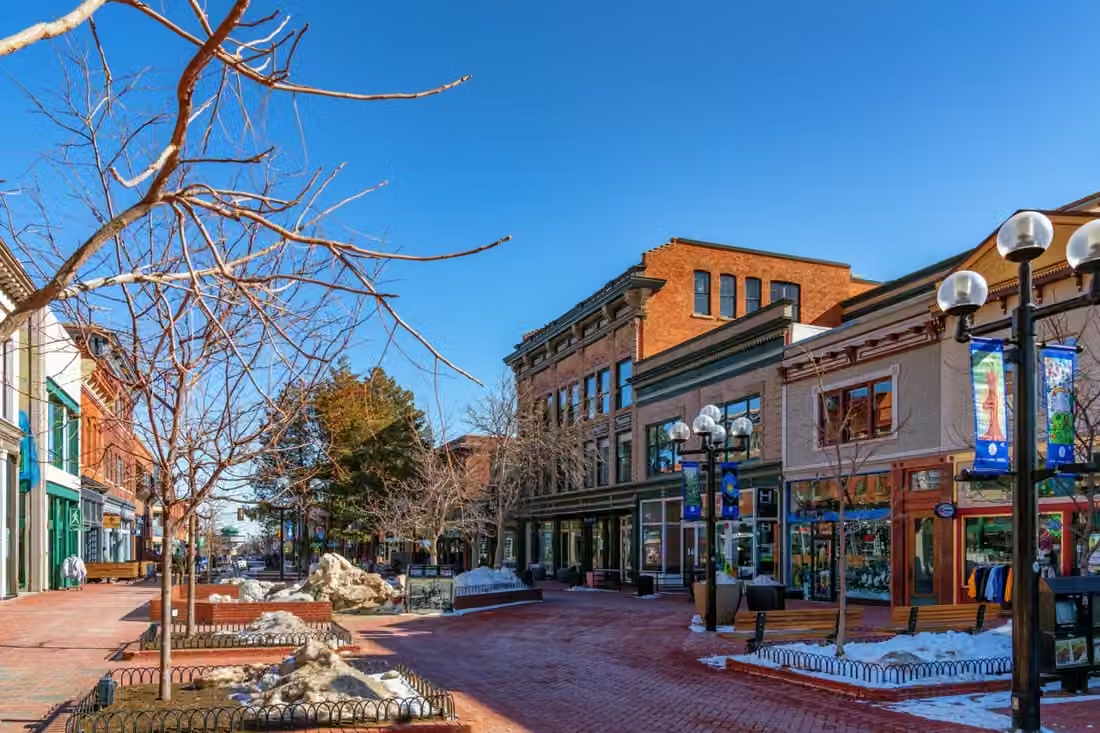
Boulder's universities, research institutions, and tech companies coexist with pedestrian areas and outdoor lifestyles. Research collaborations require more than just an office space; they involve experimental conditions, connections between teams and institutions, and a long-term process from research to application.
Local shops and dining services cater to residents, students, and visitors, and their demands differ from those of technology projects. A single city can have a slow research cycle and fluctuating customer flow on a daily basis.
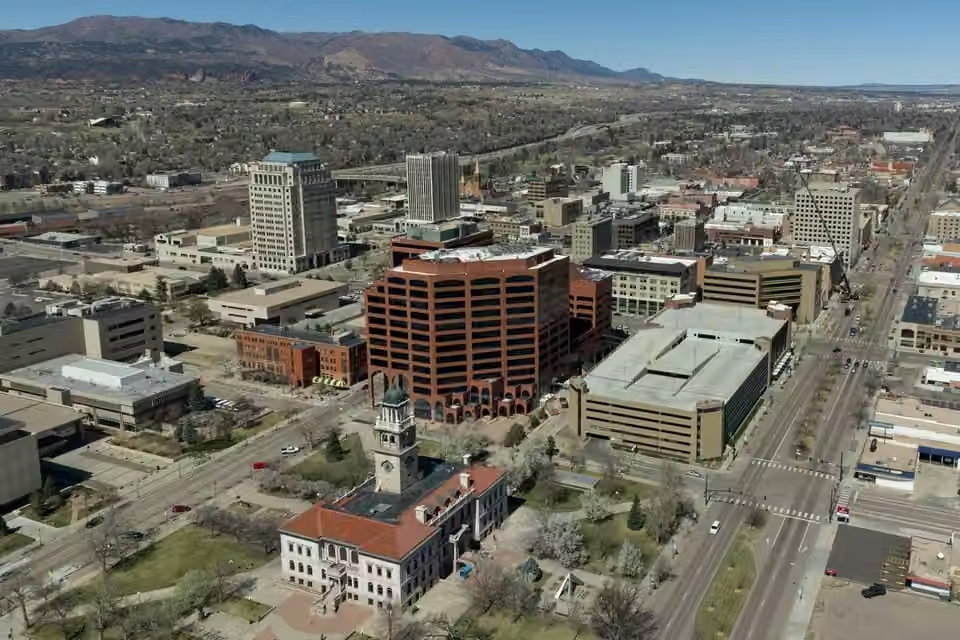
Another view of life along the Front Range.
Aerospace and defense-related services, along with community consumption, form the economic base of this city. Procurement projects focus on qualifications, technical capabilities, and delivery arrangements; local businesses, on the other hand, require a more specific look at community distribution, commutes, and service radius.
Denver, Boulder, and Colorado Springs are not interchangeable locations. They have connections, each with their own institutions, clients, and talent networks.
Some come for the mountains. Others stay for the cities.
The Colorado Tourism Office reported $29.2 billion in travel spending in 2025, about 2% above the previous year. Denver and its surrounding metropolitan area accounted for approximately 48.5% of the statewide total.
This indicates that the tourism economy is not confined to mountain resort areas. Expenses for lodging, dining, activities, and transportation are also parts of a journey. The total expenditure is part of the annual state-wide statistics and does not necessarily mean that every destination is growing at the same pace.
Tourism directly supported approximately 187,860 jobs in 2025, slightly fewer than a year earlier, even as travel spending increased. Employment and spending do not necessarily move together, and annual totals can conceal differences between cities, seasons and types of service.
For accommodations, dining, and outdoor services, arrangements also depend on whether the team can provide stable service during peak season and how they maintain facilities, retain staff, and connect with local customers during off-peak seasons. Mountain destinations and urban areas have different conditions.
Seasonal demand needs a year-round plan.
Mountain lodge and outdoor services require coordinated staffing, equipment maintenance, and adaptation to weather changes. Seasonal activities differ between snow season and summer, and employee accommodations and transportation affect daily schedules. Compared to the annual visitor count, specific months, customer stays, and services offered are closer to the reality of a single company.
Industries & establishments · 2023
The work that keeps communities running.
Healthcare, professional services, retail, and restaurants reveal an urban Colorado beyond mountain tourism. Research, aerospace, and outdoor equipment have distinctive roles, while a broad range of continuing services supports daily life.
The state recorded 182,486 employer establishments and 2,566,040 paid employees. A single company may operate several stores, offices, or factories, so establishments are not a count of registered companies.
U.S. Census Bureau, 2023 County Business Patterns. The series primarily covers private, nonfarm establishments with paid employees. Employment is measured for the pay period that includes March 12. The 2023 release was the latest in this series available when checked; it is not a measure of current monthly employment.
When transitioning from an industry background to a company lookup, one should verify the full legal name, registered state, actual address, and file date. A brand can operate in multiple locations, and a tech company might have offices, labs, and production sites simultaneously.
A tree stump from 34 million years ago.
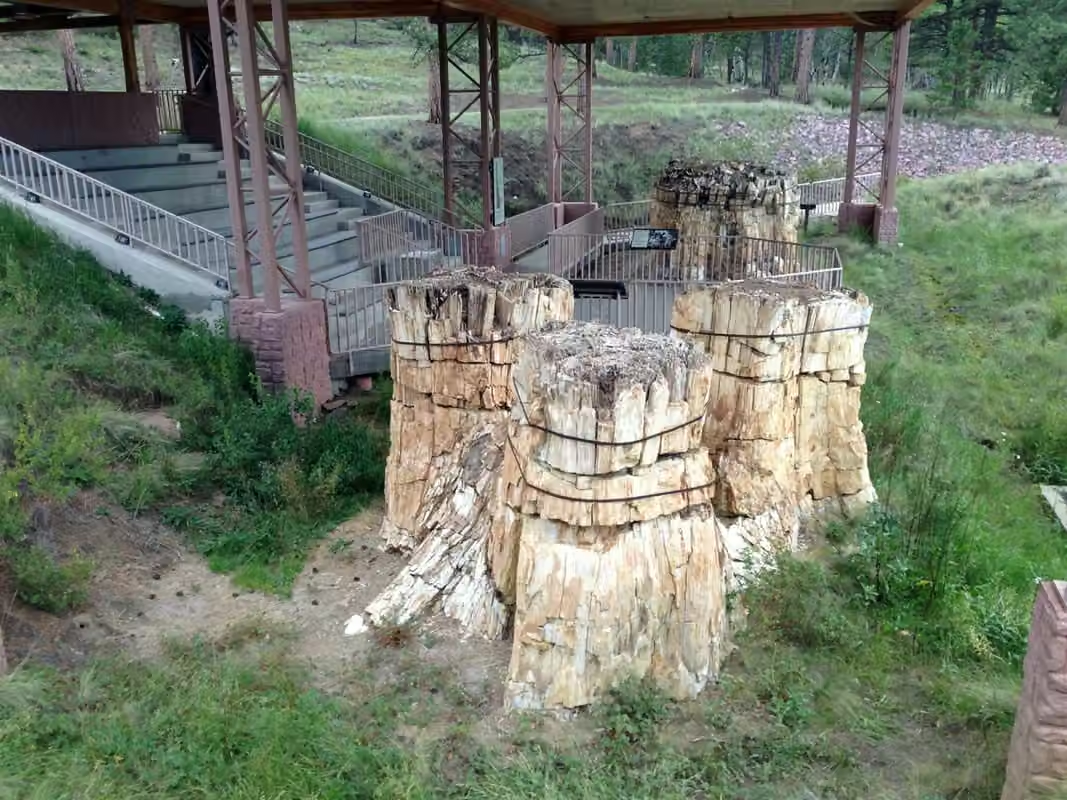
The stumps visible today are the remains of an entire forest. That forest and the mountain conifers now growing nearby belong to different geological eras.
Buried by mudflows
About 34 million years ago, volcanic activity nearby formed mudflows from volcanic ash mixed with water, burying the tree bases. The upper part of the trunk subsequently died and rotted away, while the buried part was given the chance to be preserved.
Gradually turned to stone
Over a long process of fossilization, minerals preserved the structure of the wood. The enormous stumps reveal the size of ancient trees and show how volcanic activity can sometimes preserve traces of past life.
Looking back into deep time
Colorado is not always the landscape it is today. Ancient forests, volcanic sediments, and later changing terrain belong to a longer natural history. Observing a fossil is a way to understand this span of time through specific objects.
Beyond the mountains, homes on the mesas.
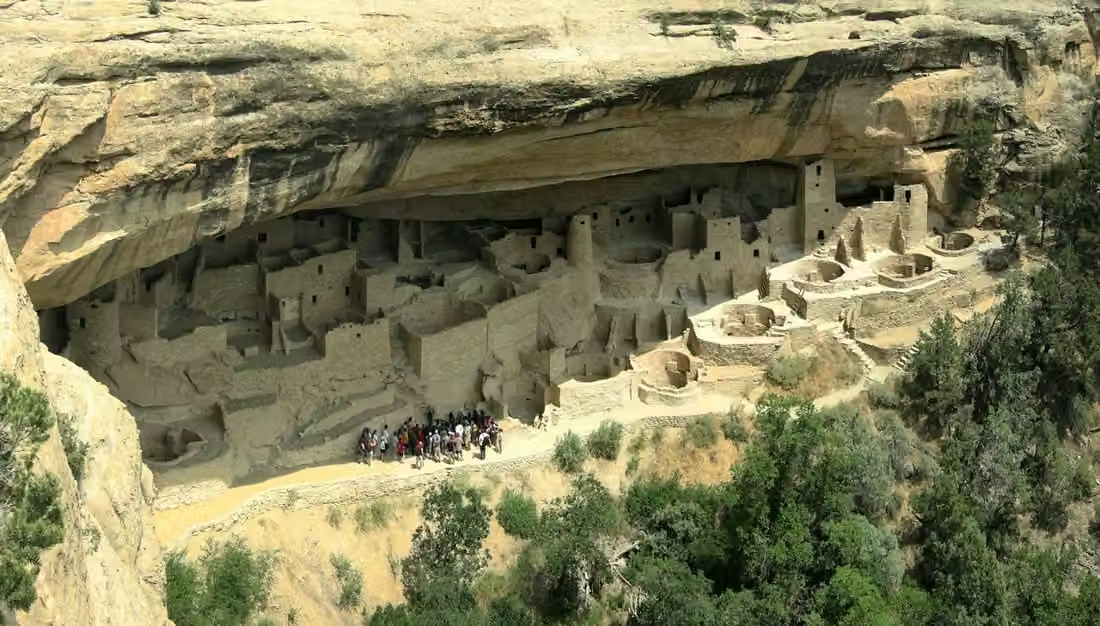
More than dwellings: a whole way of life.
The home of the ancestral Puebloans is not just the cliff-dwelling structures. Platform settlements, farmland, reservoirs, and roads also form the living spaces. Corn, beans, and squash are important crops, and food storage affects life during the long winter.
Migration did not end these connections.
Over the years, people have built and expanded settlements, and moved to new homes. These changes have also spread building styles, art, and traditions. Today, Pueblo and related cultures still maintain a cultural connection with Mesa Verde; this is not a world that has disappeared.
Mining towns and farming communities of the southwest.
Telluride, Durango and Montrose all have ties to Colorado’s mining history. Across the mountains and mesas today, old town buildings coexist with farms, outdoor recreation and contemporary communities. Mesa Verde is an important part of this region, but it does not represent all of life in southwestern Colorado.
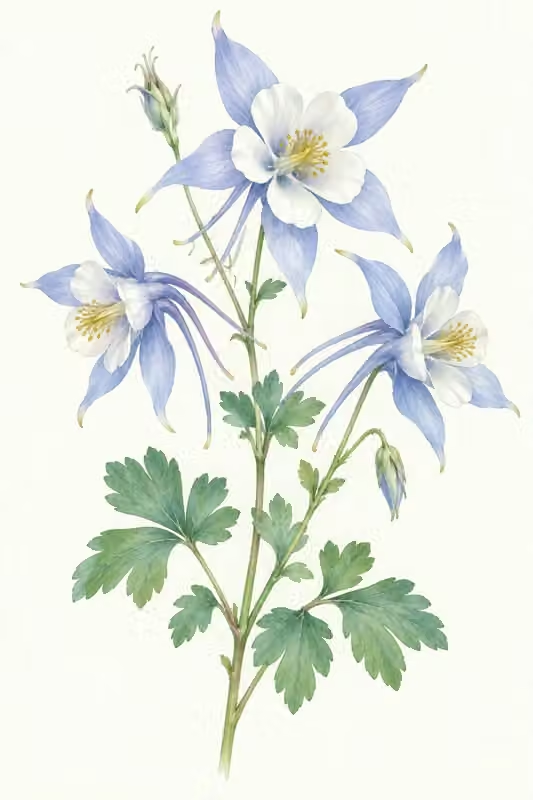
Blue and white among the mountains.
The Rocky Mountain columbine is Colorado’s state flower. Its delicate form offers another way to see the grand mountain landscape: an introduction to a place can begin with a flower beside the path.
Mountain flowers have a flowering period that varies based on elevation, snow cover, and weather conditions. The symbolic meaning of the state flower and the specific location where it blooms at a particular time are two different things.
An editorial feature by STATE.REPORT. Image creators and licenses are credited below.
Sources & further reading
U.S. Census Bureau: state population estimates for July 1, 2025.
National Park Service: Mountain, subalpine, and alpine tundra environments.
National Park Service: Ancestral Puebloans agriculture, art, and community.
National Park Service: mesa settlements, cliff dwellings, water sources, and roads.
National Park Service: the Continental Divide, river headwaters and precipitation.
National Park Service: The Ancient Forest and Volcanic Mudflows in Florissant.
Denver Public Library: the 1881 station wings and 1914 central building.
Colorado Official Tourism Guide: Southwest Towns, Agricultural Communities, and Regional Culture.
Image credits & licenses
Rocky Mountain National Park in September 2011 - Glacier Gorge from Bear Lake.JPG · Daniel Mayer (Mav) · CC BY-SA 3.0。
Denver, Colorado skyline (cropped 3x5).jpg · Quintin Soloviev · CC BY 4.0。
Pearl Street - Downtown Boulder - Colorado in Winter (52878129986).jpg · Tony Webster · CC BY 2.0。
Colorado Springs, Colorado (cropped).jpg · Quintin Soloviev · CC BY 4.0。
Cliff Palace-Colorado-Mesa Verde NP.jpg · Tobi 87 · CC BY-SA 4.0。
Florissant Petrified Redwood Stump 11.JPG · Fredlyfish4 · CC BY-SA 3.0。