

Delaware
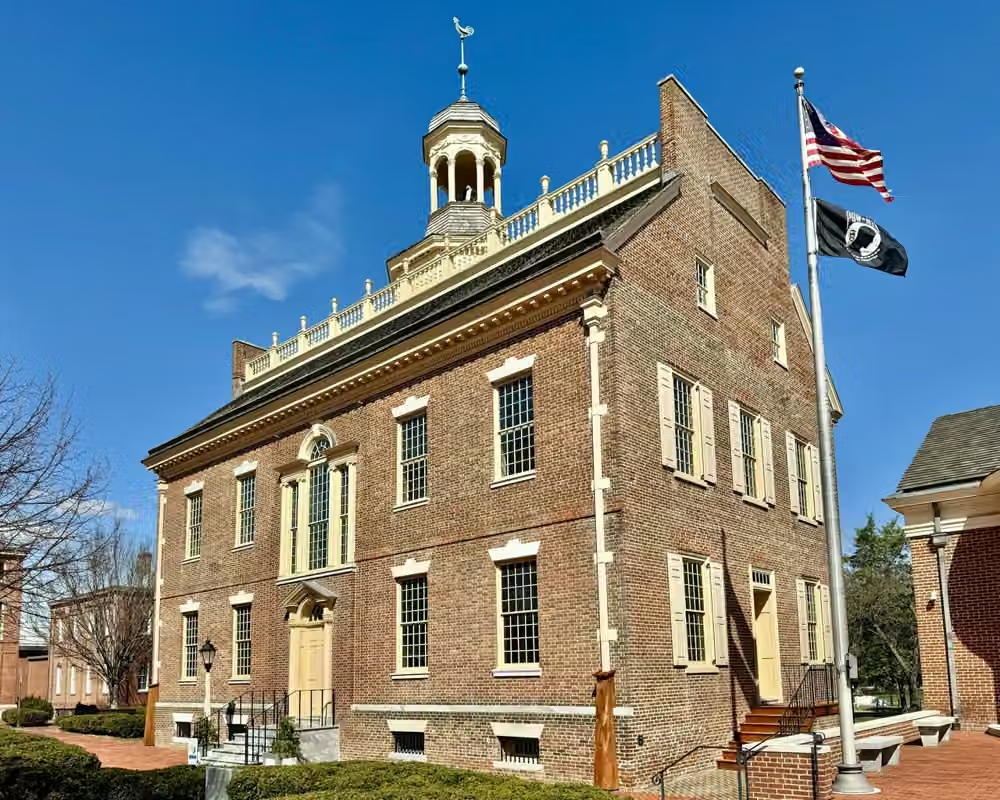
A world of its own.
From riverside mills to coastal sandbars, from founding documents to carefully tended gardens.
Explore DelawareSmall on the map, Delaware opens onto different worlds: the order of its cities, the care of its gardens, and the open reach of its bay.
A document that secured a state’s place in history.
Delaware was the first state to ratify the US Constitution on this day, earning the title "First State." The historical account of this event, preserved in the Public Archives, focuses on the Representative Assembly, the signatures, and the specific political choices made.
Dover’s Old State House was completed in 1791, after the Constitution had been ratified. It housed both state and Kent County institutions, offering a tangible record of early local administration. A historic building’s own date should be distinguished from the dates of events associated with the place.
The river flowed. The mills followed.
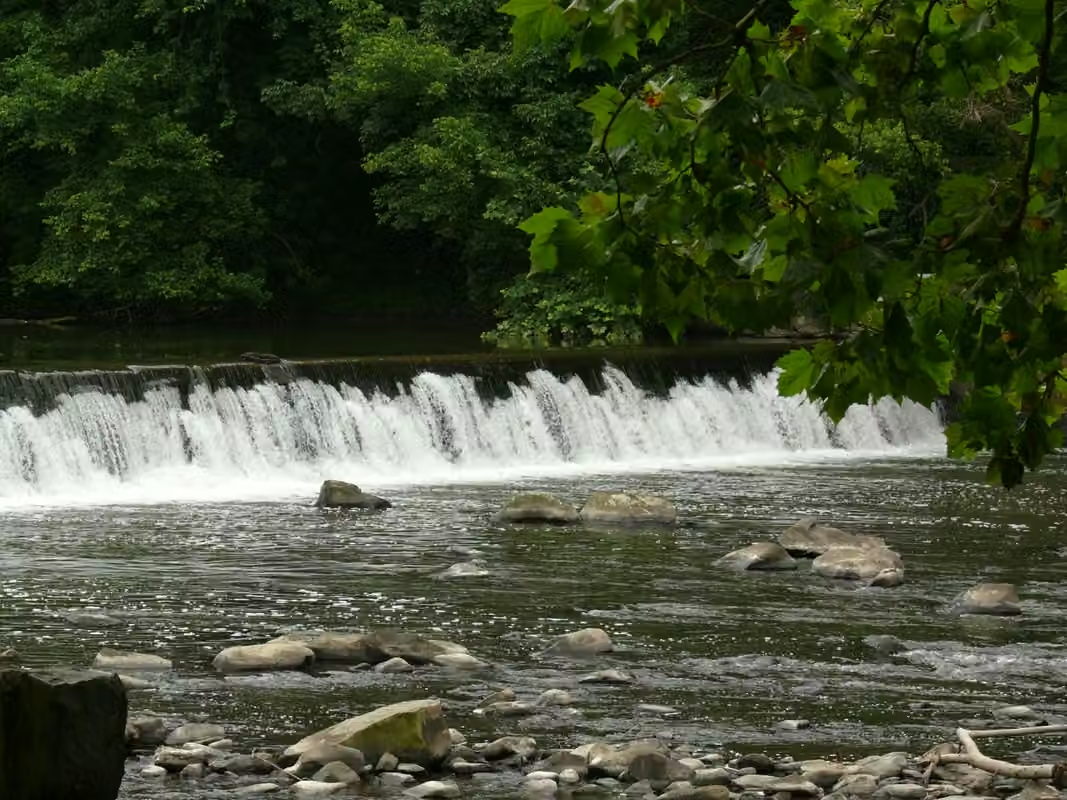
Water once powered the works.
DuPont began its operations here in 1802, with early gunpowder production relying on water and land around. The preserved waterways, mills, and machinery at Hagley allow the industrial history to transcend just the company name, showing how power entered the production process.
Behind the machinery, the workers.
Gunpowder manufacturing is dangerous. Site remnants of factories and accident records remind us that the understanding of technological progress, labor conditions, and safety management need to be integrated. Today's materials, chemistry, and technical services continue to develop in new laboratories, equipment, and talent systems.
From industrial remains to the archives.
Business history can start from machinery, blueprints, photographs, and work records. Museums and libraries preserve these different forms of evidence, turning production into a concrete affair with a location, a process, and people.
Time, planted in the landscape.
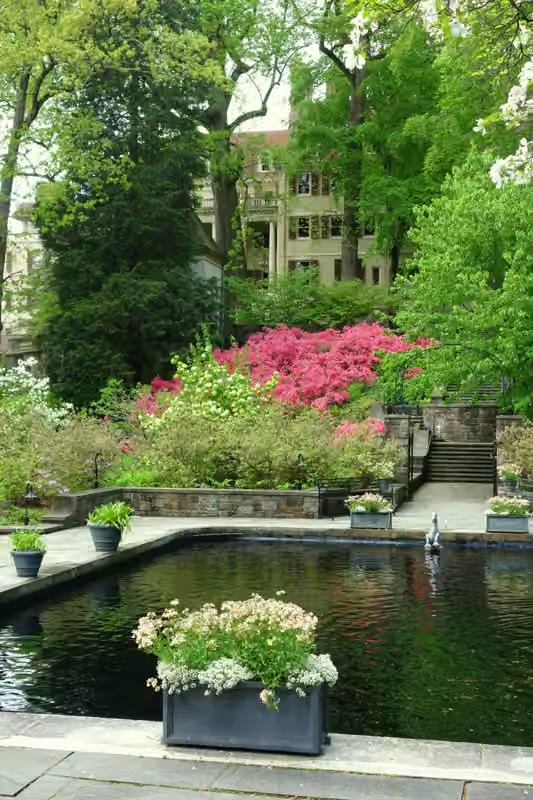
Natural in appearance. Carefully tended.
Winterthur's natural garden is not left to grow freely. Paths, sightlines, forest edges, and flowering periods are arranged over time to create different scenery in different seasons. The maintenance staff continue this design and adapt to changes brought by plant growth.
The collection preserves another time: furniture, ceramics, metalwork, textiles, and tools, recording materials, techniques, and usage habits. The value of the objects lies not only in their beauty but also in how they enter households and labor.
A chair's structure, a textile pattern, could raise questions about manufacturing, trade, and aesthetics. The proximity of the garden and the collection adds a layer of everyday details to Delaware's industrial history.
History told through illustration.
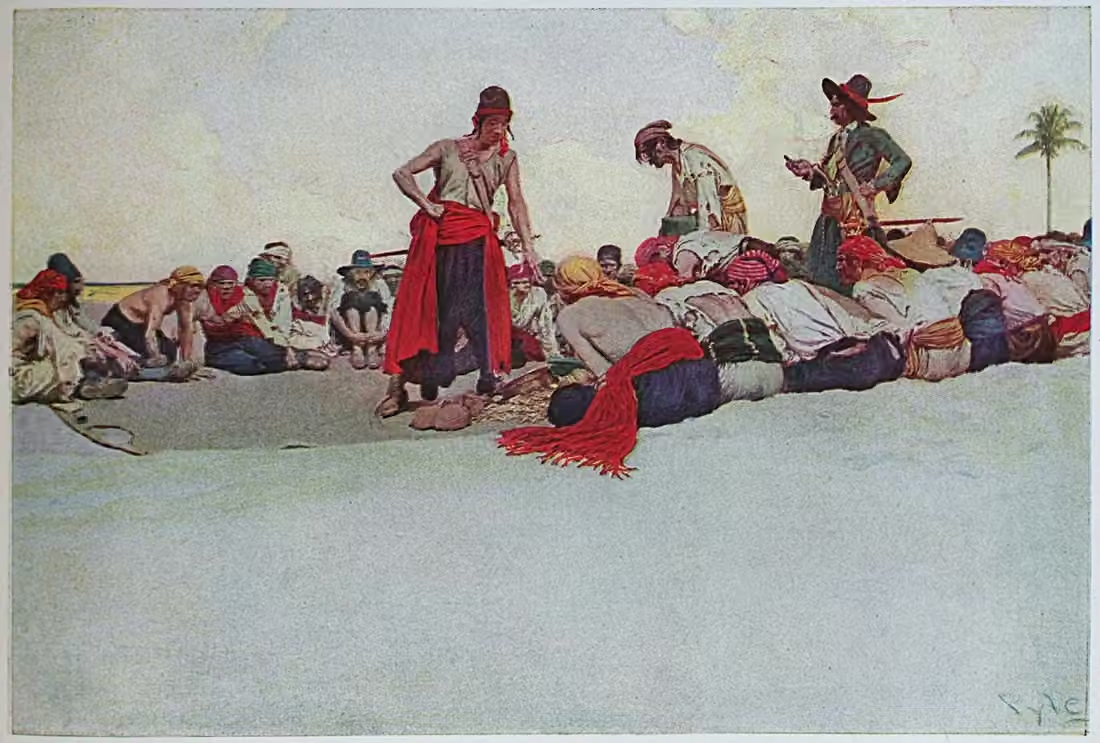
From magazines and books to museum walls.
The Delaware Art Museum's origins are tied to Wilmington artist Howard Pyle. His illustrations for books and magazines used movement, light, and composition to draw readers into stories beyond the written word.
The collection also includes work by his students and other illustrators. Pirates, historical figures, and adventures belong to artistic interpretation, not direct visual evidence of past events. They reveal how readers of the period imagined a story.
Specialized professions behind the skyline.
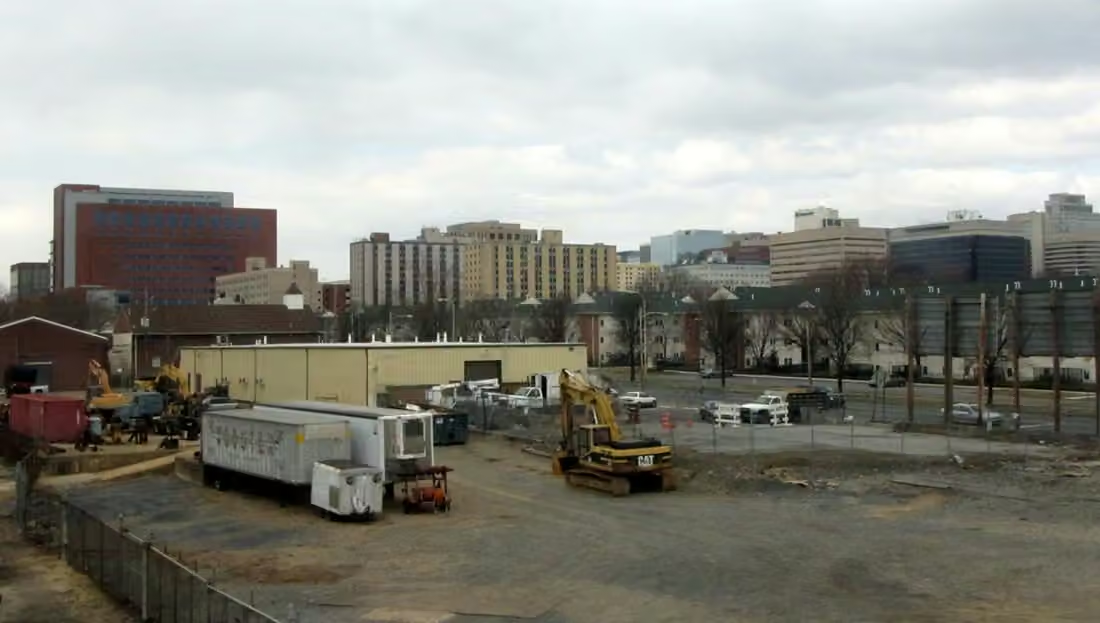
Registration, governance, and day-to-day business.
Doing business registrations puts Delaware in a national and even international business context. Legal, accounting, financial, and related services require specific talent and institutions to handle daily work. Registering here does not mean that the office location, employees, or clients are also here.
When assessing the local market, it is important to observe both registered entities and local service demands separately. Corporate governance is a specialized business, while community healthcare, dining, repair, and transportation each have their own customer distributions and operational rhythms.
Newark and Lewes: a university in different settings.
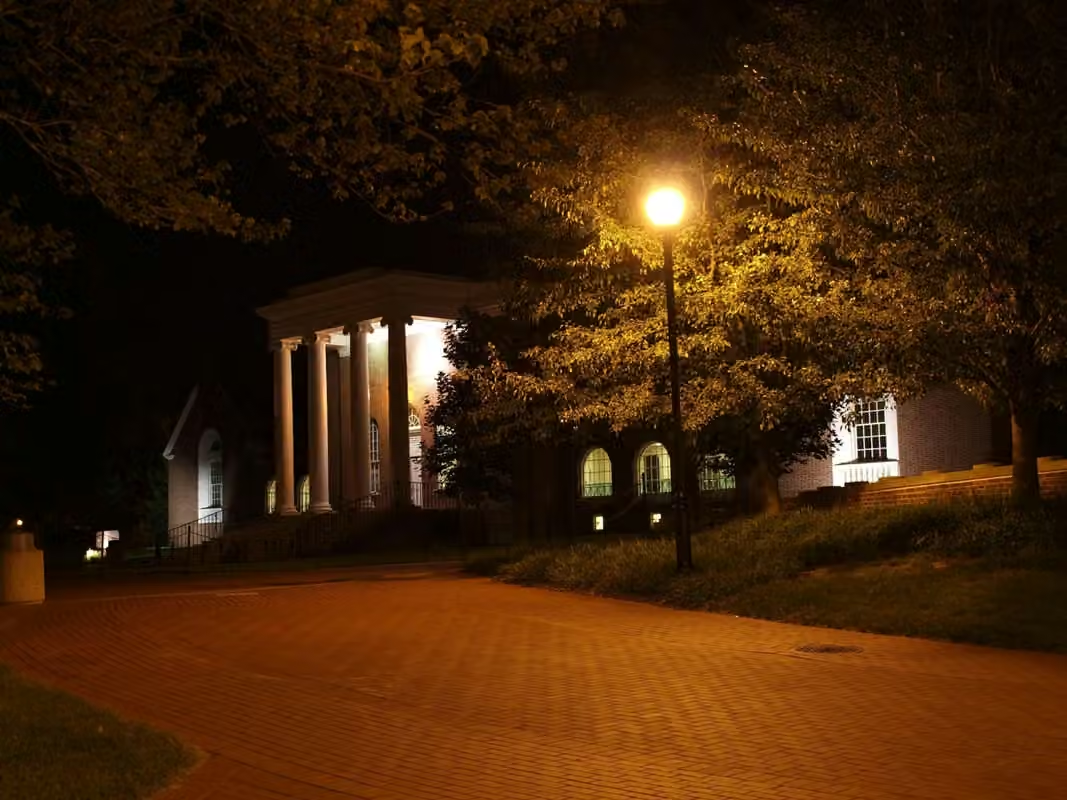
The University of Delaware's main campus is in Newark, while its Lewes campus lies close to the estuary, salt marshes, and ocean. Laboratories, classrooms, and field sites allow learning and research to reach beyond a single campus.
University marine research involves nearshore waters and extends into more distant oceans. Collaboration between different disciplines is needed for research, teaching, and technical support; opportunities surrounding the university should be aligned with specific research directions and practical partnership needs.
What the numbers actually describe.
New entity formations in 2025 exceeded the 289,810 recorded in 2024; the year-end entity total reached 2,287,728. Registration activity measures use of the legal system, not local employment or economic output.
Limited liability companies accounted for about 70.4% of new entities that year. Ownership, management, and tax classification each need separate consideration; a company's name alone does not establish what it actually does.
Corporations accounted for about 22.3%. Equity, board governance, and financing arrangements generally require more continuing attention than the initial registration.
Beyond the totals, the purpose of each entity.
These figures cover businesses for various purposes and locations. When choosing a registration state, consider factors such as shareholder relationships, investment arrangements, place of actual operations, and long-term maintenance costs.
Source: Delaware Division of Corporations, 2025 Annual Report. Search company records within STATE.REPORT.
Two business forms. Two annual calendars.
Applicable corporations formed in Delaware generally must complete the preceding year’s annual report and franchise tax obligations by this date. The tax calculation depends on factors including the corporation’s share structure.
Applicable LLCs and partnerships generally pay the prior year's tax by this deadline. These entities do not file the same annual franchise tax report with the Division of Corporations.
Record: State registration department annual reporting guidelines, verified September 2026. Two types of requirements cannot be substituted for each other; other taxes, permits, and business location registrations should be managed separately.
Industries & establishments · 2023
The work that keeps communities running.
In addition to business registrations, different parts of local employment include healthcare, food services, retail, and professional services. Below, establishments are displayed to help understand the local industry structure.
The state recorded 29,706 employer establishments and 457,635 paid employees. A single company may operate several stores, offices, or factories, so establishments are not a count of registered companies.
U.S. Census Bureau, 2023 County Business Patterns. The series primarily covers private, nonfarm establishments with paid employees. Employment is measured for the pay period that includes March 12. The 2023 release was the latest in this series available when checked; it is not a measure of current monthly employment.
A tidal flat with far-reaching connections.
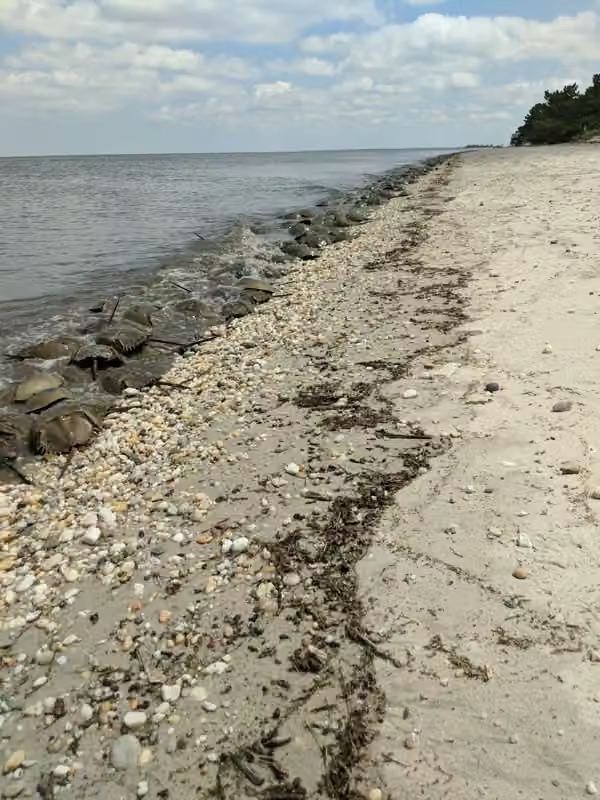
Different journeys, one shared season.
Spring sea water warms, horseshoe crabs lay eggs on Delaware Bay beaches. The eggs provide food for birds that migrate along the bay, linking a long migration to a stretch of coastal sand.
Protection work requires observing the number of animals, beach conditions, and food supplies simultaneously. State natural resources departments and researchers continue to investigate, and visitors are expected to comply with site protection requirements, leaving space for breeding and feeding.
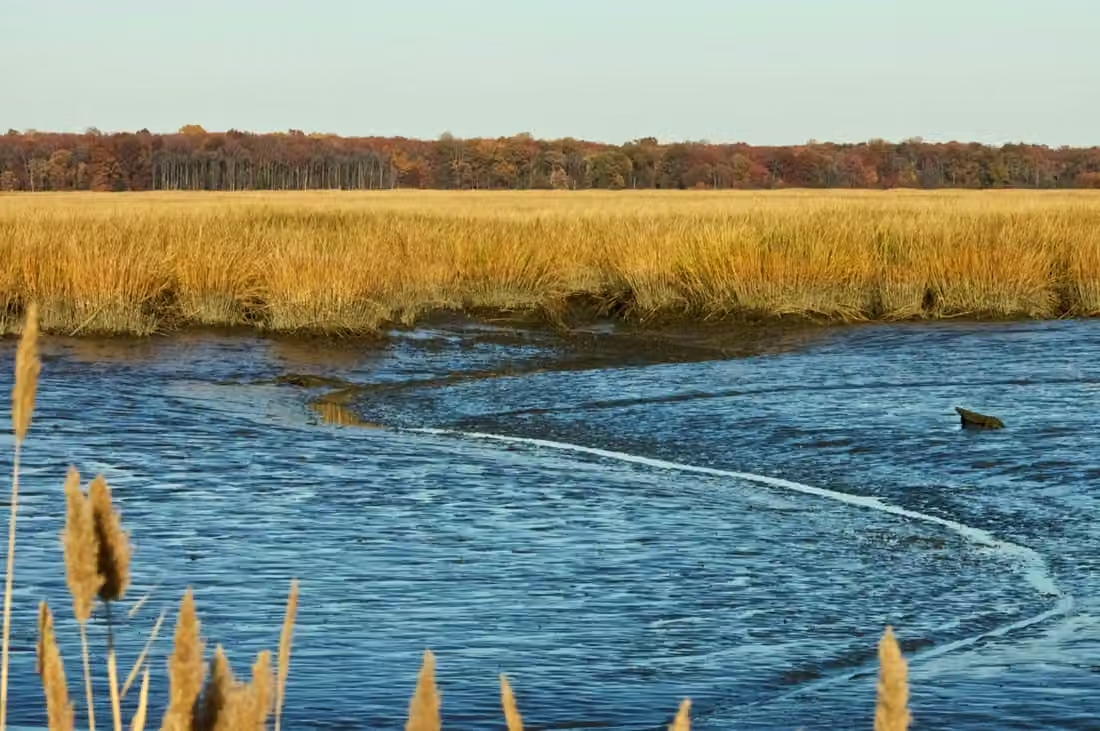
As the tide recedes, the marsh keeps working.
Bombay Hook preserves extensive tidal salt marshes. Changing water levels expose mudflats, grasses and shallow water in turn, creating places for different birds to rest and feed.
The value of wetlands is often not brought to the forefront by prominent landmarks. It takes a pause to observe the tides, flocks of birds, and vegetation to read the rich layers of this flat coastal landscape.
A coast beyond the beach.
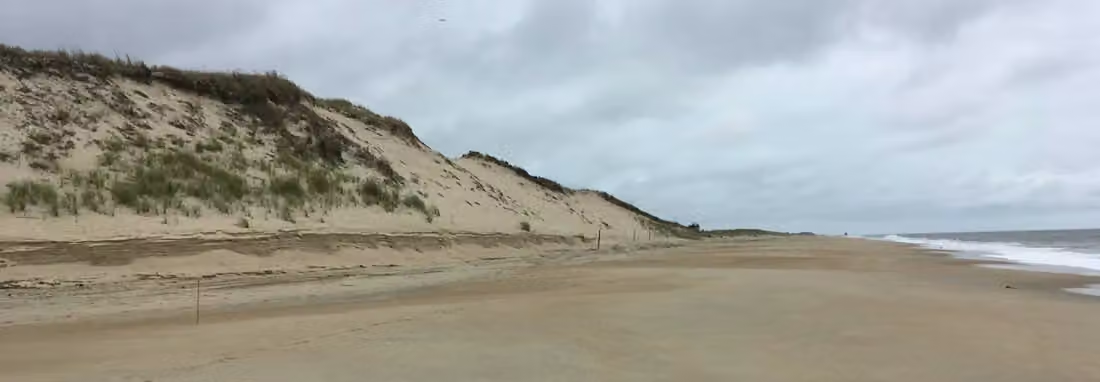
Dunes, coastal forests, and the intertidal zone make up the Seashore environment. Walking along the designated path, one can observe how plants adapt to wind, salt, and shifting sand. Vegetation on the dunes needs protection and should not be treated as arbitrary land to walk on.
Marine research in Lewes, observations in protected areas, and everyday state-park management make this coast a place of continuing study. It is both a destination for visitors and a setting for residential life, research, and conservation.
Sea breezes are part of everyday life.
Rehoboth · Life by the sea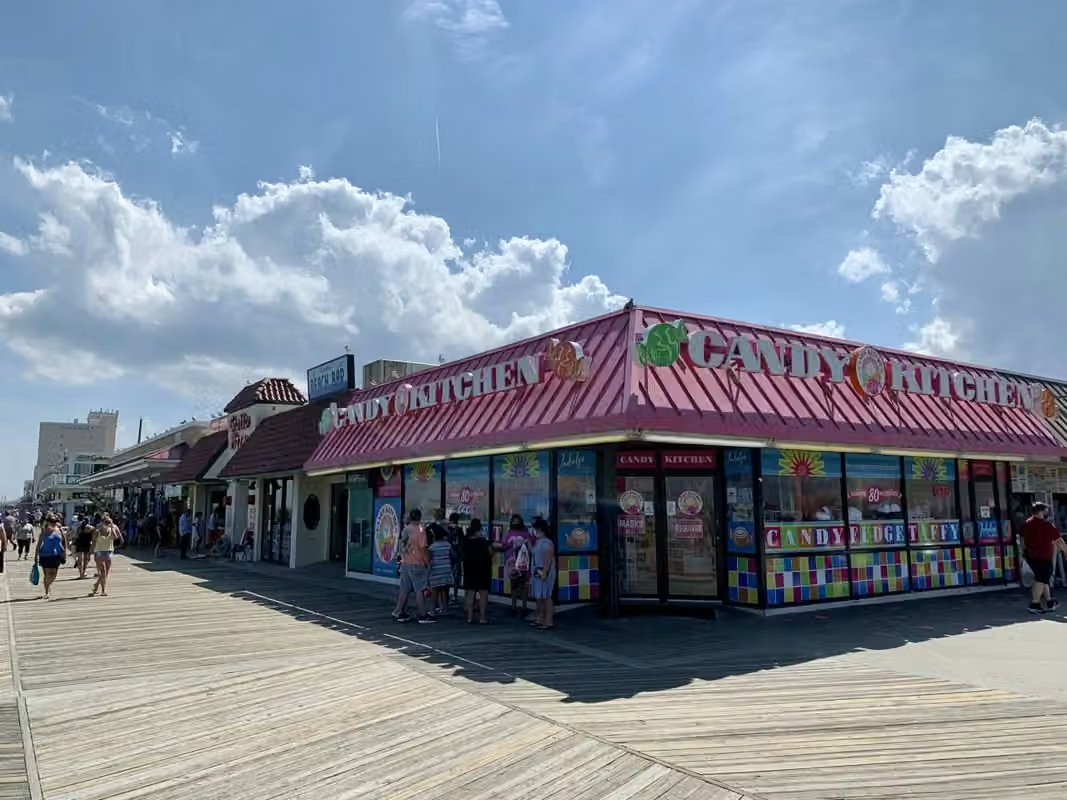
A visitor season. A business year.
Seaside dining, lodging, and retail face significant seasonal fluctuations. During peak seasons, these services require employees, suppliers, cleaning staff, and transportation to support the increased traffic; even during off-peak seasons, there are ongoing maintenance and fixed costs.
Judgments on business operations should be made at the specific block, lease conditions, and target clientele. A bustling sidewalk indicates foot traffic, but it cannot replace a store's income and cost plan.
Fields and food are part of southern Delaware, too.
The livestock and agricultural sector connects feed production, transportation, processing, and food supply. The animal health work of the state agriculture department also underscores the food industry's reliance on disease prevention and biosecurity.
Beyond the beach, the museum and community of the Nanticoke Tribe outside preserves their history. To know Delaware, one should not limit Native Americans to colonial-era introductions; they are also today's residents, storytellers, and cultural practitioners.
A last branch of spring.
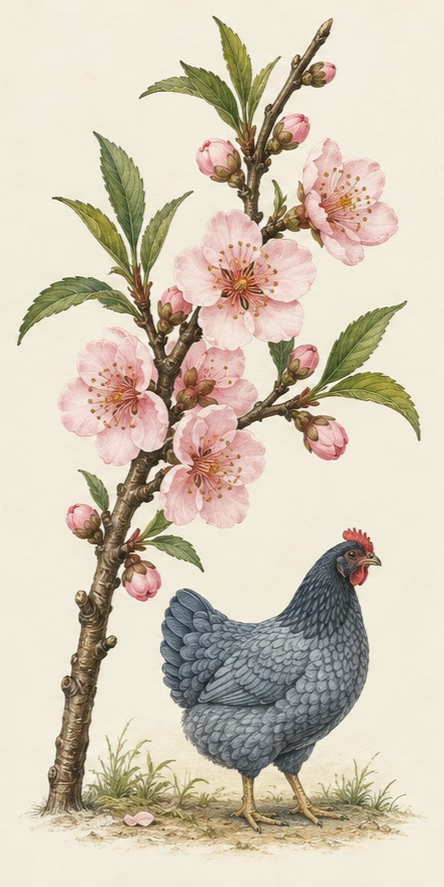
In 1895, peach blossom was selected as the state flower symbol, connected to the orchard planting history of the time; in 1953, legislation further solidified its status as the state flower. Behind its delicate petals lies a memory of fields and markets.
Blue Hen is another state symbol. Spanning from garden collections to seaside shallows, from urban systems to rural life, this small state has a face far richer than its registered address.
An editorial feature by STATE.REPORT. Image creators and licenses are credited below.
Sources & further reading
U.S. Census Bureau: state population estimates for July 1, 2025.
Delaware Public Archives: Documents related to the Constitutional Ratification Proceedings of the 1787 Constitutional Convention.
Delaware Division of Historical and Cultural Affairs: the public building completed in 1791.
Hagley Museum: water power, gunpowder production and historic mill sites.
Winterthur Museum: The Formation of a Natural Garden Style.
Winterthur Museum: Collections of furniture, textiles, ceramics, and tools.
Delaware Art Museum: Illustrations by Howard Pyle and his students.
Delaware’s natural resources department: spawning in Delaware Bay and food for migrating shorebirds.
US Fish and Wildlife Service: Habitat of the Bombay Hook National Wildlife Refuge.
Delaware State Parks: Coastal Environment and Trails at Cape Henlopen.
University of Delaware: Lewes campus, Rivermouth and Ocean Research.
Nanticoke Indian Tribe: migration, community and a homeland in Delaware.
State Agriculture Department: Livestock farming, biosecurity, and disease prevention and control.
Delaware State Government: Peach Blossom, Blue Hen, and State History.
Image credits & licenses
Old Delaware State House, The Green, Dover, DE.jpg · w_lemay · CC BY-SA 2.0。
Brandywine Creek at Hagley Museum 2.JPG · Ad Meskens · CC BY-SA 3.0。
Pool - Winterthur Museum - DSC01661.JPG · Daderot · CC0。
Horseshoe Crabs Pickering Beach DE.jpg · Bobistraveling · CC BY 2.0。
Beach at Cape Henlopen State Park in Delaware USA.jpg · Nolabob · CC BY-SA 4.0。
Wilmington Skyline from Amtrak - panoramio.jpg · Bohao Zhao · CC BY 3.0。
Rehoboth Boardwalk shops.jpg · APK · CC BY-SA 4.0。
Mudflats left behind by a receding tide at Bombay Hook National Wildlife Refuge.jpg · Steven Fine · CC BY-SA 4.0。
Memorial Hall at Night.JPG · Michael Romagnoli · CC BY-SA 3.0。
Pyle pirates dividing edited.jpg · LordToran, original scan by Beej71 · Public domain。