

Kansas
Toward the light, beyond the horizon.

Wind moves across the prairie; aircraft leave the factory for the sky. Schools, basketball courts, and small-town tables hold stories of this land, too.
Explore the prairie and the citiesThe sunflower became the state flower. This locally growing plant had long appeared in residents’ decorations, badges, and public life.
Wide horizons. Deep histories.
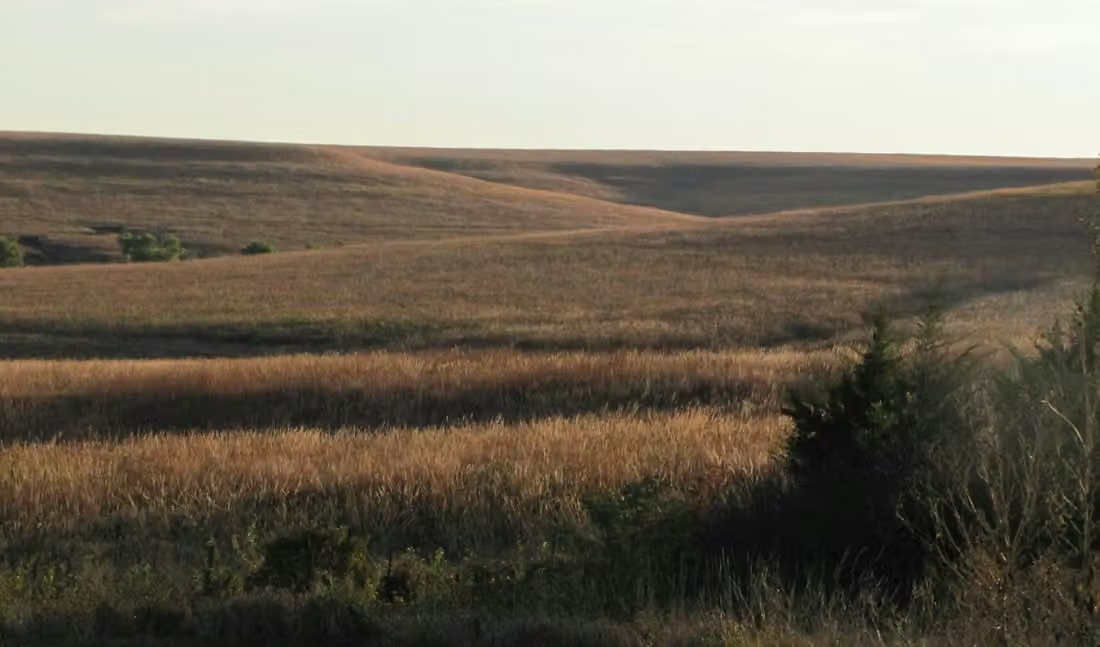
Tallgrass prairie once covered a vast area of North America. The National Park Service estimates that less than 4% remains intact, mainly in Kansas's Flint Hills. Protection here includes the living relationships among plants, animals, and soil as well as the open landscape.
Fire clears dead vegetation and checks the spread of woody plants, while grazing animals alter the height and distribution of grasses. Managing a preserve requires understanding these processes. Prescribed spring burns belong to the same seasonal cycle as the familiar green prairie.
Not all prairie is empty land. Indigenous people have long lived here, and ranches, towns, and protected areas later changed how the land was used. To understand Kansas, one must see both its natural environment and human activities.
From eastern cities to the open plains.
NortheastTopeka’s state institutions, Lawrence’s university and communities on the western side of metropolitan Kansas City offer different kinds of urban life. The metropolitan area crosses the state line; Kansas and Missouri remain separate administrative jurisdictions.
South CentralWichita has a strong tradition in aviation manufacturing and technical skills. Hutchinson's aerospace collection connects scientific education with industrial craftsmanship in a different path.
MidwestThe prairies, agriculture, small towns, and layers left by ancient seas intertwine. The distances between cities, water usage, and land conditions serve as an important backdrop for understanding business and daily life.
Today’s prairie was once a seafloor.
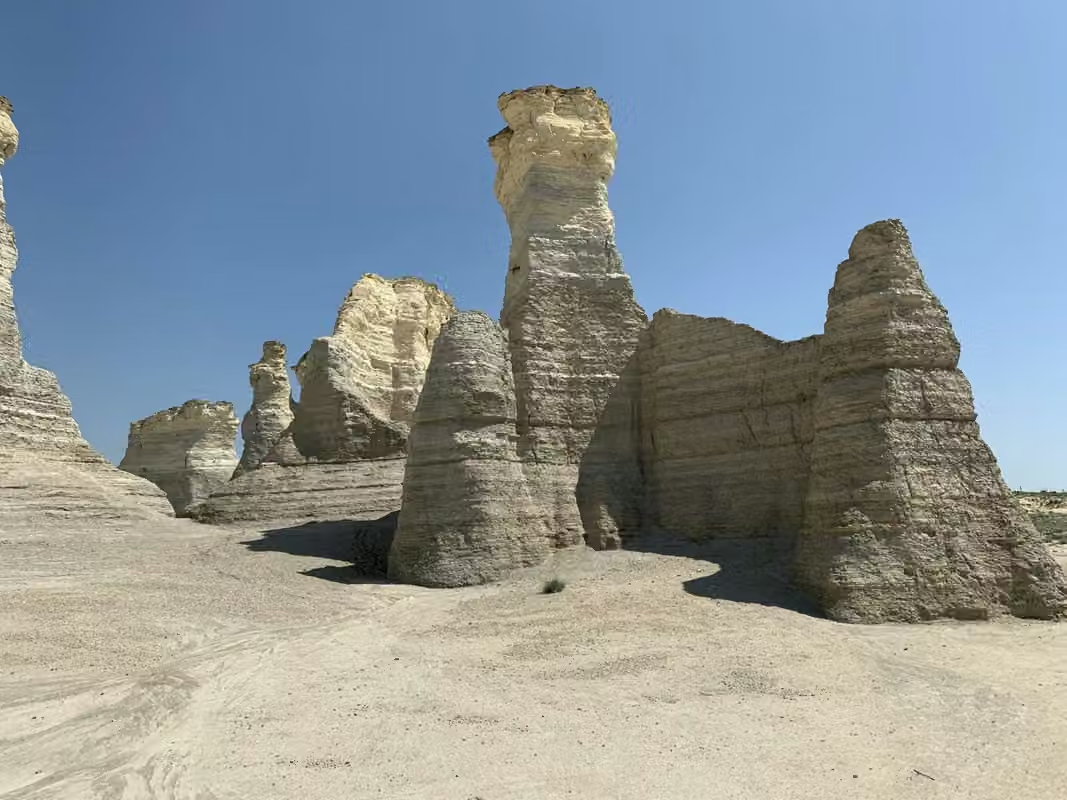
Chalk preserves the traces of tiny lives.
Cretaceous rock is primarily formed from the remains of tiny marine organisms that have been deposited. The prominent rock pillars in the western Kansas are remnants of the rock layers that have been eroded; the stark contrast with the surrounding plains comes from long geological changes.
The openness of the prairie can easily make one overlook the history buried underground and within the rock layers. Geological surveys study rocks, fossils, and terrain together, reconnecting today's scenery with past oceans.
A city built to fly.

From early workshops to an aviation center.
Aviation and manufacturing began to take shape in Wichita in the early twentieth century. In 1916, the Cessna brothers worked with the Jones Motor Car Company on aircraft manufacturing and a flying school. More companies and skilled workers subsequently gathered here.
Aircraft manufacturing requires coordination among design, materials, component machining, assembly, and inspection. Serving this type of customer, the reliability, record, and delivery capability of the product often mean more than proximity to an airport.
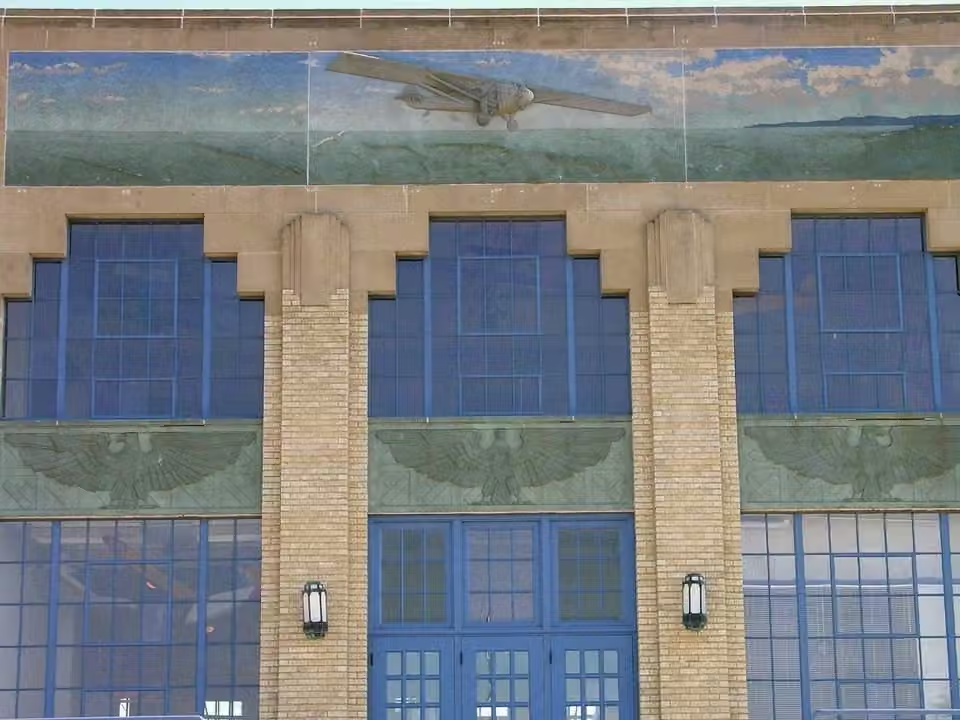
Architecture from an age of flight.
The old terminal's Art Deco design carries aviation motifs across its exterior and interior. After serving civilian passengers and later military uses, it became the Kansas Aviation Museum in 1991.
This building records changes in transportation methods and also provides clues about how Wichita sees itself: flying is not just on runways but also enters public buildings, city memories, and residents' lives.
From an old projector to objects flown in space.
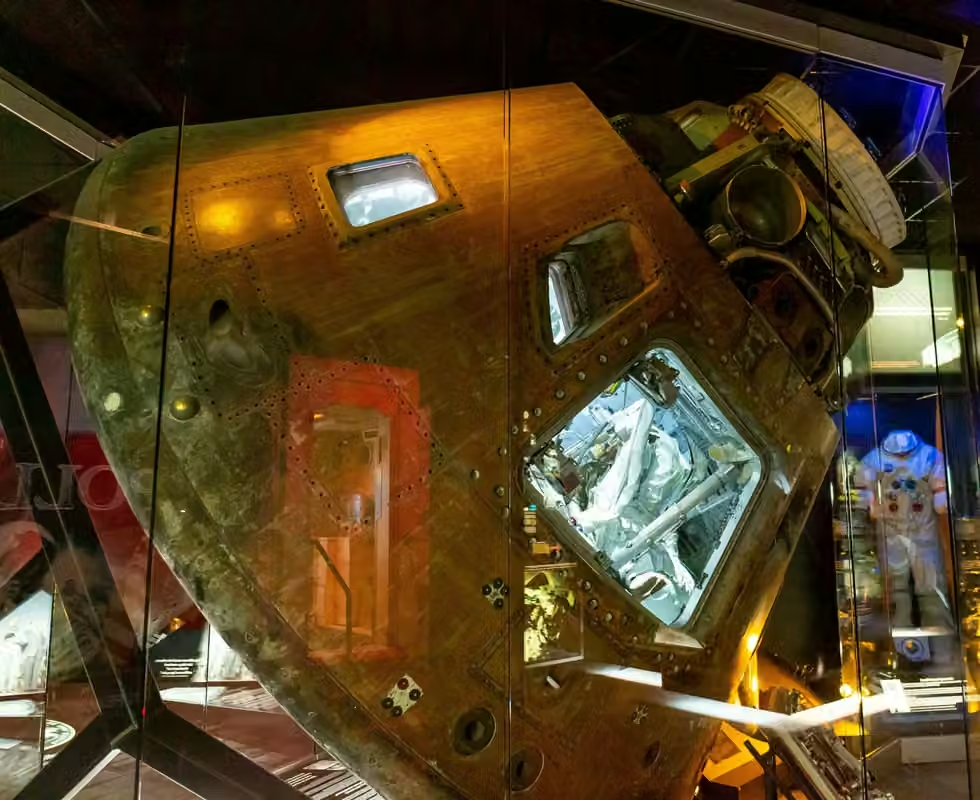
A beginning supported by the community
Patty Carey opened a planetarium in a poultry building at the state fairgrounds, using secondhand projection equipment and rented folding chairs. It was a modest beginning that gave local residents a place to explore the stars together.
Keeping history alive through objects
The museum's spacecraft work expanded into preservation, restoration, and replication. Apollo 13's command module Odyssey was restored and displayed here, giving space history a tangible presence beyond words and photographs.
Passing curiosity to the next generation
From exhibits of celestial phenomena to camp activities and scientific research, museums continually bridge collections and learning. For an inland city, scientific education can also become a prominent cultural aspect, without relying on a launch site.
A city with more than aviation at work.
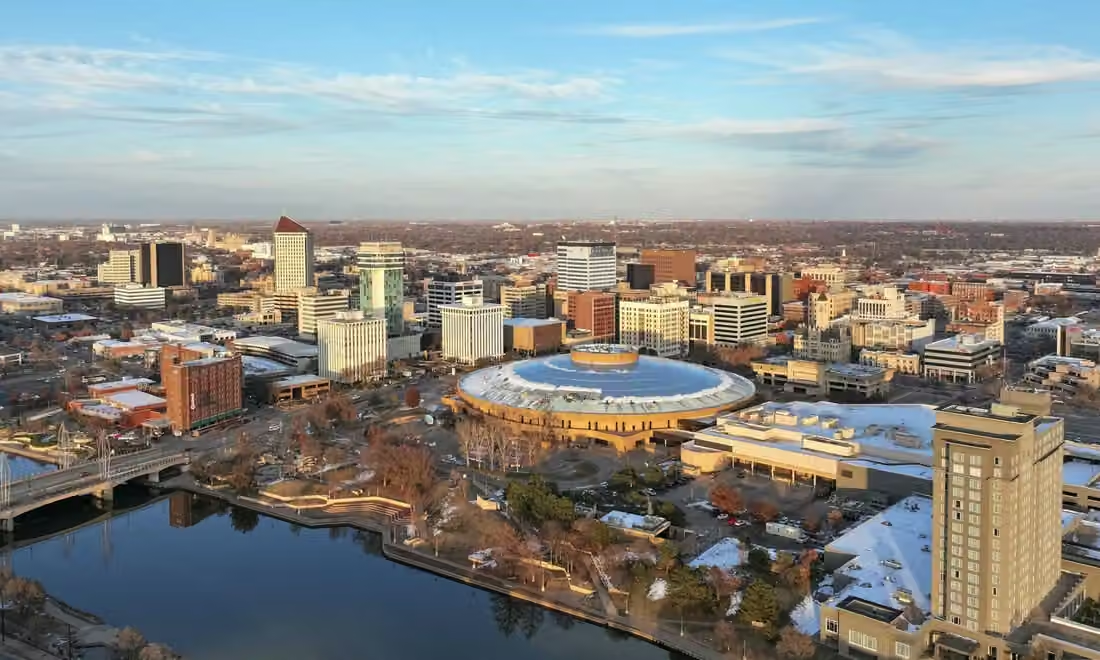
Up 1,900 jobs from July; unemployment stood at 3.8%.
U.S. Bureau of Labor Statistics, preliminary August figures released September 18, 2026. July job totals use the revised figures from the same release.
Manufacturing is one part of the economy.
In August, there were approximately 173,500 manufacturing jobs in the state, 221,800 in private education and healthcare services, and 273,500 in trade, transportation, and utilities. This shows the importance of goods flow and everyday services.
These are job positions across different departments in the state, and they cannot be directly used to gauge the size of Wichita's aviation industry or added to the total population. When selecting a market, further differentiation between industries, cities, and service recipients is needed.
Aviation suppliers: capability comes before location.
Precision machining, inspection, engineering, and maintenance each require different personnel and equipment. When preparing to enter the supply chain, judgments should be made based on specific customer technical requirements, quality processes, and delivery arrangements, rather than relying solely on the city's industry reputation to decide on orders.
A metropolitan area across state lines.
Northeastern urban life spans Kansas and Missouri. Locations for offices, stores, warehouses, and employee sites can affect registered, tax, and local permit matters; a company name mentioning a city name is not sufficient to explain this.
Business reports now follow a two-year cycle.
Kansas changed its business information reporting to a biennial schedule in 2024. Entities should maintain their records according to the Secretary of State’s timetable. Information reports, tax filings and industry licenses remain separate obligations; completing one does not complete the others.
Registry Information: Kansas Secretary of State Business Information Reports and Business Filings Guide. Latest verification on September 2026. Company searches can be conducted on this site.
Industries & establishments · 2023
The work that keeps communities running.
Healthcare, retail, manufacturing, and professional services are connected to residents' daily needs and regional clients. The annual data helps understand the base distribution of these jobs, while the monthly report observes recent changes.
The state recorded 76,139 employer establishments and 1,248,825 paid employees. A single company may operate several stores, offices, or factories, so establishments are not a count of registered companies.
U.S. Census Bureau, 2023 County Business Patterns. The series primarily covers private, nonfarm establishments with paid employees. Employment is measured for the pay period that includes March 12. The 2023 release was the latest in this series available when checked; it is not a measure of current monthly employment.
The work that keeps communities running.
Wheat is an important image of Kansas, but the agricultural income structure is not solely composed of wheat. Cattle and calves, corn, and soybeans, among other goods, link the ranches, agriculture, feed, and transport sectors.
The September 2026 estimate from the U.S. Department of Agriculture shows that livestock and products cash income was approximately $19.171 billion in 2025, while crop income was about $7.684 billion. Different goods have different production cycles, and harvesting, fattening, processing, and selling do not occur at the same time.
Cash receipts measure sales before feed, land, equipment, labor, and other costs are deducted; they are not profit. Both prices and sales volumes affect the total. Individual commodities are already included and should not be added again.
US Department of Agriculture Economic Research Agency published on September 3, 2026, 2025 state-level estimates; figures in US dollars, original units were in thousands of dollars.
A classroom and the right to equal treatment.
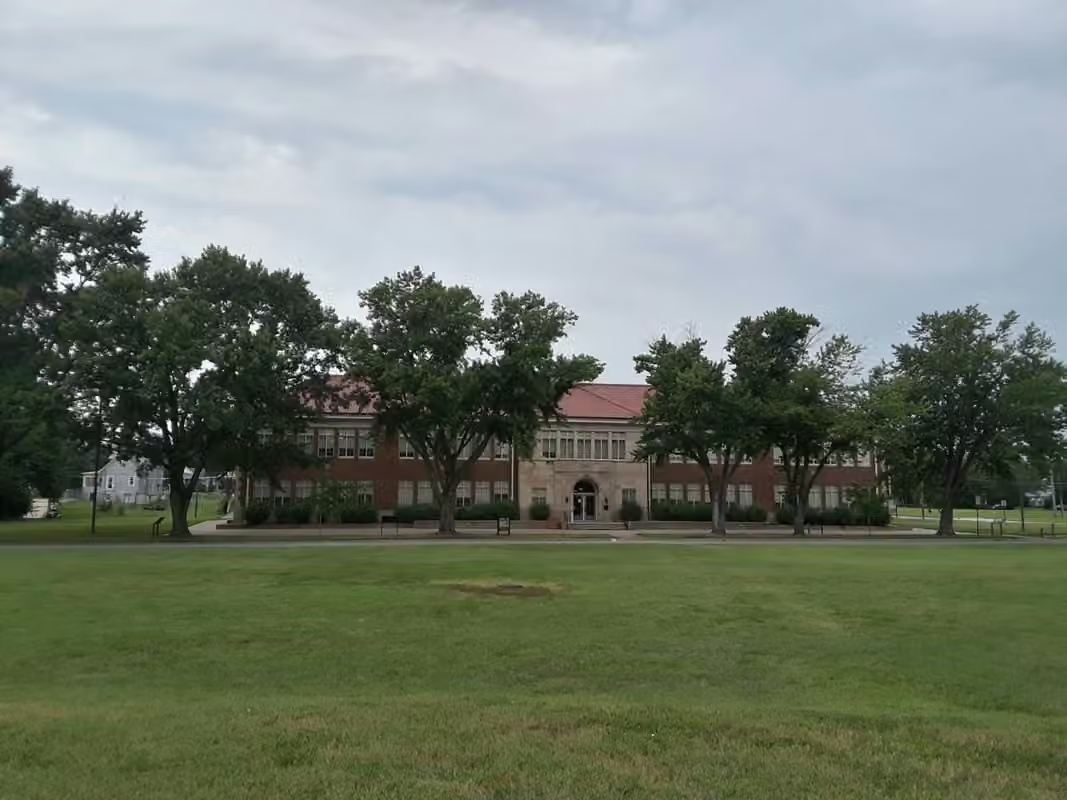
Behind the lawsuit, families making a choice.
Topeka parents' efforts to secure equal public education for their children became an important starting point for the Brown v. Board of Education case. Ultimately, the Supreme Court heard five separate lawsuits from different regions, not just one city's efforts that led to change.
The 1954 ruling declared segregation in public schools unconstitutional. The legal breakthrough was vital, but achieving equality required more time and continued action by communities, schools, and individuals.
School buildings preserve a public history.
The Monroe School's displays bring together experiences of families, lawyers, students, and organizers. It reminds people that changes in public institutions often begin with seemingly ordinary routes to school, application processes, and parent decisions.
Topeka is both the state capital and a city that carries these experiences. To understand its history, one cannot only look at the dome of the state legislature; one must also hear those who once walked into classrooms.
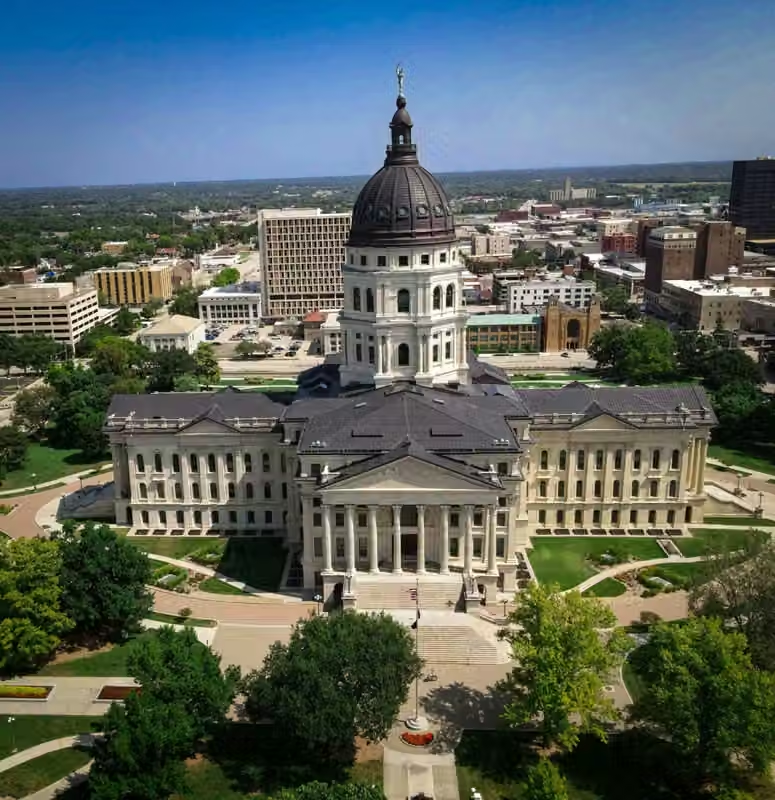
From state institutions to schools and neighborhoods, public life has many specific places. They collectively form the face of Topeka.
Building a community on land of their own.
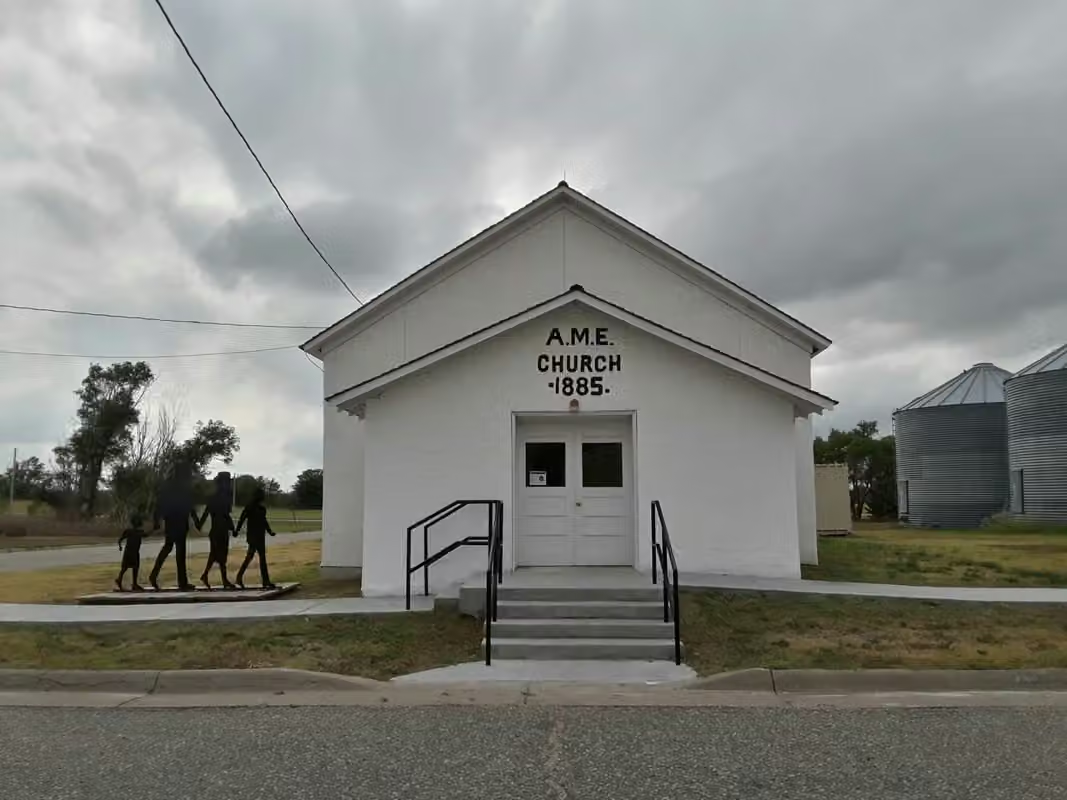
After the Civil War, some African Americans left the South in search of land and greater independence. Founded in 1877, Nicodemus attracted settlers from Kentucky and elsewhere, gradually developing shops, churches, schools and farms.
The railway did not pass through the town as residents had hoped, and the business sector was affected, but farmers and communities continued to persevere. Today's homecoming celebrations carry on the tradition of reunions; this history has both aspirations and the challenges brought by environment, markets, and transportation.
A basketball tradition, beginning with thirteen rules.
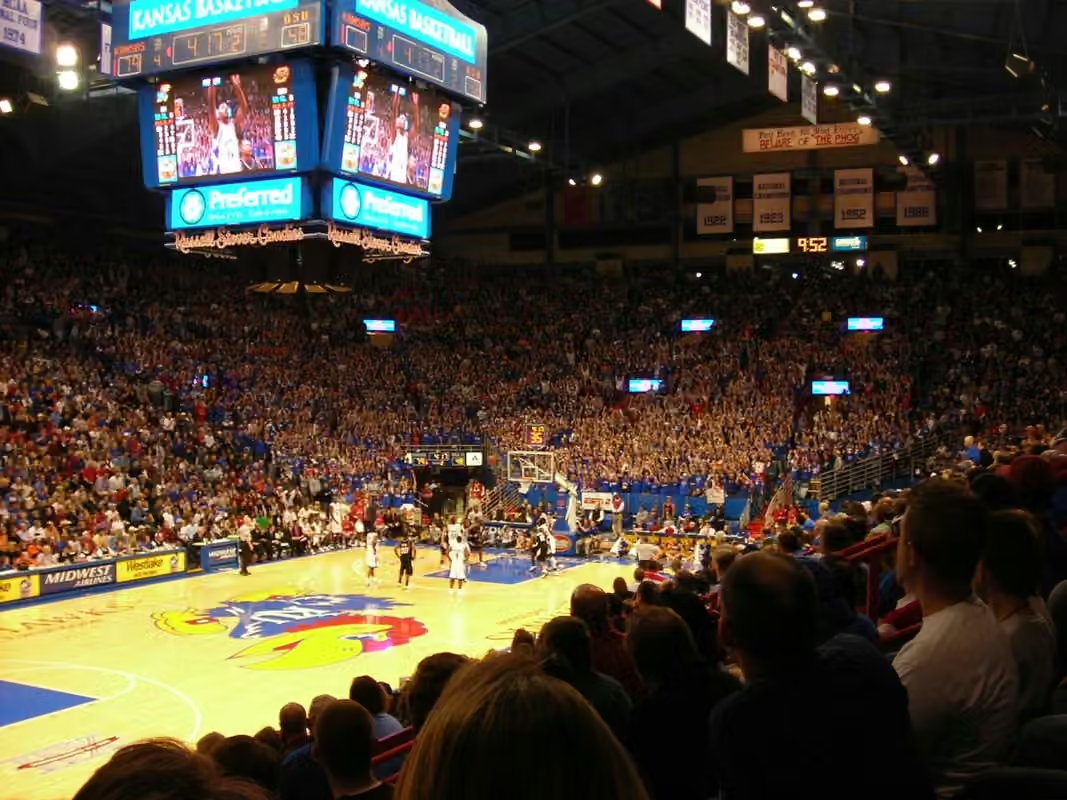
James Naismith invented basketball in Massachusetts in 1891 and became the first basketball coach at Kansas University. Basketball was not born in Kansas, but the university has deep ties to early figures in the sport.
The university now preserves and displays the original document setting out basketball’s thirteen rules. It brings the game, campus traditions and sporting history together in Lawrence, offering something to explore beyond the court.
A taste of home inside the bread.

Meat and vegetables wrapped in yeast dough.
This common local bread is typically filled with meat, cabbage, and onions. Different families and stores adjust the filling, and it can be eaten as a quick meal or featured during local celebrations.
The official travel magazine records ethnic German community activities where food is accompanied by polka music, dance, and family gatherings. Tradition is not preserved only in old photographs but continues to evolve through baking, meals, and reunions.
The story of Kansas is one of vast plains and small, specific daily lives. From state flowers, rock layers, factories, and classrooms to dinner tables, different scales of life come together to compose this land.
An editorial feature by STATE.REPORT. Image creators and licenses are credited below.
Sources & further reading
U.S. Census Bureau: state population estimates for July 1, 2025.
The Kansas Historical Society: The local meaning of sunflower and the 1903 legislation.
National Park Service: The Flint Hills and Tallgrass Prairie National Preserve.
National Park Service: Maintains natural processes essential to grassland ecosystems.
The Kansas Geological Survey: Marine Depositional Sources of Monument Rock.
Kansas Historical Society: aircraft manufacturing, the 1935 terminal and the museum.
Cosmosphere, Hutchinson: its beginnings in 1962, space artifact restoration and education.
National Park Service: Litigation, Family and Public Education Equity.
National Park Service: The town's founding in 1877, land, and homecoming traditions.
University of Kansas: Naismith, Original Rules Document, and College Basketball.
The official travel magazine of Kansas: German traditions, community music, and local cuisine.
Image credits & licenses
Sunset falls across the beautiful Flint Hills (f0f6c731-1dd8-b71b-0b88-d326127c9973).jpg · NPS · Public domain。
Wichita, Kansas skyline.jpg · Quintin Soloviev · CC BY 4.0。
Brown v. Board of Education NHP, Topeka unit - Monroe School viewed from parking area.jpg · Ser Amantio di Nicolao · CC BY-SA 4.0。
Kansas Capitol.jpg · Srudisell · CC BY-SA 4.0。
B-47 Stratojet Kansas Aviation Museum Full.jpg · Balon Greyjoy · CC0。
20180502 Apollo 13 command module Cosmosphere 1.jpg · Balon Greyjoy · CC0。
Nicodemus NHS - AME church head-on.jpg · Ser Amantio di Nicolao · CC BY-SA 4.0。
Allen Fieldhouse.jpg · Original uploader · Public domain。
KansasBierock.jpg · InDefenseOfToucans · CC BY-SA 4.0。
Monument Rocks, Kansas.jpg · Hu Nhu · CC BY-SA 4.0。
Detail of Kansas Aviation Museum building.jpg · David G. Keith · CC BY-SA 3.0。