

Kentucky
Life, woven into the landscape.
Hooves, strings, looms, and rivers keep different rhythms. Beyond the familiar images of racing and bourbon lie crafts, communities, and natural places worth a closer look.
Begin with the craft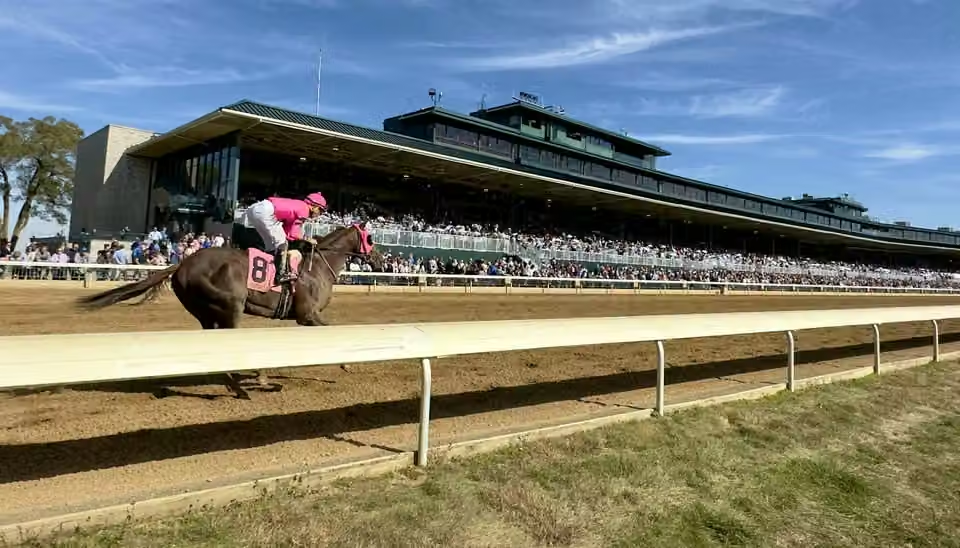
Tradition made by hand. Room for something new.
At college, making is part of learning.
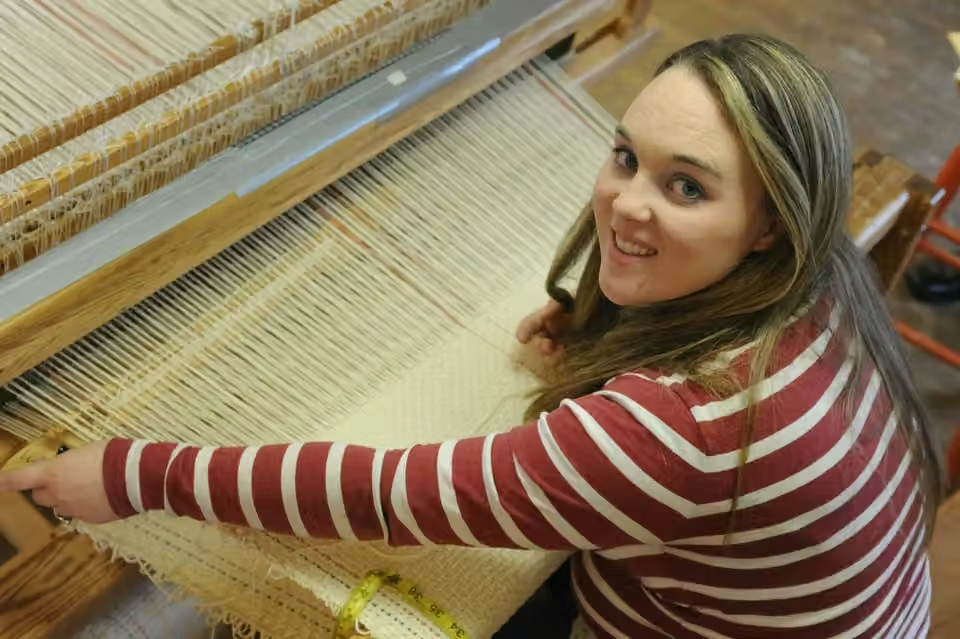
Berea College’s student craft program includes weaving, woodworking, ceramics and broommaking. Students do more than repeat established patterns: they design, experiment with materials and consider why an object is made a particular way.
The project has a long connection with the material culture of the Appalachian region. Daily objects, local techniques, and contemporary design meet here, allowing craftsmanship to preserve experience while expressing today's life.
Stitch by stitch, contemporary art takes shape.
The quilting tradition in Paducah is an important part of the local creative culture. The National Quilt Museum collects contemporary works from the United States and other countries, with all pieces created after 1980 and not limited to displaying antique quilts.
Artists organize color and shape through fabric, dyeing, patching, and sewing. After the practical craft is displayed, what remains important about the materials themselves is still significant, but the theme, composition, and personal expression also become focal points for viewing.
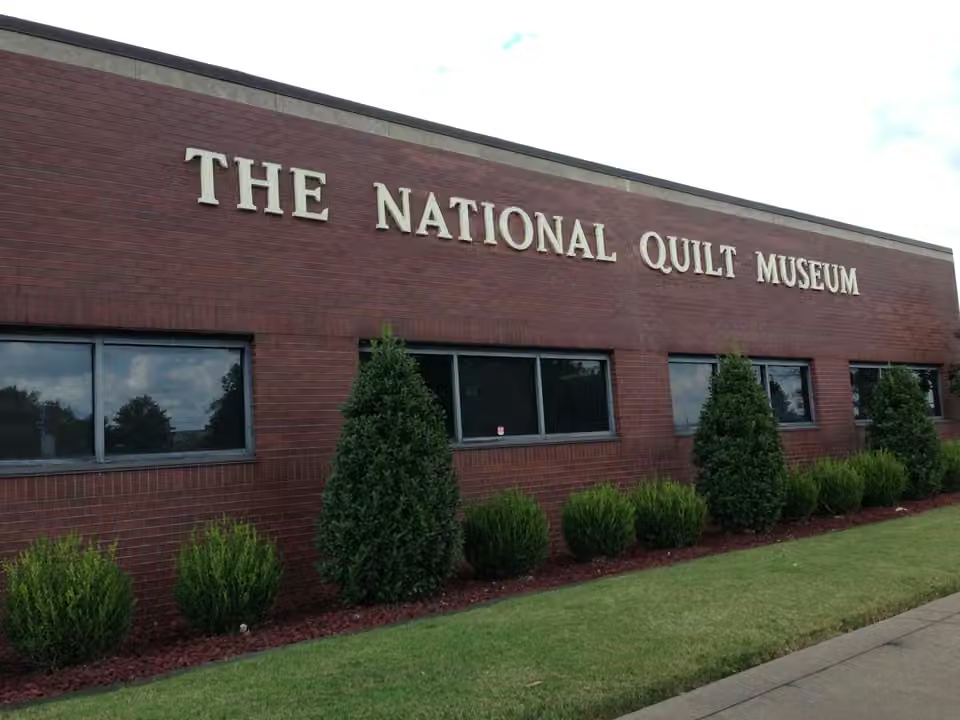
Museums, craft education, and community participation come together to preserve local culture. Here, visitors can not only see the works but also learn about the teaching and community efforts that keep these skills alive.
A sound born in the hills.
A new sound, drawn from many traditions.
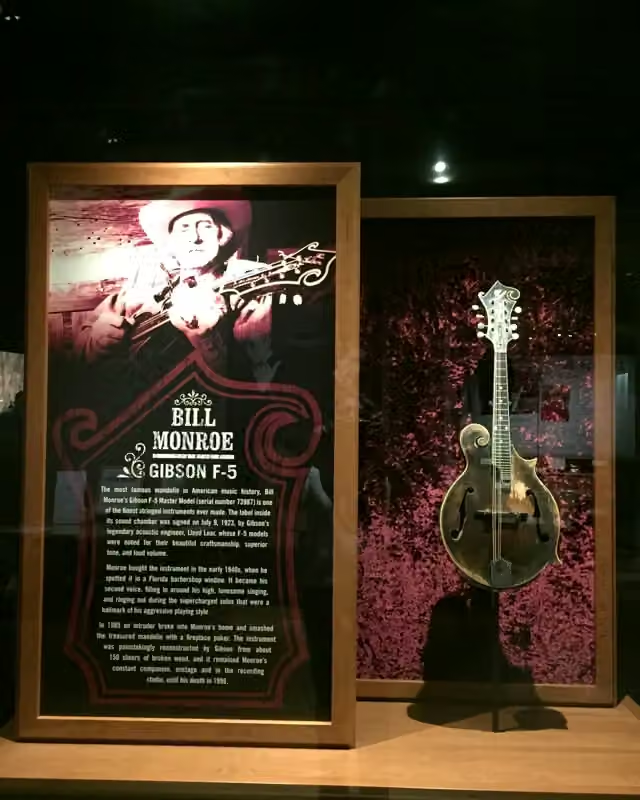
Born in Rosine, Kentucky, Bill Monroe shaped bluegrass through his mandolin playing and band. His music drew on string traditions from the British Isles, African American blues and gospel, mountain dance tunes and jazz rhythms.
The name of bluegrass music is tied to his band, but this genre did not suddenly emerge one day. Different musicians joined and left, and performances and recordings evolved to create the sound that became widely known.
Taking a solo. Answering one another.
In a classic band configuration, mandolins, guitars, violins, banjos, and basses each have their place. A tight rhythm, instrumental solos, and vocal harmonies make the performance both a showcase of individual skill and a testament to mutual listening.
The Owensboro Bluegrass Music Hall of Fame and Museum will collect, perform, and educate together. Music moves from Kentucky to a wider region and is continually changed by new performers.
Minutes on the track. Years of care.
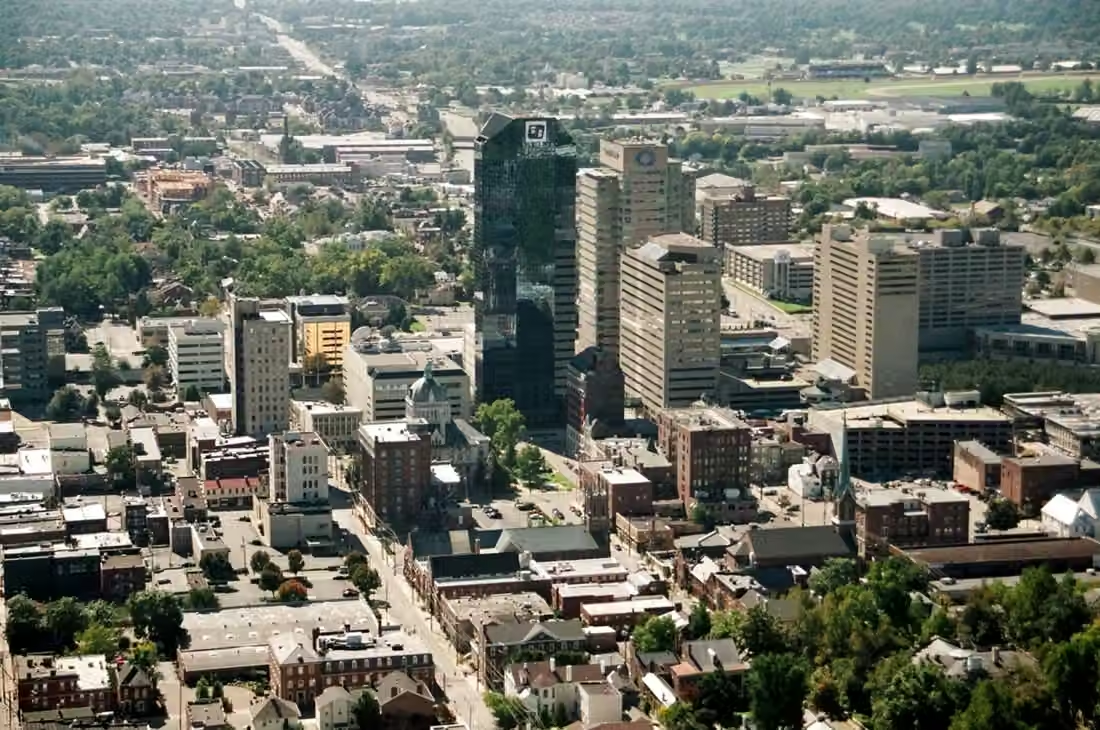
Lexington is not only a horse industry center but also a place where people can learn, get medical care, work, and live long-term. The horse farms depend on the city services, but they are not the same thing.
The daily life behind a racehorse.
Breeding, boarding, training, veterinary care, shoeing, and transportation comprise different professional activities in the horse industry. Beyond racing, there are riding lessons, recreational uses, and other purposes, each requiring different facilities and services.
The university survey on Kentucky divides its observations by at least one horse property, thus covering activities that are not fully captured by ordinary agricultural statistics. Understanding the horse industry requires specifying which part one is discussing.
Beyond the grandstand, a wider industry.
Keeneland held its first fall race meeting in 1936 and later became an important venue for both racing and sales. Events bring together owners, trainers, staff and spectators, while industry records and the library preserve decades of experience.
For equine services businesses, it is important to distinguish between the reception needs during the event period and the ongoing professional work throughout the year. Event heat can attract people, but it cannot replace the judgment on facilities, personnel, seasons, and long-term clients.
Underground, time stretches further back.
426milesThe length of explored and mapped caves, as announced by the National Park Service, is approximately 686 kilometers; exploration continues.
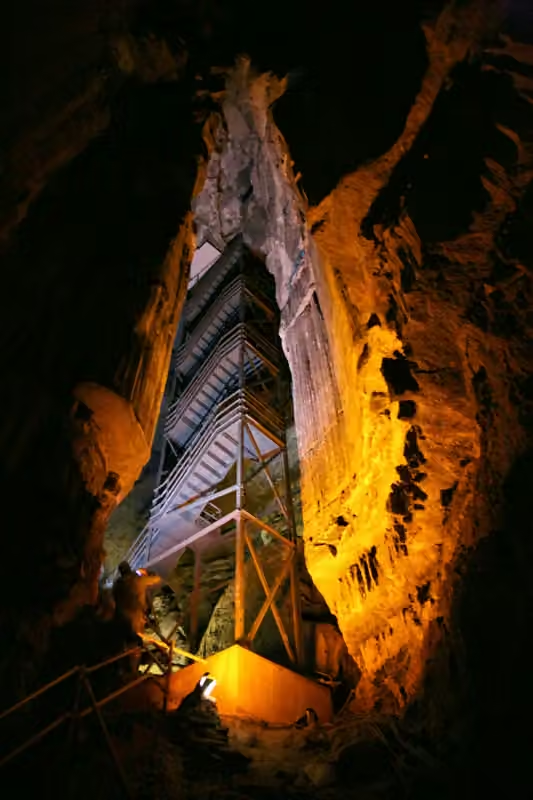
The world’s longest known cave system.
The length of the tunnel is not the distance a visitor can walk in one session. It comes from extensive exploration, measurement, and connections with different passages. The underground network is far more complex than what is presented by the entrance.
In 1972, cavers confirmed the connection between Mammoth Cave and Flint Ridge cave system, which changed people's understanding of this underground world. The new discoveries were not just an increase in numbers but also helped to understand the relationship between strata, water, and passages.
Remembering the people who opened the way.
Stephen Bishop served as a cave guide in a condition of slavery, exploring unknown passages and creating maps. His experiences link the history of cave exploration with labor, knowledge, and slavery history.
Today, meeting Mammoth Cave involves not only seeing the naturally formed space but also remembering those who have long observed, guided, and documented it.
A mountain gap that connected many routes.
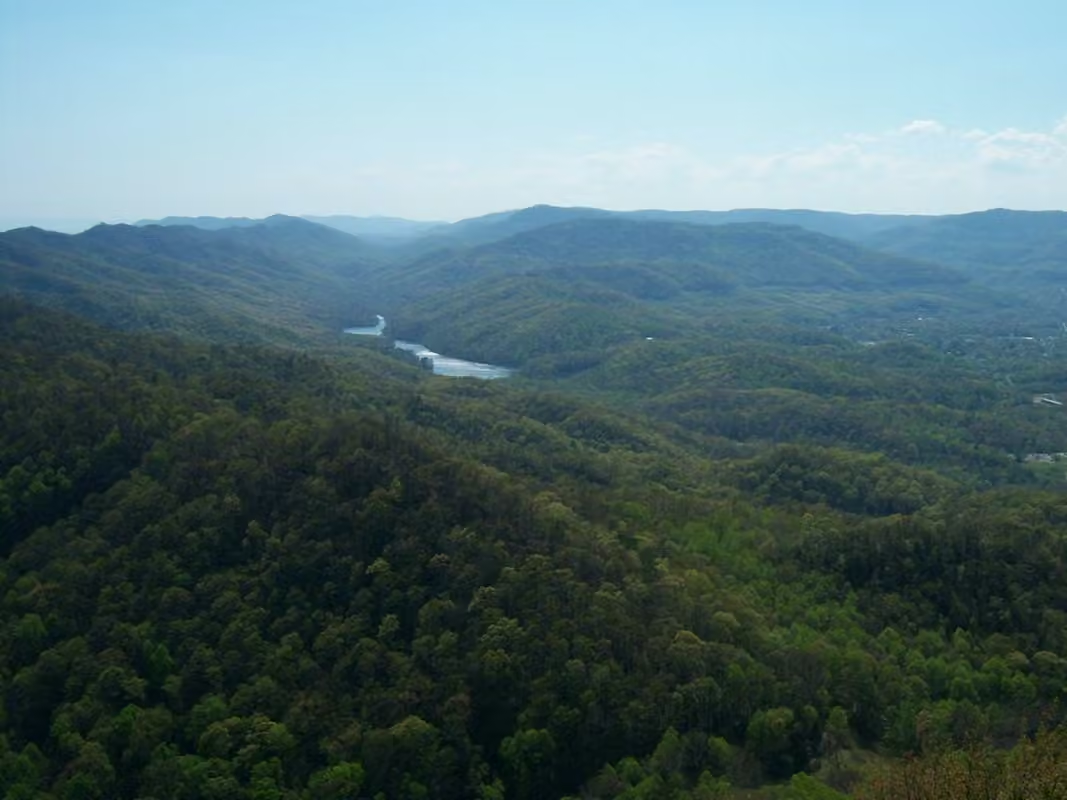
Prior to large-scale European immigration, the Cherokee and Shawnee, among others, had been using the mountain passes for trade and migration. The history of roads here cannot be told from the later westward expansion narrative alone.
Pinnacle Overlook sits within a landscape that crosses state lines: visitors park on the Kentucky side and walk into Virginia. Ridges, valleys and routes connect across the terrain, while administrative borders form a separate layer.
The mountainous region in the east of Kentucky differs from the central horse farms and western river regions. Distances, terrain, and transportation conditions change the lifestyle of communities and affect the scope of services that businesses can provide.
River cities, factories, and international markets.
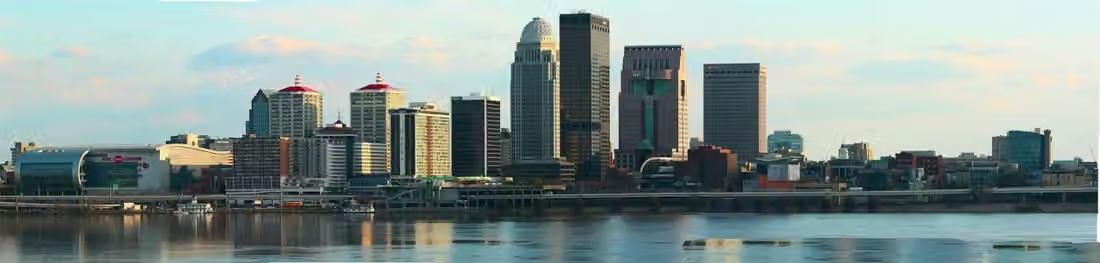
Up 5.65% from 2024
The leading export is not the best-known visitor attraction.
The February 2026 release by the state government states that aerospace products and components remain Kentucky's largest category of exported goods. Exports reached nearly $23 billion in 2025. Industrial machinery was approximately $5.7 billion, automobiles and parts were approximately $4.6 billion, and pharmaceuticals were approximately $3.6 billion.
These figures illustrate the importance of production, maintenance, warehousing, and trade activities. Export figures record cross-border flows of goods, not enterprise profits, and cannot be simply viewed as all-inclusive value added within the state.
Source: Kentucky state government, 2025 merchandise export figures released February 25, 2026, based on U.S. Census Bureau foreign trade data. Amounts are rounded as in the source.
Up 200 jobs from July, with approximately 249,800 in manufacturing. A small statewide change does not mean every region and industry moved in the same direction.
U.S. Bureau of Labor Statistics, released September 18, 2026; seasonally adjusted, with preliminary August figures.Industries & establishments · 2023
The work that keeps communities running.
Manufacturing, healthcare, retail, and transportation together make up local employment. Different cities have different focuses, and one cannot directly apply the characteristics of the horse industry or brewing to all enterprises in the entire state.
The state recorded 94,402 employer establishments and 1,708,602 paid employees. A single company may operate several stores, offices, or factories, so establishments are not a count of registered companies.
U.S. Census Bureau, 2023 County Business Patterns. The series primarily covers private, nonfarm establishments with paid employees. Employment is measured for the pay period that includes March 12. The 2023 release was the latest in this series available when checked; it is not a measure of current monthly employment.
Production lines and shaded public squares.
Corvette production moved to Bowling Green in 1981, making manufacturing and related visitor attractions part of the city's identity. But the city does not revolve around a single production line.
The center square, surrounding shops, and community activities showcase another side of how residents use the city. Industrial jobs and local services are interconnected yet distinct in their operations.
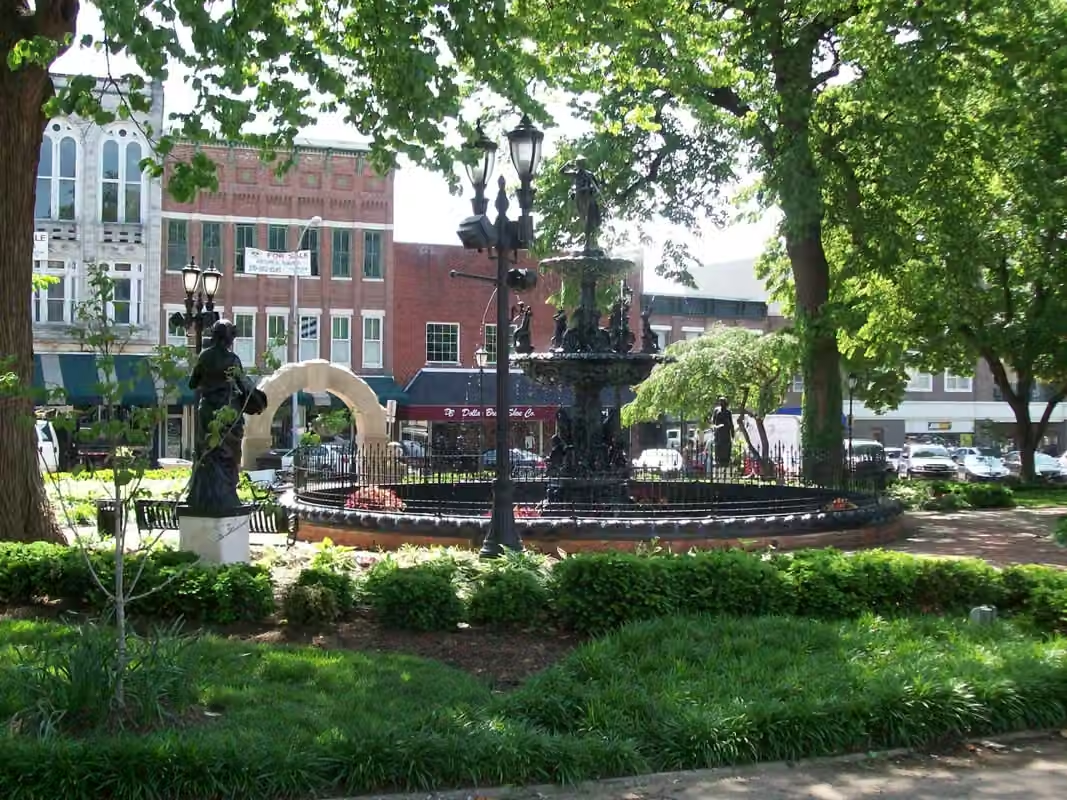
A warm classic as evening falls.
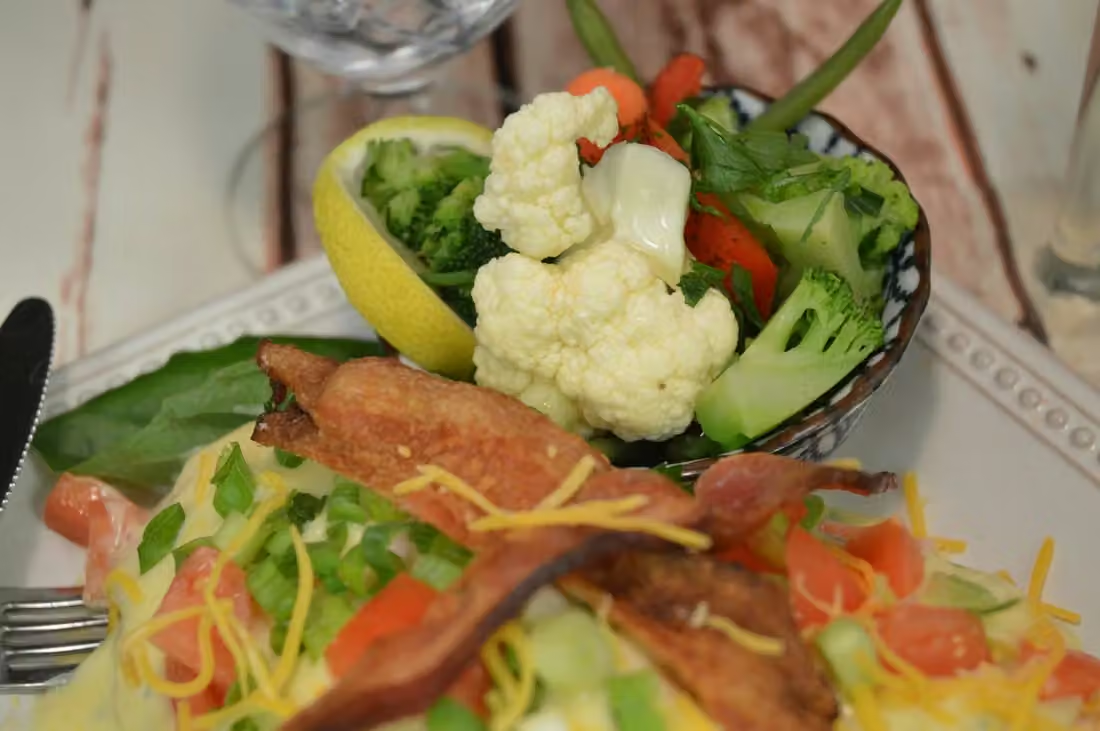
A city’s memory, served on a plate.
According to the Brown Hotel, its chef created this open-faced sandwich in 1926 for late-night diners. Turkey, toast, sauce and bacon became a hot dish that would come to represent Louisville.
The photos show how the dish is prepared in different places, not that it was taken at Brown Hotel. The cuisine is continually reinterpreted by different kitchens, and it is in this process of repetition and change that the local traditions are preserved.
A final touch of gold from the hills.
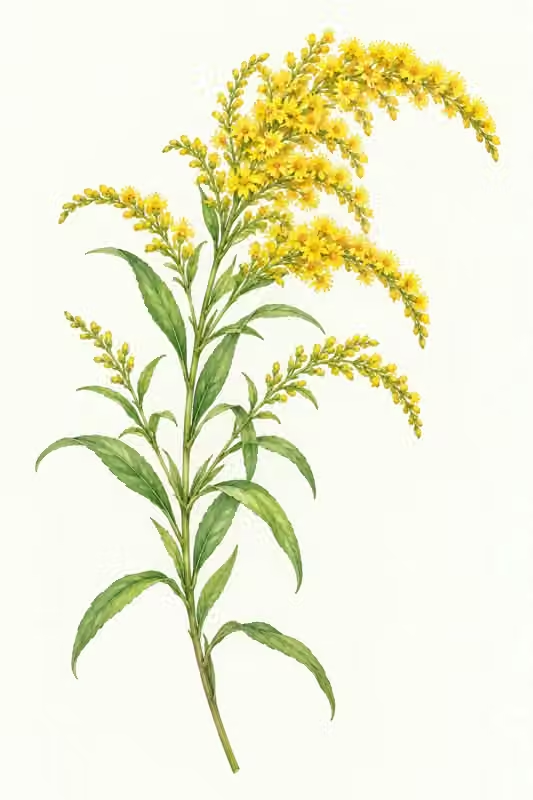
Kentucky designates goldenrod as the state flower. Small flowers cluster into bright displays, along with horse farms, rivers, and mountains, to create a local natural imagery.
Students at looms, cave guides, musicians, factory workers and people working with horses all contribute to Kentucky’s character. Together, their stories reveal a state beyond its familiar labels.
An editorial feature by STATE.REPORT. Image creators and licenses are credited below.
Sources & further reading
U.S. Census Bureau: state population estimates for July 1, 2025.
Berea College: weaving, woodworking, ceramics, and student design.
Paducah: A quilt tradition and creative city.
National Quilt Museum: contemporary works created after 1980.
Bluegrass Music Hall of Fame and Museum: Sources of music, bands, and traditional playing.
Keeneland Library: Opened in 1936 and history of the racetrack.
University of Kentucky: The 2022 equine survey, covering breeding, boarding, instruction, and other activities.
National Park Service: Known cave length and ongoing exploration.
National Park Service: Guide Work During the Period of Slavery and Cavern Exploration.
National Park Service: Geographical boundaries and indigenous pathways in tri-state area.
The Brown Hotel: the open-faced turkey sandwich created in 1926.
National Corvette Museum: the manufacturing tradition established locally in 1981.
Kentucky: Goldenrod is the official state flower.
Image credits & licenses
Mammoth Cave Mammoth Dome.jpg · Daniel Schwen · CC BY-SA 4.0。
Panorama de Louisville.jpg · Anindya Chakraborty · CC BY-SA 3.0。
LexingtonDowntown.JPG · Madgeek1450 at English Wikipedia · Public domain。
Fountain Square Park, Bowling Green, Kentucky.JPG · OPMaster ( talk ) · CC BY-SA 3.0。
Pinnacle overlook.jpg · J654567 · CC BY-SA 3.0。
Berea College Weaving studio photos (20143132814).jpg · IMCBerea College · CC BY 2.0。
Bill Monroe's Mandolin Gibson F-5.jpg · diane cordell · CC BY 2.0。
Lincoln Heritage Scenic Highway - Bourbon Barrels in a Local Warehouse - NARA - 7720083.jpg · Unknown author Unknown author or not provided · Public domain。
Hotbrown 1 (26497668039).jpg · John Freeman · CC BY 2.0。
National Quilt Museum.jpg · Road Travel America from USA · Public domain。
Keeneland's Winning horse returns.jpg · Kenneth Dale Silvestri · CC BY-SA 4.0。