

Minnesota
Between lakes and rivers, a history of connections unfolds.
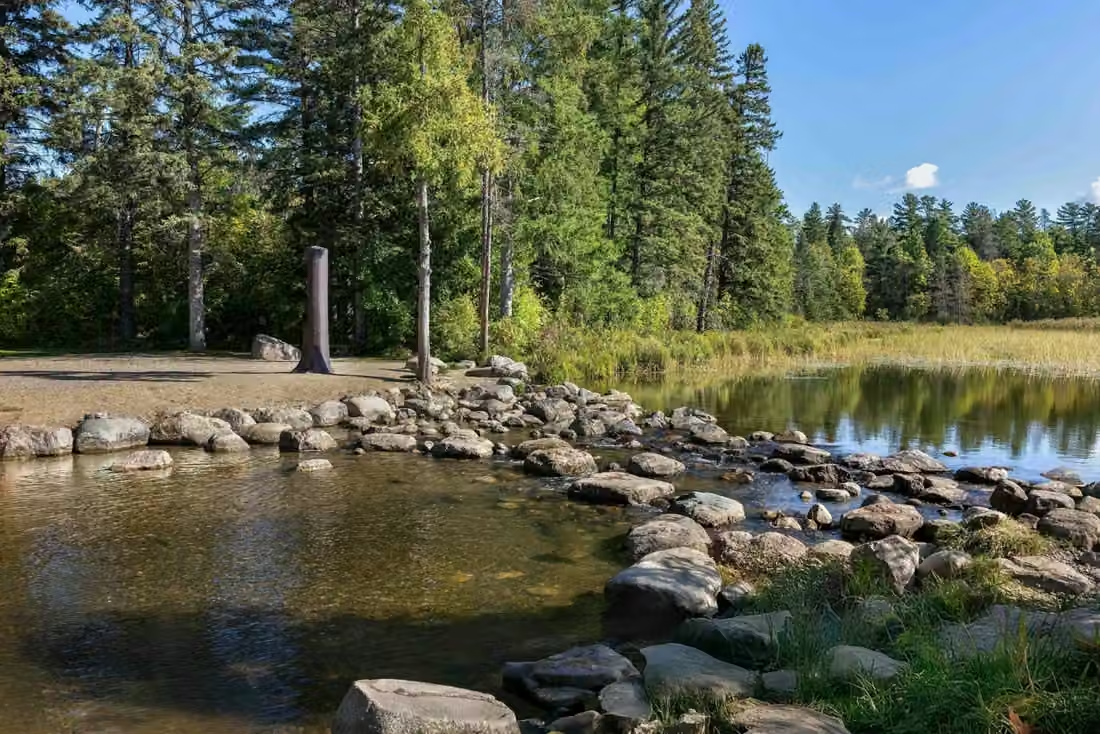
A great river begins with a stream you can wade across.
At the mouth of Itasca Lake, the Mississippi River is about 18 feet wide, or roughly 5.5 meters. It's hard to connect the shallow waters before us with the mighty river that later traverses the heart of America; this scale difference is Minnesota's most poignant introduction.
Lakes are not just a backdrop for travel. Hydro power once powered mills, and lake ports carried minerals far away. The northern waterways also bore the history of indigenous life and trade. There is always a real connection between cities and wilderness.
The state's appearance is not uniform: Twin Cities embody urban life and work, while the northeast faces Lake Superior, and the west and south are dotted with farms and small towns. One must recognize Minnesota through its waters, but also see the land beyond its shores.
Twin Cities, distinct beginnings.
Minneapolis and Saint Paul are neighbors, each with an identity of its own.
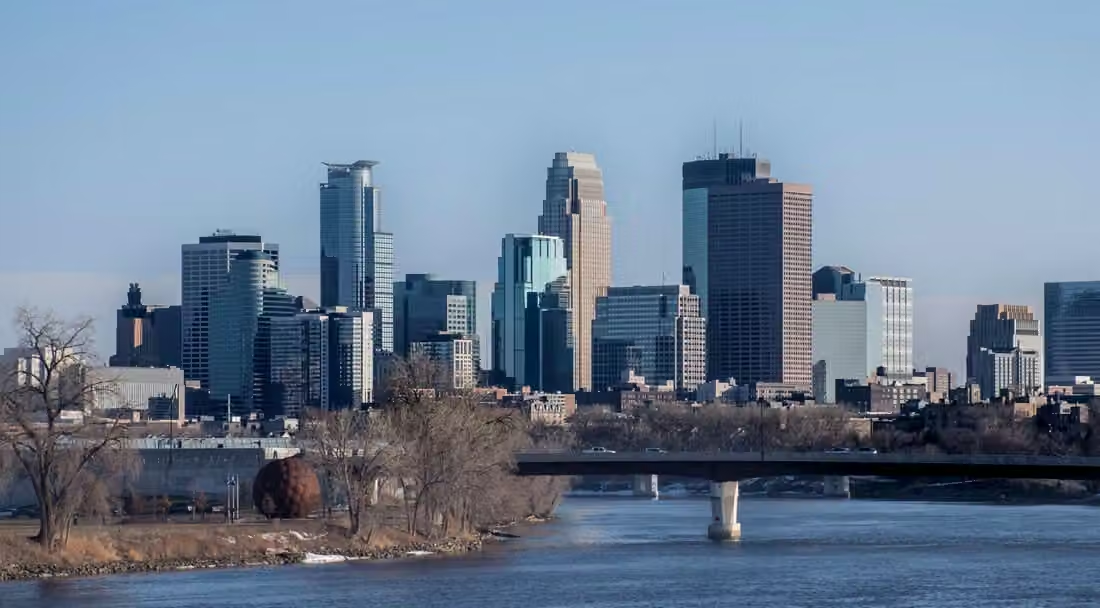
Minneapolis: industry beside the falls
St Anthony Falls provided the power needed for early sawmills and flour mills. The western prairie supplied the raw materials, and railroads connected the mills to the market. Migrant laborers turned this system into a routine production.
Today's riverbank is no longer defined solely by the flour mill. Old industrial buildings, public pathways, and contemporary urban life coexist, and it is only by visiting the ruins of the mill that one can read the changes behind the skyline.
Saint Paul: capital streets and a railroad past
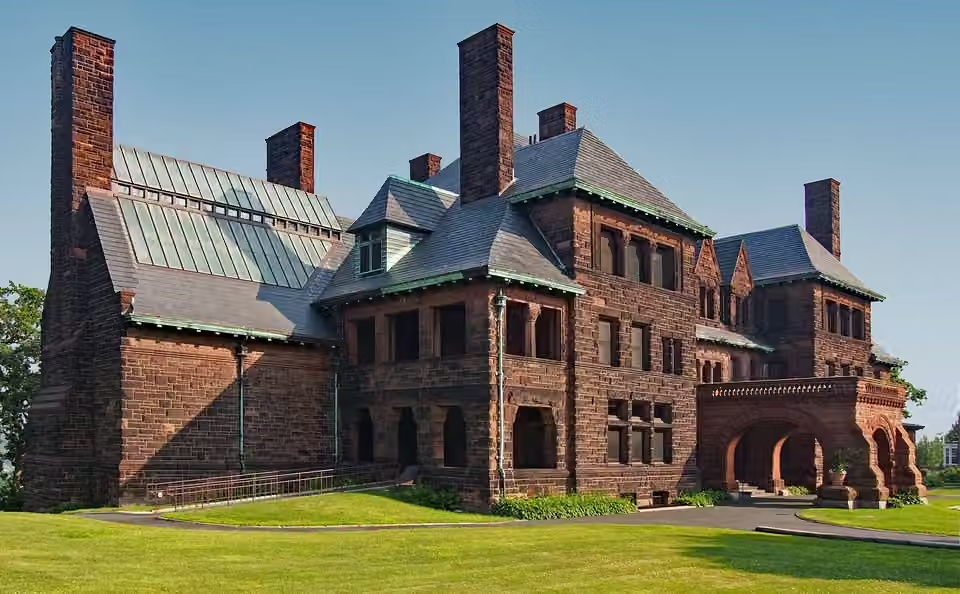
Saint Paul is Minnesota’s capital. The James J. Hill House on Summit Avenue preserves an architectural expression of wealth accumulated through the railroad business.
Built in 1891, this residence presents a family's life while also showing the relationship between railroads, cities, and urban economies. The twin cities share connections to the metropolis, but each retains its own historical focus.
Industrial history within the stone walls.
Advances in production technology, including a renewed focus on worker safety.
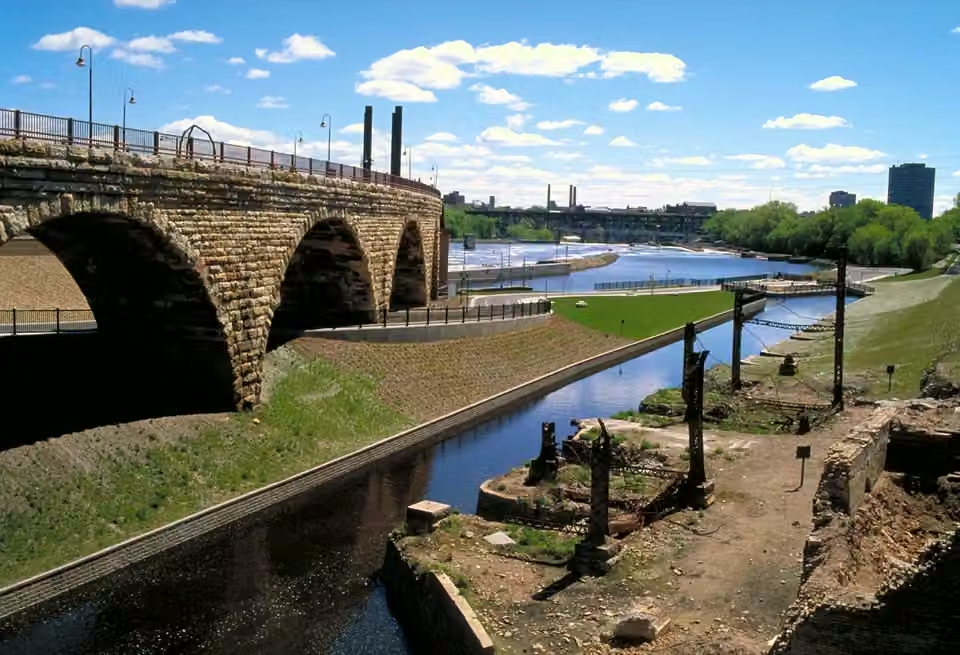
In 1878, a dust explosion occurred.A devastating accident struck the Washburn mill. During rebuilding, ventilation, dust collection, and new milling equipment became priorities, bringing industrial efficiency and worker safety into the same discussion.
The site found a new use in 2003.After the mill closed, a fire damaged it further. Its surviving stone walls were eventually incorporated into Mill City Museum, turning the old building into a place to explore labor, technology, and urban change.
Along a winding shore, the world slows down.
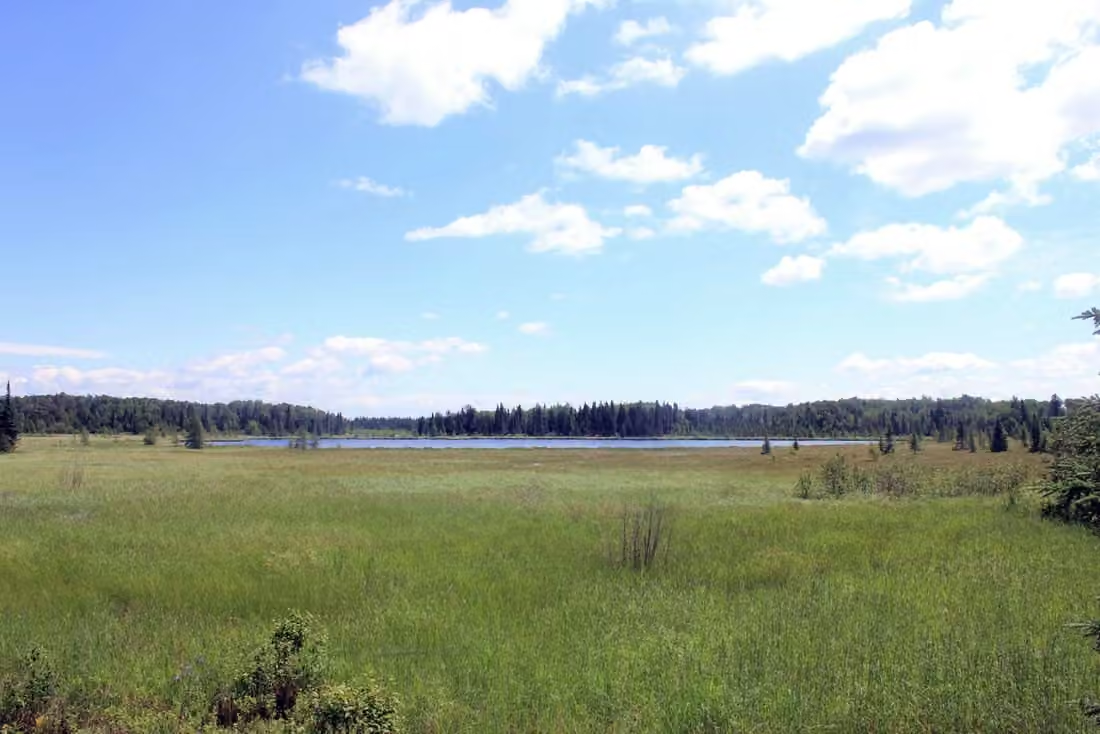
First the rock, then the glaciers, and finally the lakes before you.
Exposed ancient rocks from the park have undergone volcanic activity, metamorphism, uplift, and erosion. Glaciers removed younger cover layers, which retreated, allowing meltwater to fill low areas, creating lakes and swamps.
The seemingly calm surface actually preserves a long geological process. Islands, rocky shores, and forests interlace, making the spatial experience here vastly different from that of a city: distance is no longer measured solely by roads; waterways and seasons are equally important.
Lodging, guiding and outdoor services in the northern lake country depend on these local conditions. Visiting seasons, access and conservation requirements all shape the work; a lake view is only one part of the picture.
Water routes—and the paths between them.
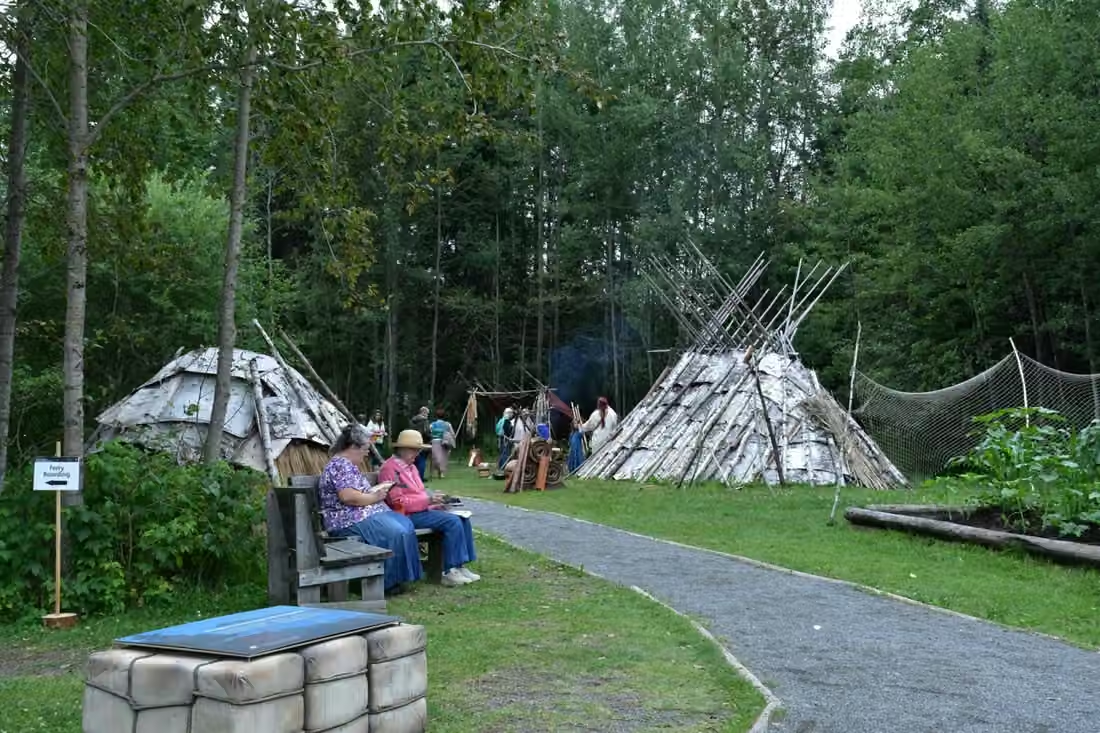
Grand Portage connects the Ojibwe homeland with the history of the North American fur trade. Canoe travel was not an uninterrupted journey: overland portages between waterways also determined how goods and people moved.
Indigenous communities here are not confined to historical exhibits. The Grand Portage Band continues to live here and participates in preserving and interpreting the site. Trade history includes local knowledge, labor, and community relationships that continue today.
A route matters for the places it connects—and for the people who know and maintain it.
A Great Lake connected to the ocean.
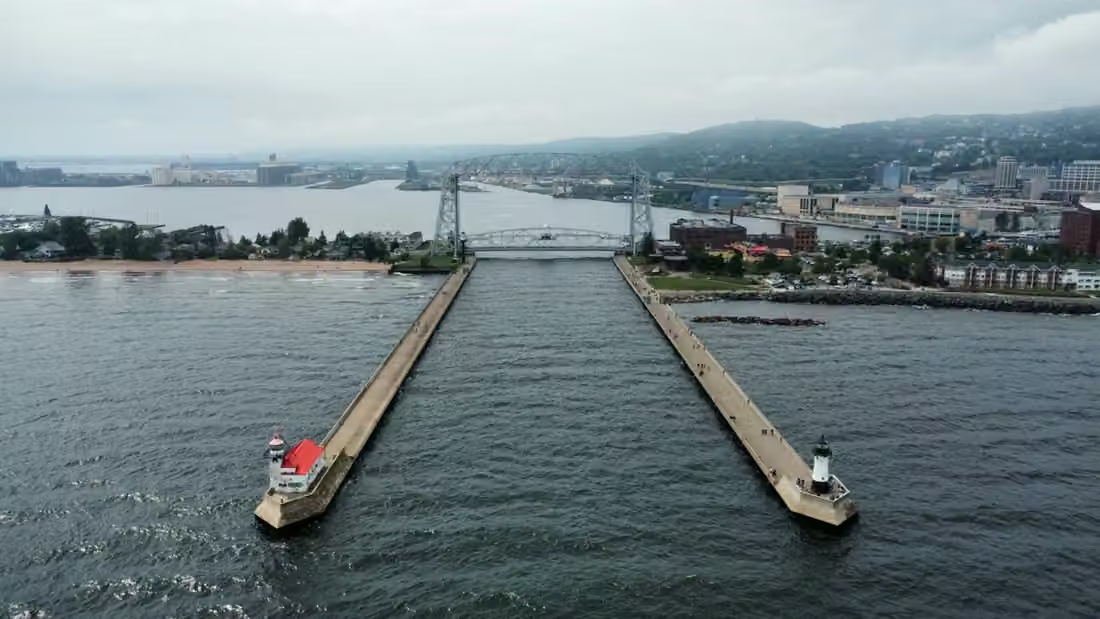
Ore, grain, and heavy cargo change course here.
Duluth and Superior, Wisconsin, together form the Twin Ports. The Great Lakes–St. Lawrence Seaway, railways, and roads connect them with inland markets. Bulk cargo and large equipment create a working landscape distinct from a container port.
The waterway cargo volume for the 2025 season, as announced by the Harbor Authority, is approximately. 25,300,000 short tons, down 14.6% from the previous shipping season. Iron ore accounted for about 16.5 million U.S. short tons. These figures cover the Twin Ports in both states and cannot all be assigned to Minnesota.
For related companies, the schedule, loading and unloading equipment, cargo dimensions, and subsequent transportation are more specific than a general "port advantage." Maintenance during the winter lay-off period is also part of this transportation system's cycle.
Source: Duluth Seaway Port Authority, season summary of January 30, 2026. U.S. short tons differ from metric tons; the 2025 shipping season continued into January 2026.
A city shaped around care.
Clinical care, research, and education bring different professions together around shared questions.
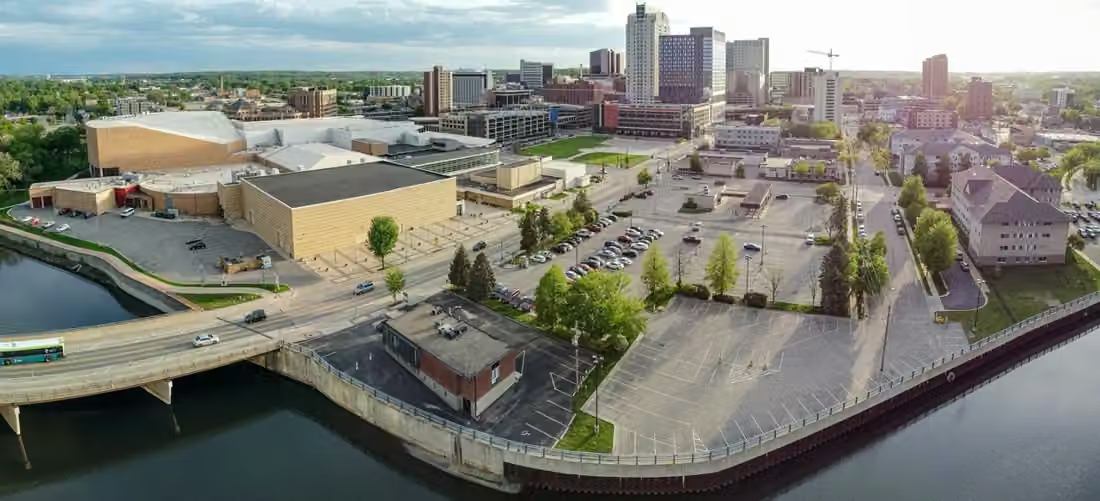
The multi-specialty collaborative model of Mayo Clinic is an important clue to understanding Rochester. It emphasizes the involvement of different professionals in care, linking clinical, research, and educational efforts, rather than breaking down complex needs into isolated services.
This urban characteristic also brings specific commercial demands: patient and accompanying stays, employee commutes, equipment maintenance, and professional procurement differ from general tourist traffic. The size of a healthcare facility should not be directly equated with the expected income of any nearby retail store.
Healthcare services and medical product manufacturing need to be distinguished. The former focuses on diagnosis and care, while the latter involves research, manufacturing, quality control, and sales. They are interconnected yet serve different clients, facilities, and management requirements.
Recent exports reveal another side of manufacturing.
Up 14% from a year earlier. State Department of Employment and Economic Development, released September 17, 2026.
Optical and medical products, electrical equipment, and machinery are the top three export categories for the season. They suggest that Minnesota's industries extend beyond lakes, farmland, and traditional resources to include specialized manufacturing and its supply networks.
Up 7% year over year. This category covers several products and should not be interpreted entirely as healthcare service revenue.
Growth is 21% year-over-year. Canada and Mexico are important markets driving the growth.
Up 13% year over year. Customer locations and cross-border transport matter alongside production conditions.
Above are statistics for this season's exported goods; separate calculations are made for total state enterprise revenue, port cargo volume, and healthcare facility income.
Employment across the state
In August 2026, the nonfarm jobs in the state, after seasonal adjustment, were 3,068,600It is the preliminary value released by the Bureau of Labor Statistics on September 18, and revisions may occur subsequently. Professional services in the metro area, healthcare in Rochester, and industries in the northern region need to be examined separately. The unemployment rate stands at 4.4%. This is an increase of 43.9 thousand compared to the same period last year.
Industries & establishments · 2023
The work that keeps communities running.
Annual establishment data can supplement industry distribution: healthcare, manufacturing, retail, and accommodations cater to different local needs. When selecting actual operating locations, specific communities, employee sources, and transportation and site availability must also be considered.
The state recorded 154,455 employer establishments and 2,803,410 paid employees. A single company may operate several stores, offices, or factories, so establishments are not a count of registered companies.
U.S. Census Bureau, 2023 County Business Patterns. The series primarily covers private, nonfarm establishments with paid employees. Employment is measured for the pay period that includes March 12. The 2023 release was the latest in this series available when checked; it is not a measure of current monthly employment.
Pink and white, delicately northern.
Showy lady’s slipper · State flower illustration

The showy lady's slipper became Minnesota's state flower in 1902. Its pouch-shaped flowers and pink-and-white coloring make it unmistakable. Admiring the plant also means valuing the wetlands and woodlands that sustain it.
The state bird selected in 1961 is the common loon. From water birds to wildflowers, Minnesota's natural symbols take the eye from expansive lakes to more subtle life. There are shallow streams one can walk along, and entire northern expanses that require patience to understand.
An editorial feature by STATE.REPORT. Image creators and licenses are credited below.
Sources & further reading
U.S. Census Bureau: state population estimates for July 1, 2025.
Minnesota Department of Natural Resources: Outlet of Itasca Lake marks the source of the river.
National Park Service: The Historical Connection Between the Flour Industry and Transportation Services.
Minnesota Historical Society: the Washburn mill, fire, rebuilding and the museum.
The Minnesota Historical Society: A residence built in 1891 during the Age of Railroads.
National Park Service: Home, Trade, and Local History of the Ojibwe.
National Park Service: Ancient rocks and glacial processes in Voyageurs National Park.
Mayo Clinic Historical Archives: Collaborative Multidisciplinary Approach, Education, and Research.
Minnesota Department of Natural Resources: the showy lady’s slipper and common loon.
Image credits & licenses
Gfp-minnesota-voyaguers-nationa-park-landscape-and-lake.jpg · Yinan Chen · Public Domain。
Minneapolis Skyline looking south.jpg · BpA9543 · CC BY-SA 4.0。
James J. Hill House 2013.jpg · McGhiever · CC BY-SA 3.0。
Rochester Minnesota Skyline 01.jpg · Wikideas1 · CC0。
The Ojibwe village has several Ojibwe lodges and gardens. (75472724-1dd8-b71b-0bbc-8450fd9fb492).jpg · NPS · Public domain。
Headwaters of the Mississippi River at Itasca State Park.jpg · Robbschultz69 · CC BY-SA 4.0。
Duluth, MN - Aerial Lift Bridge and harbor, aerial, August 2024.jpg · Bspor.88 · CC0。
Mill City Museum Area.jpg · National Park Service · Public domain。