

Missouri
Beyond two great cities, rivers branch in many directions.
From the Missouri River to the Mississippi River, and south into Ozark, the state's face changes repeatedly. Jazz and barbecue, pages and old courthouses, springs and universities: these are the sights that define the landscape.
One state, distinct urban identities.
Music, neighborhoods, and life across a state line.
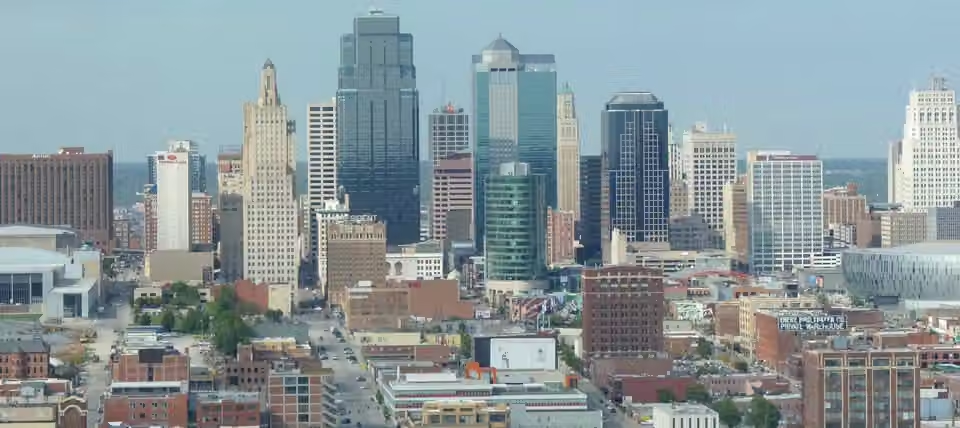
Jazz, barbecue, and public art give Kansas City's neighborhoods their character. The 18th and Vine district preserves music and Black community history, while museums and public spaces reveal other sides of the city.
Kansas City metropolitan area spans over Missouri and Kansas two states. Though the city names are similar, this does not mean that the administrative and operational requirements are the same; when observing specific locations, state boundaries must still be distinguished.
A river port, national monuments, and specialist work.
The grand arch serves as a prominent city image, yet it is not just a hub for tourists. The rivers, neighborhoods, research areas, and manufacturing sectors coalesce to form the local economy, providing the city with various work rhythms.
The state capital of Missouri is Jefferson City, not the two most famous cities. To understand the whole state, one must also include the mid-state university town, the northern agricultural lands, and the southern mountain regions in their view.
Read the history beside the Gateway Arch.
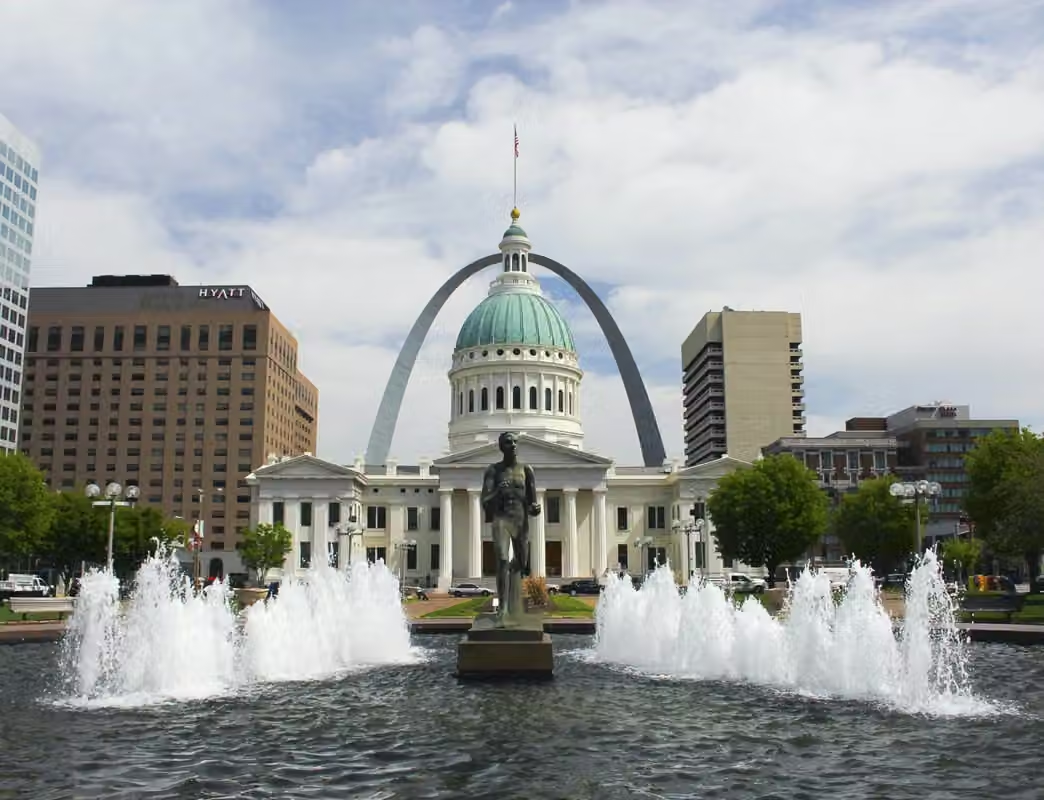
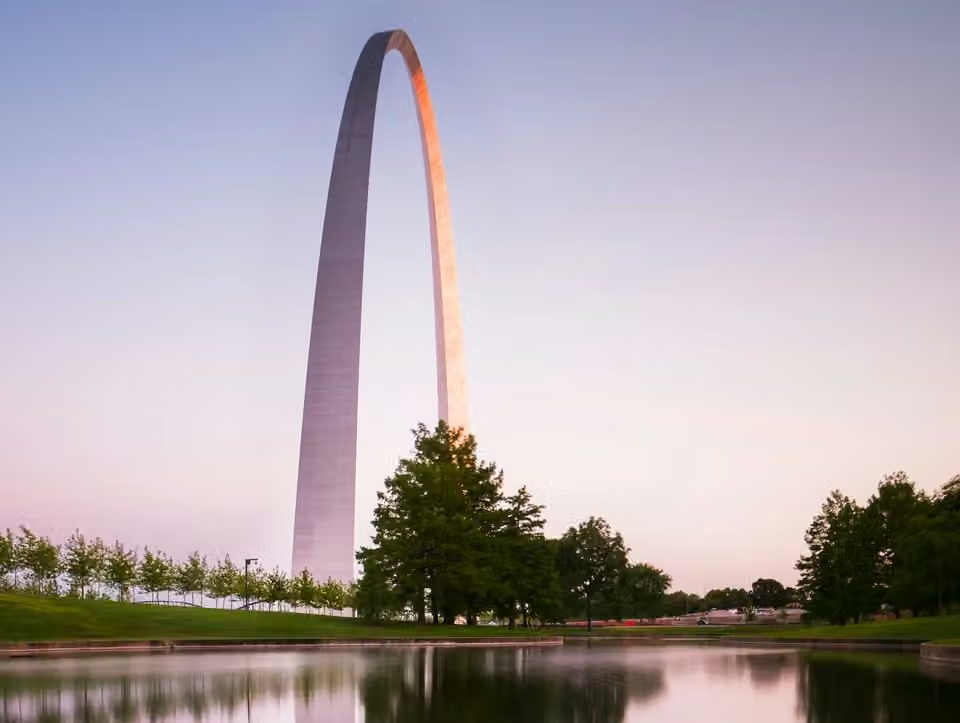
The design by Eero Saarinen, featuring stainless steel curves, became a city landmark. The Gateway Arch stands approximately 192 meters tall and has a simple yet complex shape, its construction relying on precise engineering and construction.
Westward expansion was not the same story for everyone.
This memorial building is connected to the history of westward expansion in the United States. For different groups, expansion could mean opportunity, or it could mean conquest, loss of land, and displacement from home.
The explanation of national parks brings these complex experiences together. Appreciating the beauty of architecture can also serve as a beginning to further understanding of history.
The freedom suits at the Old Courthouse.
The legal struggle of Dred Scott and Harriet Scott for family freedom was heard in Old Court. The two trials in 1847 and 1850 were important stages of this long case.
The lawsuit did not yield the sought legal outcome but deeply revealed the conflict between slavery and rights. The buildings along the river, therefore, are not just the cityscape but also the historical sites of specific individuals.
Many people make a city’s rhythm.
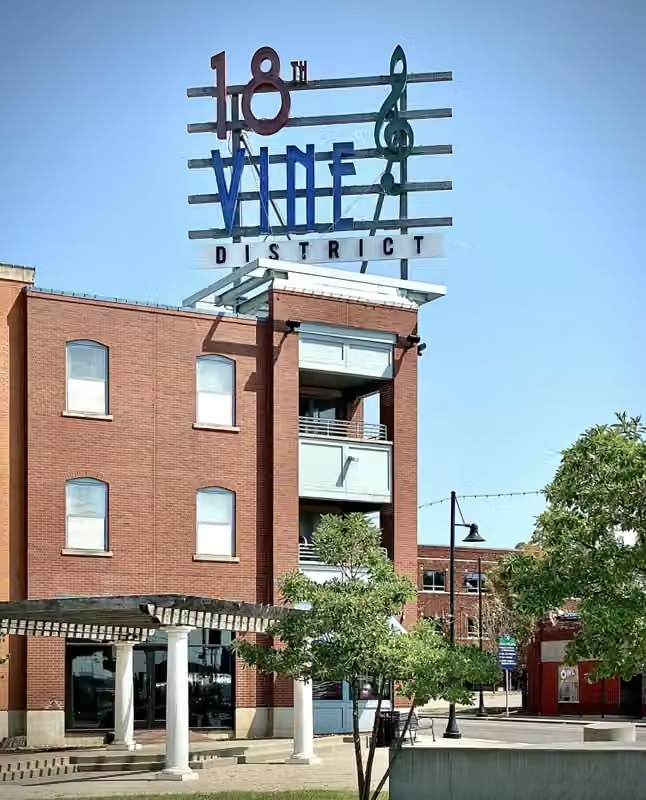
Kansas City jazz grew through African American musicians, clubs and years of live performance. Bennie Moten, Count Basie and Mary Lou Williams each left a distinct creative legacy here.
The melody with a blues flavor, the swinging rhythm, and the improvisation develop between the band and the audience. This sound is not a fixed recipe but the result of the players learning from and responding to each other.
A museum can be a classroom.
The American Jazz Museum brings together collections, live performances, and education. Young musicians learn to play, listen, and collaborate, giving the city's musical traditions new participants.
Know your music district, it's not just about scouring the list for familiar names; you can also see how performance spaces, community organizations, and teaching initiatives work together to sustain a culture.
Art steps outside the gallery.
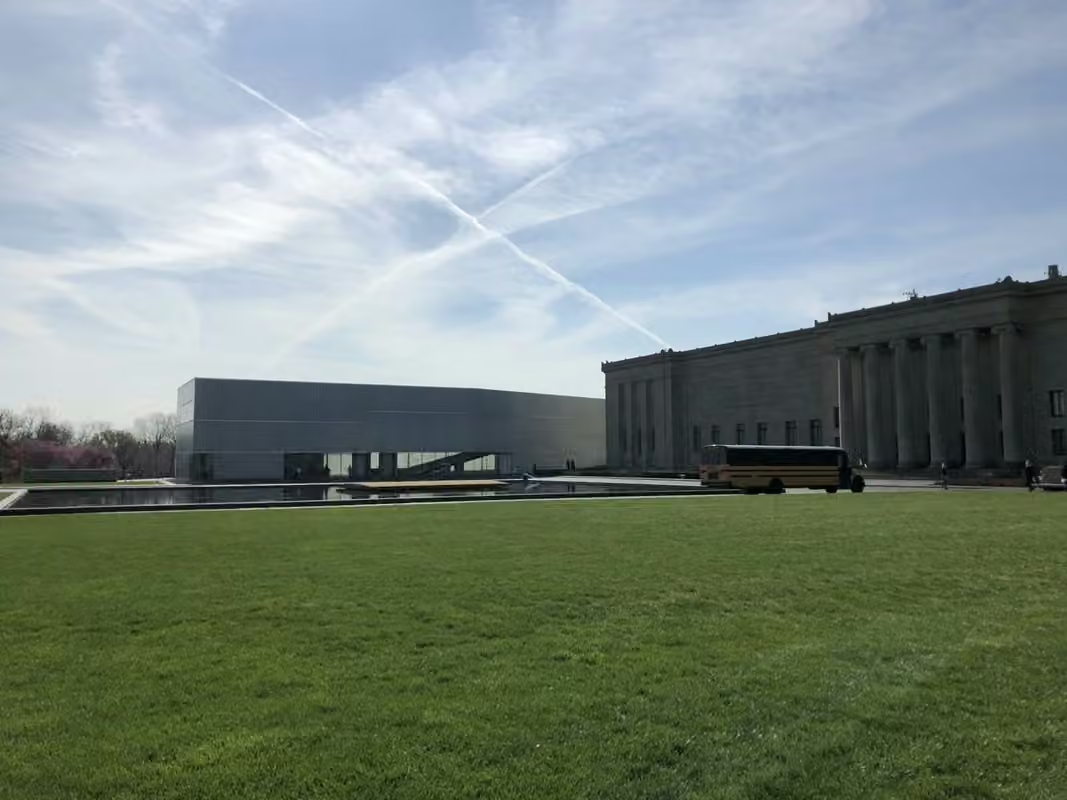
Outdoor sculpture and lawns bring art into everyday walks. The giant Shuttlecocks, completed by Claes Oldenburg and Coosje van Bruggen in 1994, initially prompted debate and later became a familiar part of the city’s public landscape.
How a work is accepted often takes time. Museums' related exhibitions preserve sketches, models, and the design process, allowing viewers to see the trials and discussions behind familiar images.
A city’s flavor, made in many kitchens.
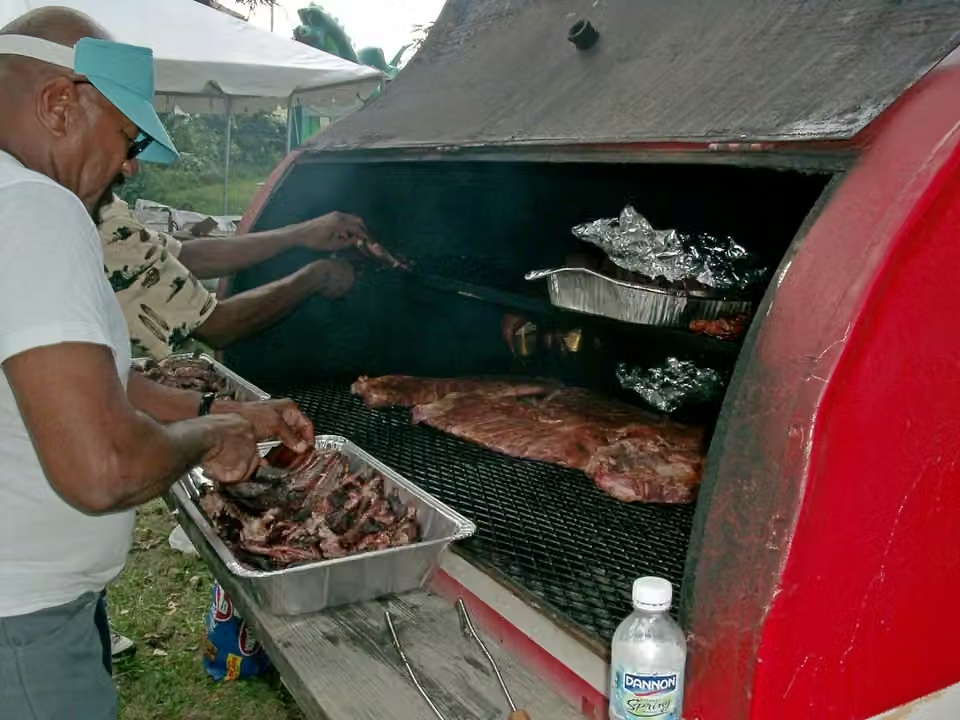
Henry Perry played an important role in the history of Kansas City barbecue. Later, different chefs and families continued, modified, and developed their own selections of meats, smoking methods, and sauce styles.
This history is closely tied to the labor of African American entrepreneurs. A place-based flavor is not a sudden city brand but rather evolves from selling, training, family-run operations, and interactions with patrons.
The photo depicts a street gathering where food presents one side of public life. A barbecue can belong to a restaurant or to a community gathering; under the same dish name, there are still many different methods.
Some rivers flow into literature.
A lived childhood becomes a fictional town.
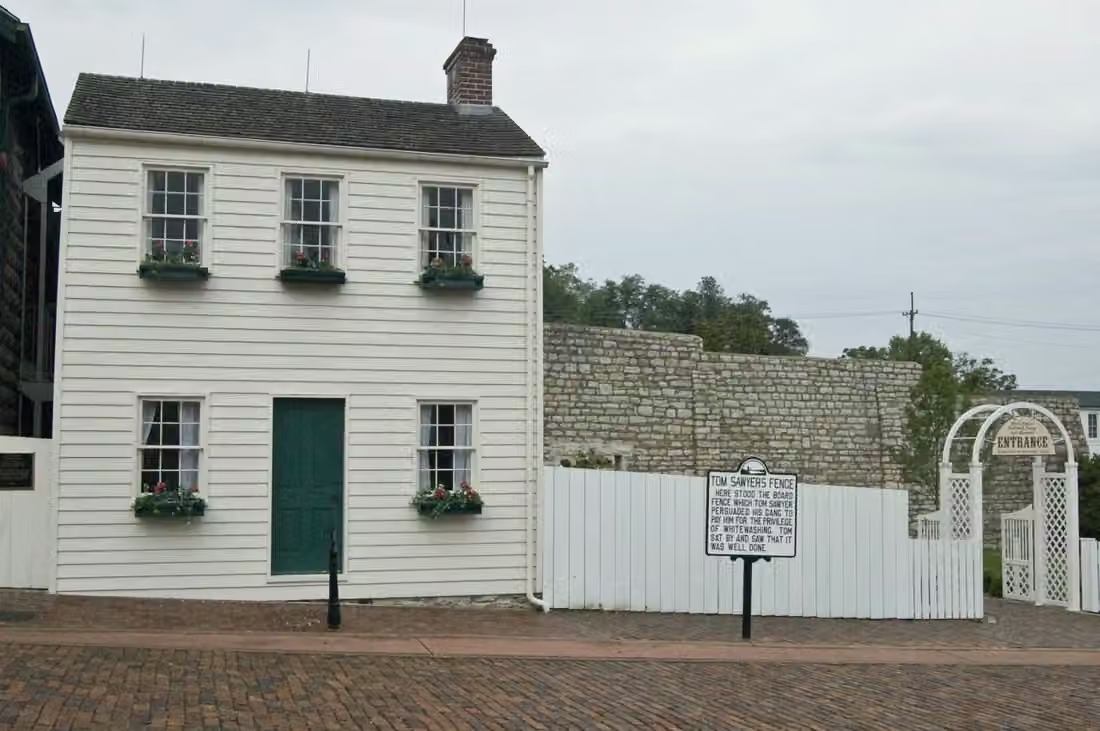
Mark Twain's childhood in Hannibal supplied rich material for his writing. Through houses, people, and collections, the boyhood home museum shows how local life became stories.
Preserving work has its own history: The childhood home opened to the public in 1912, followed by the addition of surrounding buildings, exhibits, and collections over the years. The current visiting environment is the result of years of preservation and interpretation work.
Real towns are intimately connected to the worlds of novels, yet never fully overlap them. Literature preserves the details of life, reorganizing these experiences through imagination, humor, and criticism.
Blue-green water from an unseen source.
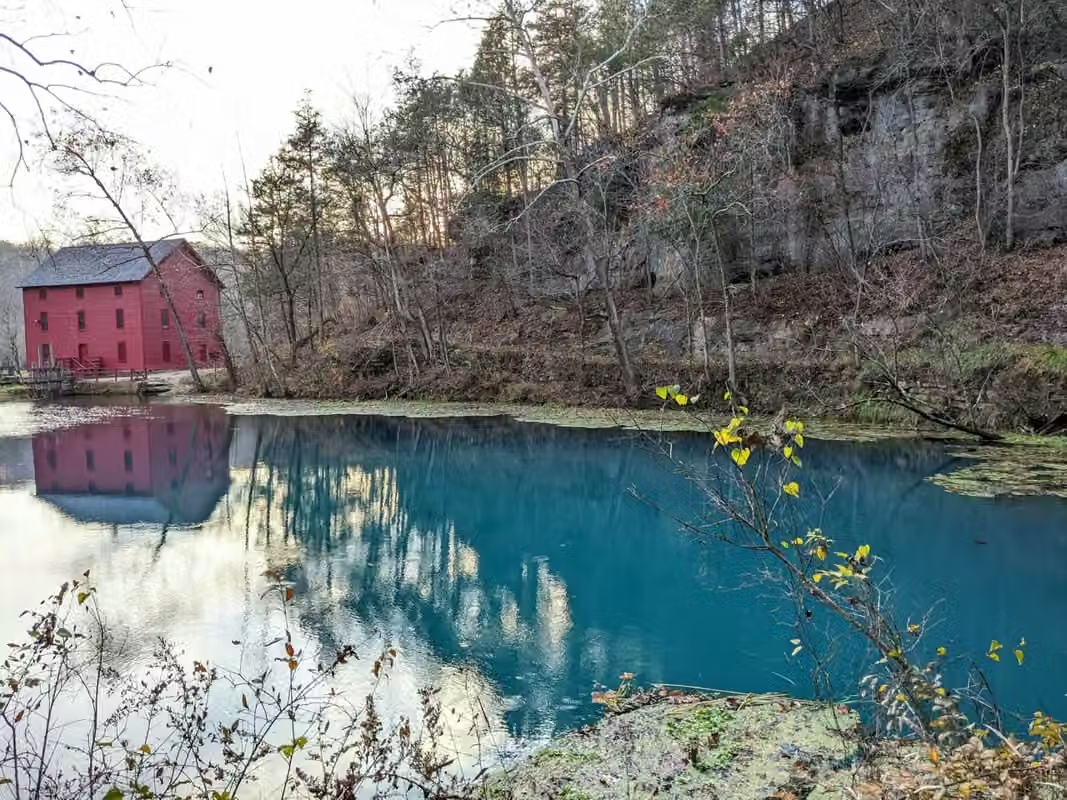
The landscape above, the passages below.
Ozark limestone, dolomite, and karst terrain form caves, sinkholes, and springs. Some rainfall and surface runoff infiltrates underground and re-emerges through channels.
Alley Spring is connected to underground water systems around Summersville to the northwest. What looks like an isolated pool is part of a much wider landscape.
Clear water is not necessarily safe to drink.
Springs provide more stable temperatures and flow to rivers and support diverse aquatic environments. Pollutants can also move through underground channels, thus protecting springs cannot only involve monitoring the spring outlet.
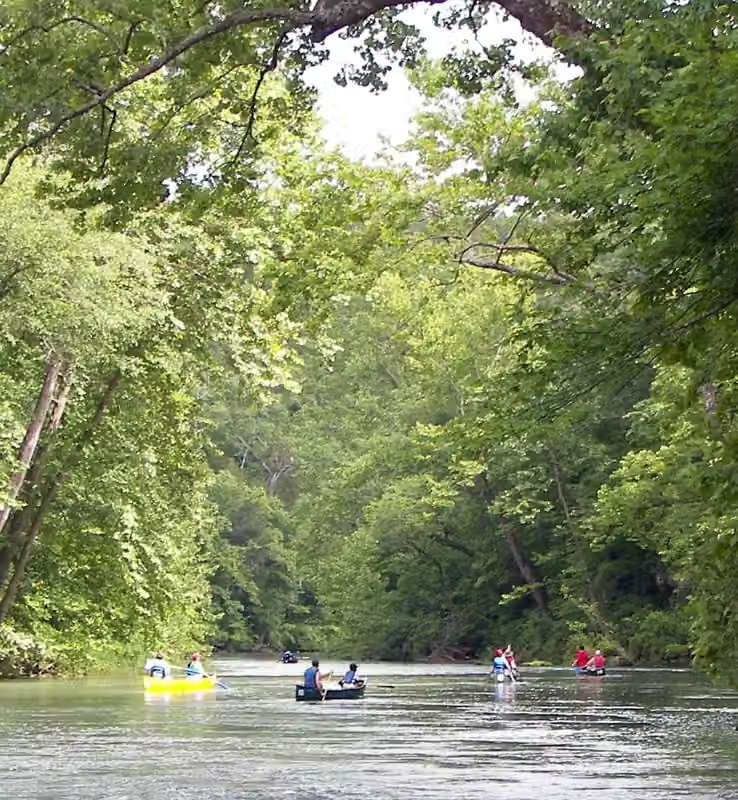
The Current River and other waterways connect forests, uplands and communities. Alongside paddling, walking and wildlife observation, watershed management is part of everyday life here.
An old railroad, traveled at a new pace.
About 386 kilometers, connecting Clinton and Machens.
The Katy Trail utilizes the original Missouri-Kansas-Texas Railroad corridor, with most sections close to the Missouri River. The former transportation route is now a space for walking and cycling.
Along the route, towns, stations, and valleys connect travel beyond just a distance. Supplies, accommodations, repairs, and local businesses also connect in new ways.
Knowledge grows on campus and reaches into the fields.
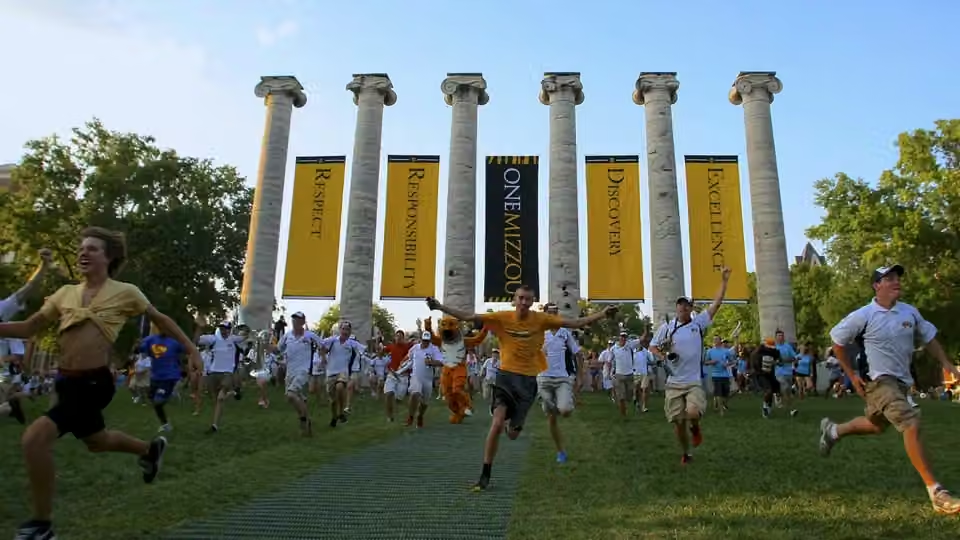
Six columns preserve a campus memory.
The old teaching building at the University of Missouri was destroyed by a fire in 1892. The six stone pillars that remain have become a symbol of the campus. Archival photos of the buildings and the fire provide clear evidence of this memory.
University town living also includes teaching, research, healthcare, and public services. The campus shares people, space, and daily needs with the surrounding community, not two worlds isolated from each other.
Plant science links the laboratory and the field.
The Donald Danforth Plant Science Center in St. Louis was founded in 1998. Its research addresses crops, food, energy, and the environment. Basic research, scientific facilities, and training contribute to the region’s long-term research capacity.
The existence of research institutions does not mean that results can immediately turn into products. There is still validation, collaboration, and testing under actual production conditions required from experimental results to field applications.
City and countryside, working together.
Manufacturing depends on lasting capability.
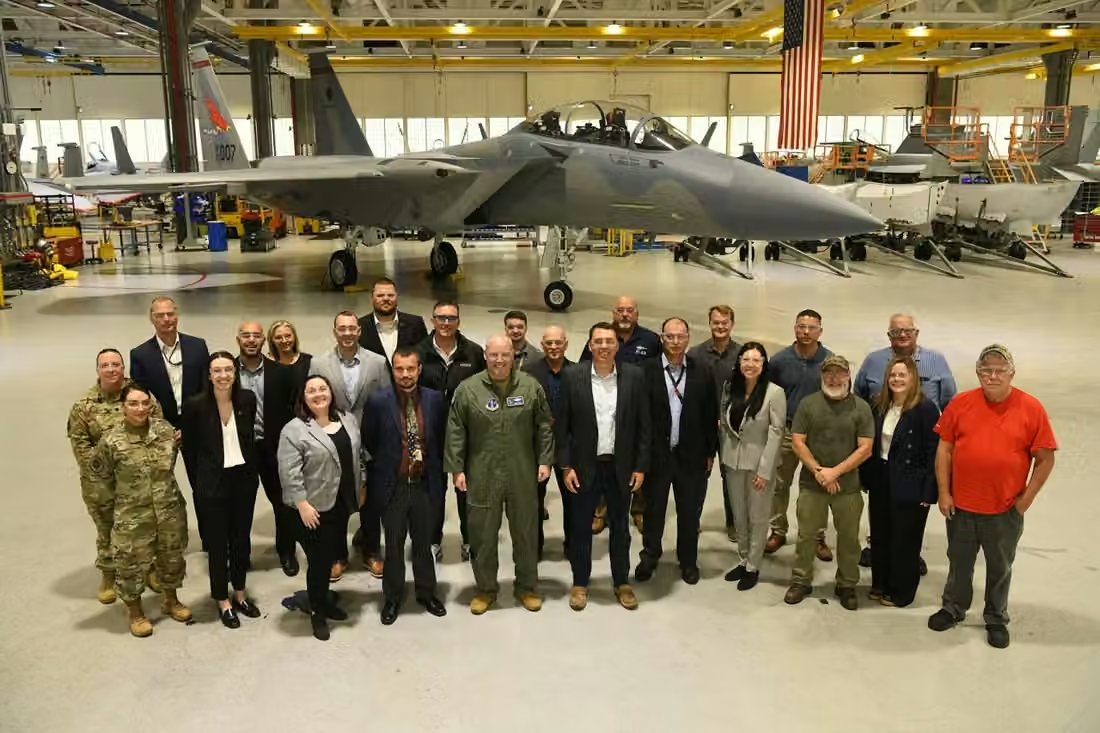
The aviation manufacturing in St. Louis area is part of Missouri's industry. Behind large product deliveries are components, quality control, professional staff, and supply chain collaboration.
In August 2026, there were approximately 278,900 manufacturing jobs in the state, down by 1,000 from July. All non-agricultural jobs in the state were approximately 3,015,700, up by 2,100 from July; changes across industries were not consistent.
Source: Bureau of Labor Statistics, September 18, 2026; data are seasonally adjusted; August data are preliminary. Photo from activity records in 2024.
Estimated cash income from agricultural product sales.
Cattle, soybeans, and corn: distinct production chains.
In 2025, cash income from cattle and calves was approximately $4.059 billion, while soybeans were approximately $2.896 billion, and corn was approximately $2.465 billion. These categories span various works including farming, livestock, feed production, processing, storage, and transportation.
Cash income describes sales amount without deducting costs for feed, land, energy, equipment, and other inputs. To judge agricultural operations, one must look at the product price as well as the inputs and actual production conditions.
The U.S. Department of Agriculture Economic Research Service released the 2025 state-level agricultural cash income estimates on September 3, 2026, presenting the amounts in round numbers.
Industries & establishments · 2023
The work that keeps communities running.
Manufacturing, healthcare, retail, and professional services each perform different functions. Urban areas, college towns, agricultural counties, and Ozarks regions cannot be summarized by the same business scenario.
The state recorded 151,475 employer establishments and 2,631,543 paid employees. A single company may operate several stores, offices, or factories, so establishments are not a count of registered companies.
U.S. Census Bureau, 2023 County Business Patterns. The series primarily covers private, nonfarm establishments with paid employees. Employment is measured for the pay period that includes March 12. The 2023 release was the latest in this series available when checked; it is not a measure of current monthly employment.
Regional centers and the towns around them.
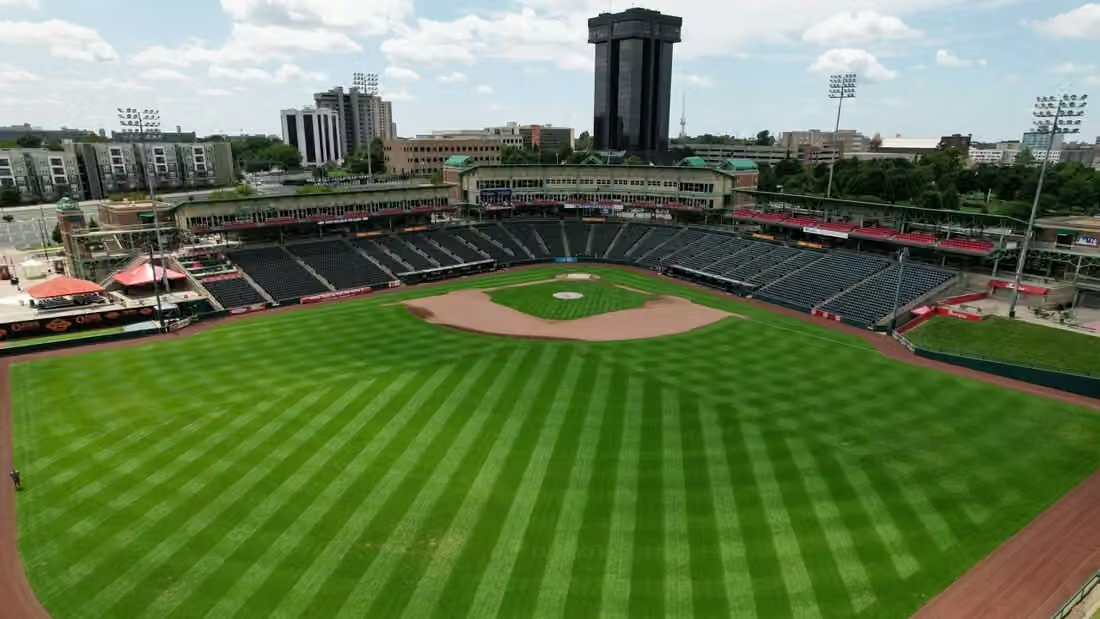
Springfield and Ozark surrounding areas maintain a wide connection. The downtown area, sports fields, commercial and service facilities accommodate various activities for residents and visitors.
Businesses serving a region often work with customers in several towns. Service range, staff travel, journey times and site conditions all affect the work. Places that look close on a map still need to be assessed through actual travel.
Different business forms, different annual requirements.
Limited liability companies
The Secretary of Missouri explains that limited liability companies do not need to submit annual reports to the agency. Matters such as registration agents, necessary information changes, taxes, and permits still need to be managed separately.
Business corporations
Companies need to submit registration reports, and if they comply with the rules, they can choose a reporting arrangement that happens every two years. They should manage the reporting cycle according to the entity type and the existing reporting period, and they should not simply adopt the practices of another type of company.
Based on Missouri Secretary of State business guidance and reporting instructions, checked in September 2026. Company searches remain within this website.
After rivers and cities, white blossoms on the branches.
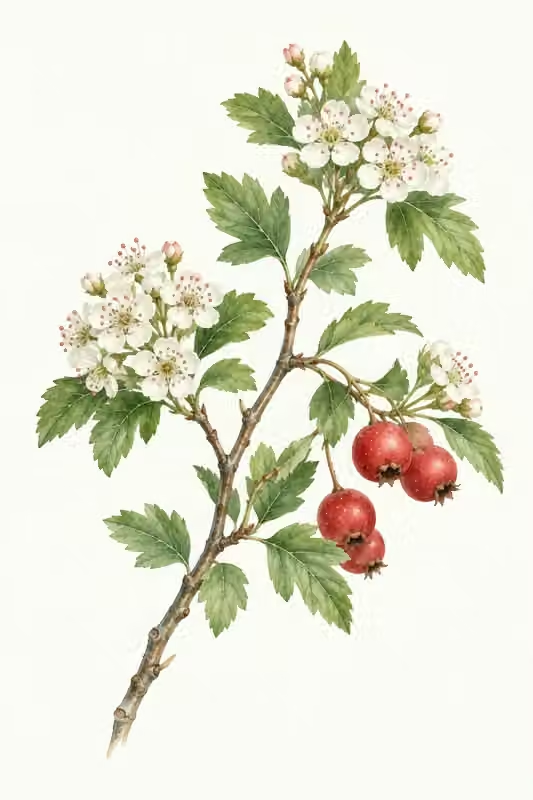
Missouri designated the hawthorn blossom as its state flower in 1923. Its natural image is represented by white flower clusters in spring, fruits and leaves in autumn.
The two major cities are only a starting point for Missouri. River towns, clear springs, universities, and farmland offer many more ways to discover life in the state.
An editorial feature by STATE.REPORT. Image creators and licenses are credited below.
Sources & further reading
U.S. Census Bureau: state population estimates for July 1, 2025.
National Park Service: Design, Construction, and Old Courthouse.
National Park Service: The Westward Expansion, Native American Experience, and Public Memory.
National Park Service: The Case of Dred and Harriet Scott
American Jazz Museum: Music, collections, and education at 18th and Vine.
American Jazz Museum: Performance spaces, musicians, and the city's sound.
Nelson-Atkins Museum of Art: The 1994 Shuttlecocks sculptures and their creation.
The Kansas City Tourism Institution highlights Henry Perry and the local culinary tradition.
Mark Twain Childhood Home Museum: The House, Collection, and Preservation of History.
Missouri Conservation Department: Karst Topography and Aquatic Ecosystems.
Missouri Conservation Department: Underground tunnels and Ozark natural environment.
Missouri State Parks: Rail Corridor Transformation and River Town Revitalization.
University of Missouri Archives: campus records before and after the 1892 fire.
Danforth Plant Science Center: Mission and Institutional History.
Missouri Secretary of State: 1923, the state flower and related laws were officially determined that year.
Image credits & licenses
Current River MO 2009-06-15 n65 below Welch Spring crop2.jpg · Kbh3rd · CC BY-SA 3.0。
Runner Fountain and Old Courthouse and Arch (5618845531).jpg · Jefferson National Expansion Memorial, NPS from St. Louis, MO, USA · CC BY 2.0。
Kansas City Skyline (5172734400) (cropped).jpg · ctj71081 · CC BY 2.0。
Downtown Springfield, MO and Hammons Field.jpg · Raschmidt87 · CC BY-SA 4.0。
Gateway Arch at Sunset (cropped).jpg · Joe Howard · CC BY-SA 4.0。
18th and Vine District sign and building.jpg · Smuckola · CC BY-SA 4.0。
Alley Spring and Mill in November 2021.jpg · 16porkchops · CC BY-SA 4.0。
Mark Twain Boyhood Home 1.jpg · Andrew Balet · CC BY-SA 3.0。
Exterior of Nelson-Atkins Museum of Art.jpg · Yungryan07 · CC BY-SA 4.0。
Visits the Boeing Aerospace factory in Berkley, Missouri on June 5, 2024, for an informal ceremony of the first delivery of the F-15EX fighter jet aircraft to be flown to the Portland Air National Guard Base in Portland, Oregon - 3.jpg · Oregon National Guard · CC BY 2.0。
Barbeque block party Kansas city.jpg · The original uploader was Gbleem at English Wikipedia . · CC BY-SA 3.0。
University missouri1.jpg · nonorganical · CC BY 2.0。