


Nebraska
Prairie winds. Returning cranes.
A prairie can have rivers, wetlands, railroads, and a town from a book. Heading west along the Platte River and then returning to Omaha and Lincoln, Nebraska is more rich than the map's plains.
Stay here.
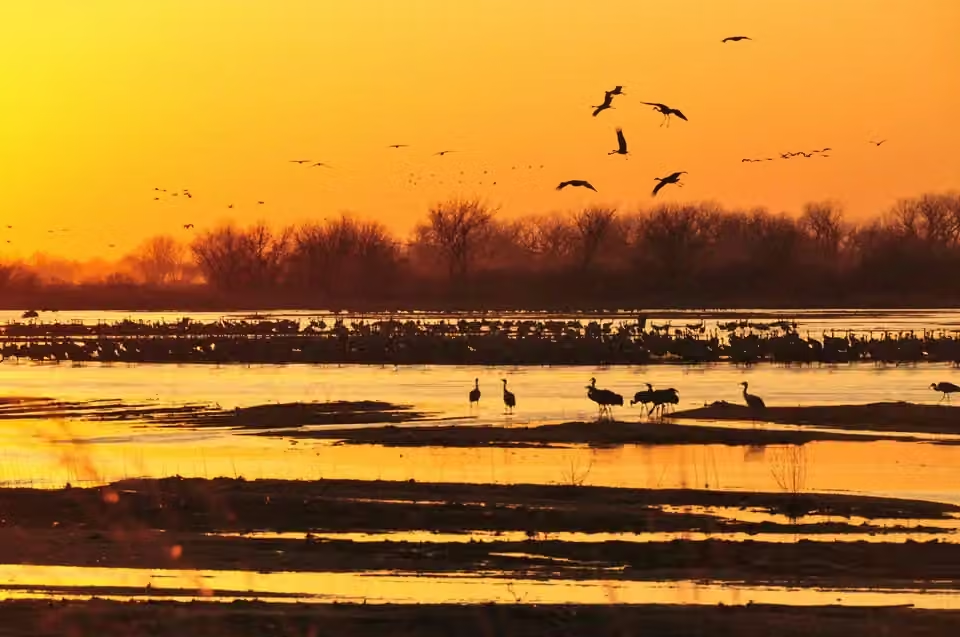
The Platte River Valley is an important spring stopover for sandhill cranes migrating north.
Out to feed at dawn. Back to the river at dusk.
Spring in the Mid-Valley often begins with the call of cranes before we see flocks of birds. The state tourism agency notes that approximately one million sandhill cranes stopover and refuel here annually before continuing northward.
Shallow river channels provide night roosts, while nearby fields offer grain for feeding. Daytime foraging, courtship, and social activity give way to evening gatherings, setting the rhythm of the season.
Migration is not a fixed-date performance. Weather, river conditions, and the arrival of birds all change the immediate scene. Design observation points and hideaway observation huts to allow people to be part of this process while maintaining a distance from the birds.
Grass above sand. Water below.
A rolling landscape with underground connections.
The Sand Prairie consists of stabilized dunes covered by grass. Low-lying areas have groundwater near or at the surface, forming various environments such as wetlands, wet meadows, and swamps. Many of these wetlands are located within pastures.
Here, grazing, grassland maintenance, and water resources are closely linked. A pasture is not a piece of land that can be easily replaced; roots, soil, groundwater, and livestock activities all impact the long-term state of the land.
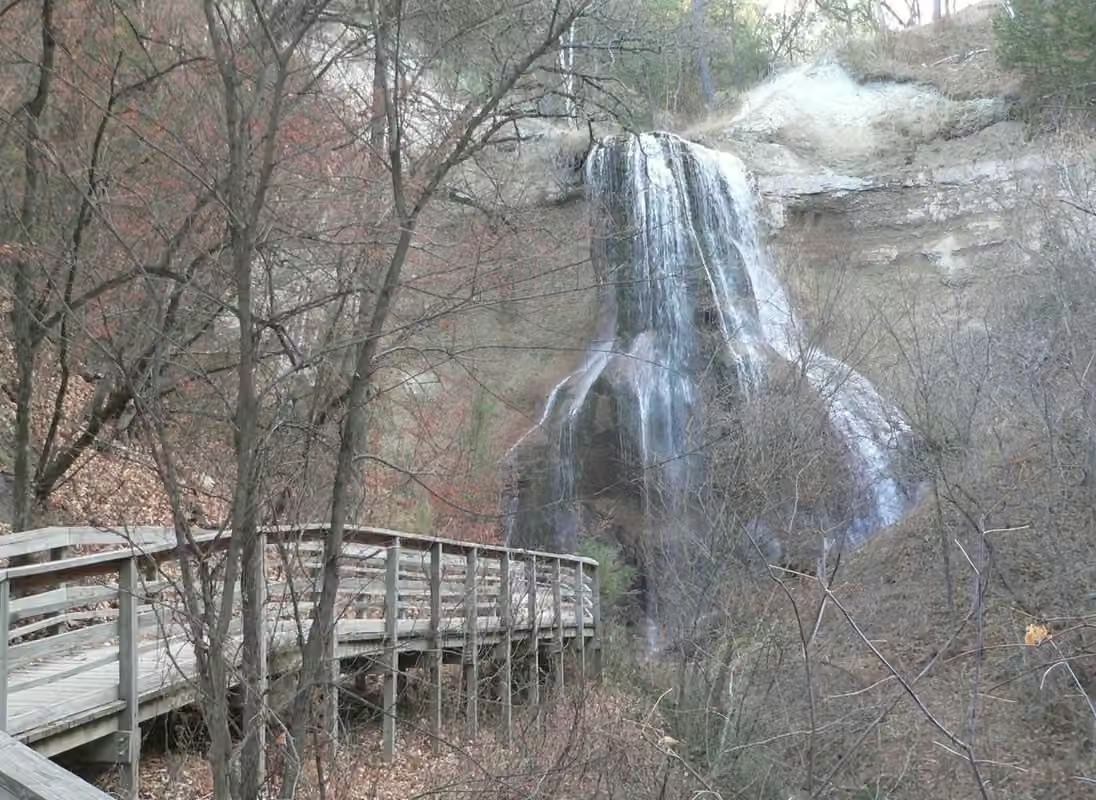
Woodland meets prairie in the river valley.
The Niobrara River Valley brings together six ecosystems: northern boreal forest, ponderosa pine forest, eastern deciduous forest, tallgrass prairie, mixed-grass prairie and shortgrass prairie.
Slope orientation, sunlight exposure, spring water, and valley terrain cause different plants to grow in places not far from each other. Just the most obvious features like waterfalls and shaded riverbanks are the easiest to see, but even smaller environmental differences affect where animals can live.
Transitioning from wide meadows into river valleys, the scenery shifts from a distant view to one up close: trees, rock faces, water sounds, and shadows all have new weight.
A prairie home with a view onto a wider world.
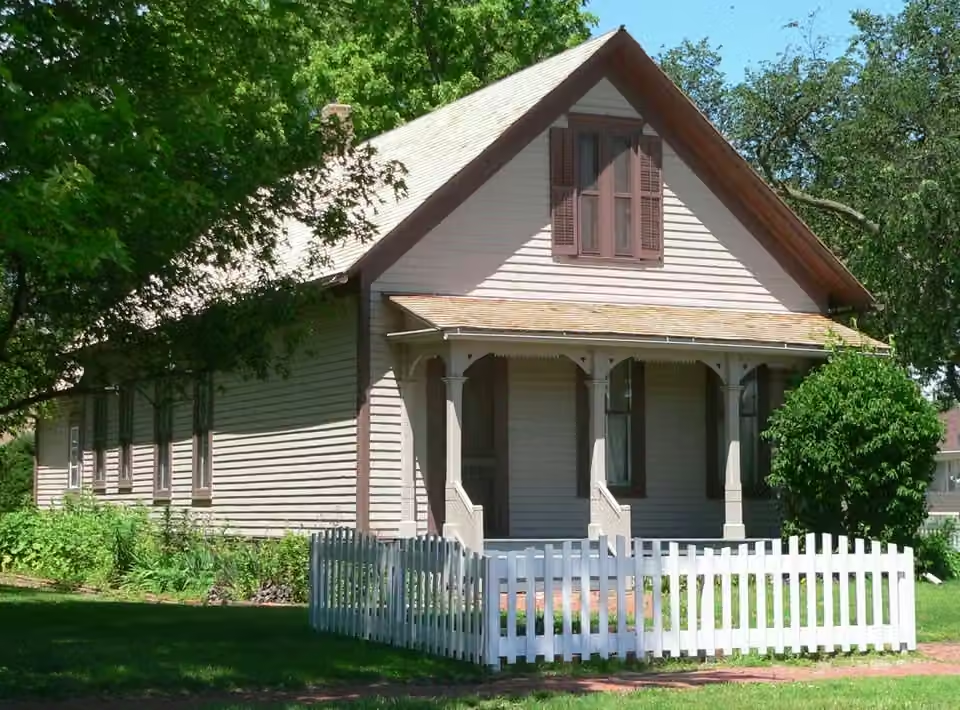
Willa Cather wrote about the land and about people making a home after migration. The work, families, languages and memories in My Ántonia give the Great Plains particular characters and voices.
Her childhood home preserves furniture, photographs, books and other family belongings. The attic bedroom connects with descriptions in The Song of the Lark, bringing an intimate domestic space into the world of literature.
After extensive restoration in 1967, the house was opened for tours and listed as a National Historic Landmark in 1972. The most recent restoration work, completed in 2024, also saw a re-opening ceremony. The preservation of the house, like many historic sites, requires patience.
From the page, step into the prairie.
The Cather Foundation protects approximately 612 acres of memorial prairie. Historic buildings, prairie conservation and cultural events place the study of the author within the surroundings she knew.
Height, the horizon, and changes in seasons help to understand the spatial sense in the text. Characters in the novel have a basis in reality and are also selected and created by the author, and they should not be taken as a checklist of each state.
City streets and gallery rooms.
Old warehouses find a new daily life.
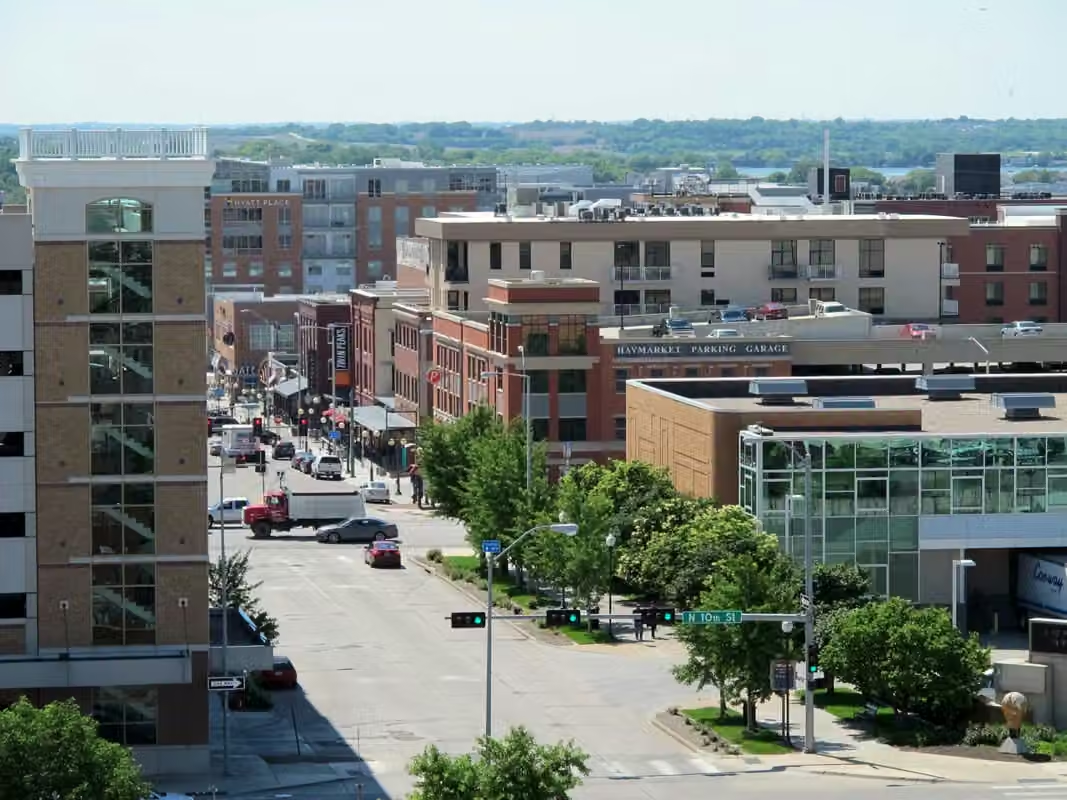
The old market district retains brick buildings and cobblestone streets. The space that once served for wholesale, storage, and agricultural product trading now houses restaurants, stores, galleries, and walking activities.
The neighborhood's appeal grows from the meeting of old buildings and new uses. Deliveries, residents, visitors, and nightlife share its streets, making urban renewal an ongoing part of daily life.
Across the river, another city.
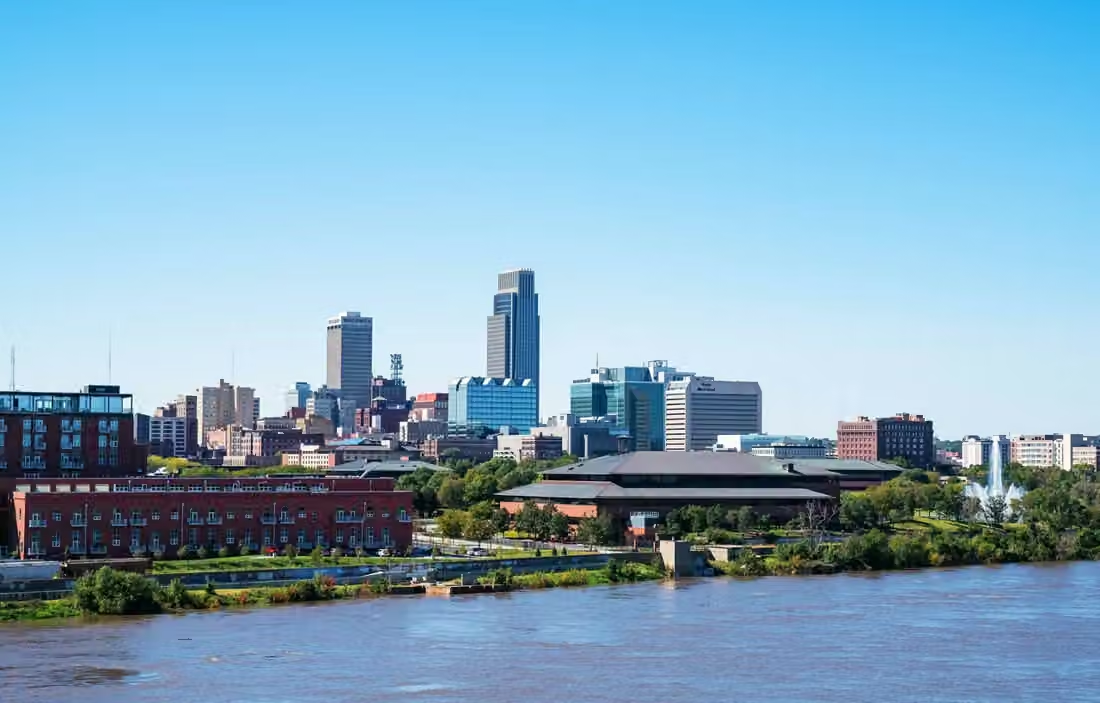
Omaha faces Council Bluffs, Iowa, across the river. Bridges and roads connect everyday life, while the state line still marks separate administrative jurisdictions.
A river view can make both banks look like a single place. Workplaces, premises, and local services still depend on which side of a bridge—and which neighborhood—they occupy.
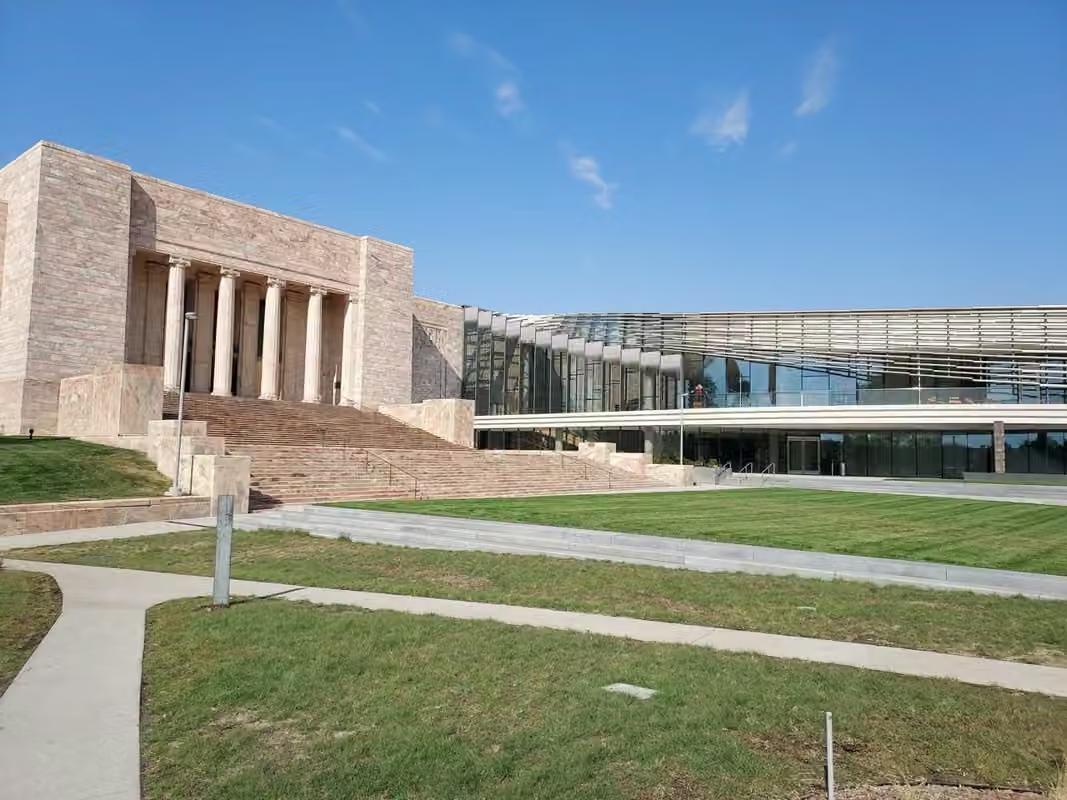
Art as part of public life.
The arts center funded by Sarah Joslyn opened in 1931, bringing exhibition and music spaces to Omaha. Its founding commitment to public access remains central to the institution's history.
In 2013, general admission became free once again. It serves as a place to view art while also learning and meeting one another through its collection, school programs, and community activities.
City culture is not solely defined by a major event. Spaces like galleries, courses, and gardens that one can repeatedly visit are closer to the long-used public spaces that residents regularly use.
Room for both the debating chamber and the quilting needle.
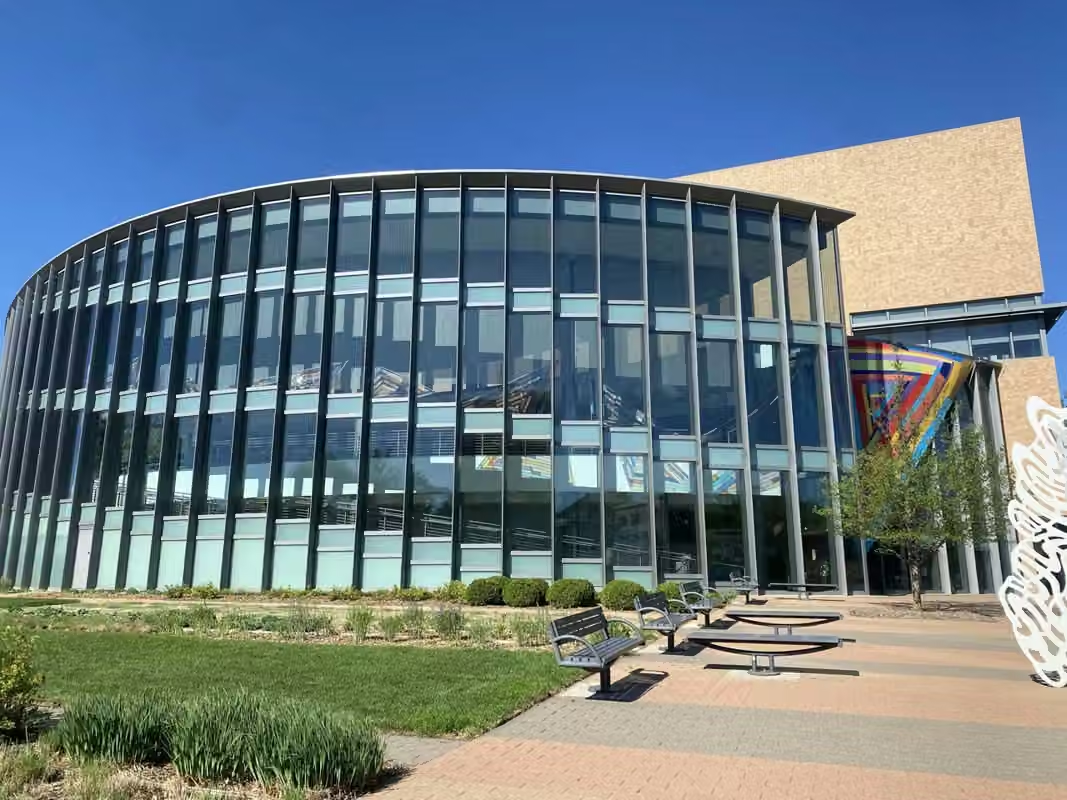
A world in fabric.
The International Quilt Museum grew from a collection donated to the University of Nebraska–Lincoln in 1997. Its research and exhibitions begin with domestic textiles and reach across regions to explore materials, patterns and ways of making.
The collection includes works from over 65 countries, spanning from the 17th century to the present day. Embroidery can document craftsmanship and also leave traces of gifts, commemorations, labor, and identity.
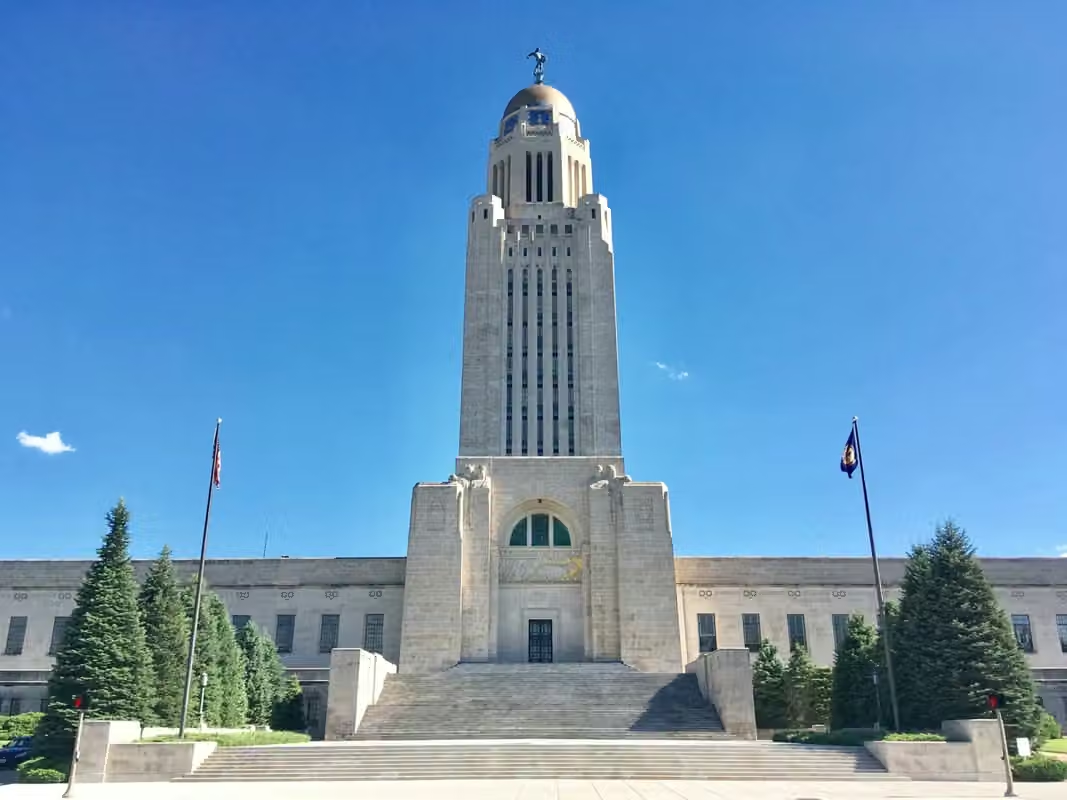
A legislature with one chamber.
Nebraska adopted a one-chamber state legislature by constitutional amendment in 1934 and began implementing it in 1937. The nonpartisan system was also part of this reform.
This arrangement changed the parliamentary structure, and it does not mean that there are no disagreements on public affairs. State government buildings, parliamentary records, and public education materials can help residents understand how the system works.
Landmarks along a route, memories along the way.
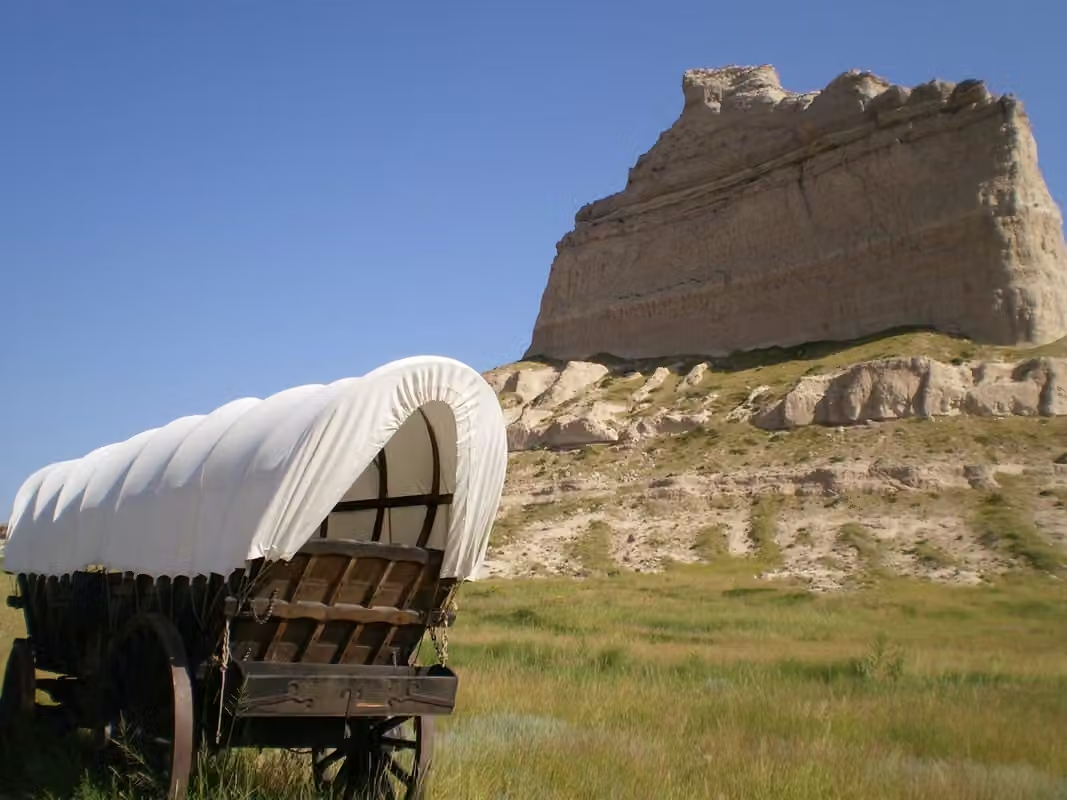
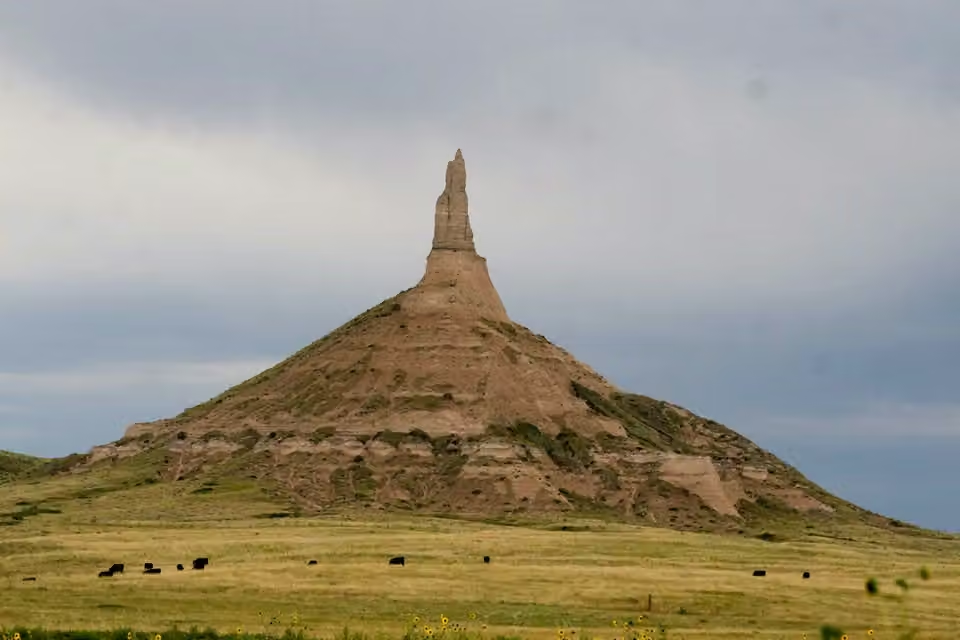
Rock pillars and fading wagon ruts.
Chimney Rock and Scotts Bluff helped westbound travelers judge their progress. Trails, landforms, and historical exhibits now preserve those journeys in the landscape.
National Park Service accounts note that erosion of sandstone and siltstone has softened some of the old wagon ruts at Scotts Bluff. The remaining broad, shallow traces are best understood through both the terrain and historical records.
Standing Bear’s struggle for the freedom to return home.
Ponca leader Standing Bear returned to his homeland after his people were relocated south to bury his son, and was subsequently arrested. The case of the Omaha trial in 1879 confirmed that Native Americans were "persons" under the legal meaning of a habeas corpus, and could seek such protection.
This history gave "migration" a different meaning: some traveled in search of opportunities, while others paid a great price to return home. Local archives preserved the records of lawsuits and later commemorations.
After dark, another river keeps moving.
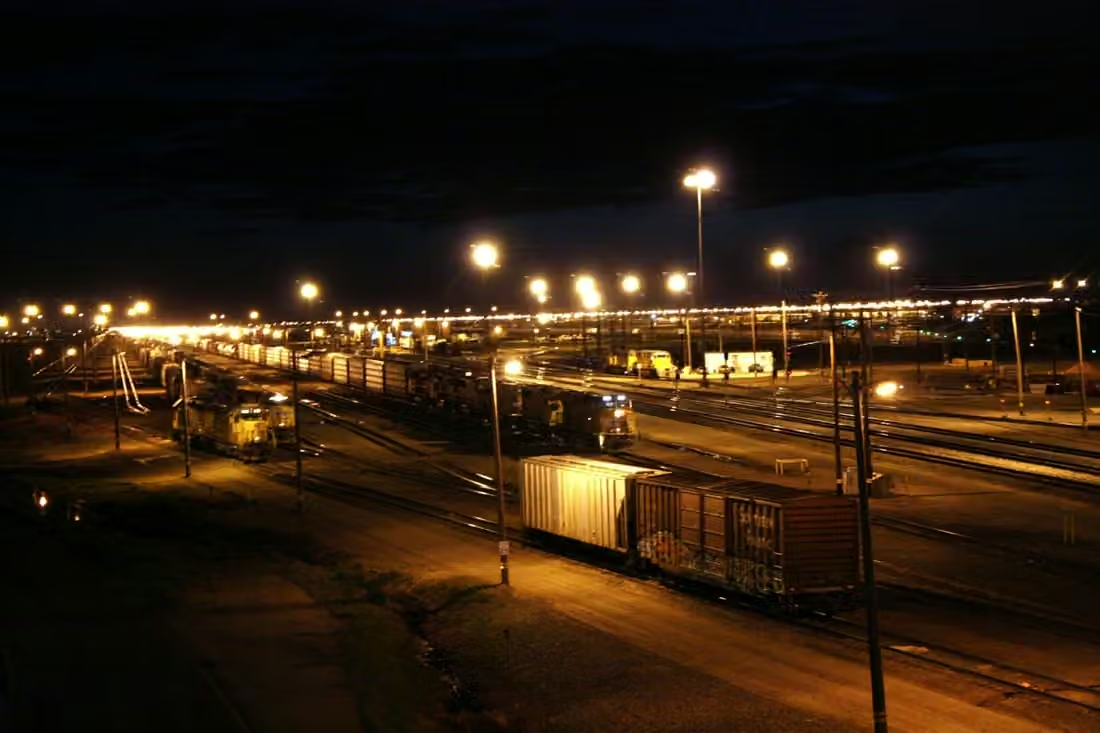
Trains bring the freight.
The Bailey Yard of the Union Pacific Railroad is a large operation facility in long-distance rail transport. Various types of cargo, including grains and industrial products, are connected through routes to different regions.
Cars are sorted for different destinations.
The focus of grouping work is organizing cars destined for different locations into subsequent trains. Coordination between tracks, scheduling, and personnel collaboration ensure that a long-distance transport chain can continue to be connected.
Maintenance is part of transportation.
Vehicle inspections, locomotive services, and maintenance provide support for operations. Railway towns' work takes place both in the cab and in workshops, depots, and logistics facilities.
Ranches, farms, and cities share the work.
The total includes approximately $20.344 billion from cattle and calves, $7.462 billion from corn and $3.104 billion from soybeans. Livestock, feed, grain processing, equipment and transport are connected, but each faces different costs and markets.
U.S. Department of Agriculture Economic Research Agency released on September 3, 2026. Cash income is the sales revenue of agricultural products, and operating costs have not been deducted yet.
Monthly employment, industry by industry.
In August 2026, Nebraska had approximately 1,062,700 non-agricultural jobs, an increase of 2,200 from July; manufacturing jobs were approximately 97,300, down by 200 from July.
The seasonally adjusted unemployment rate is 2.9%. Job statistics and resident unemployment rates come from different surveys, observing jobs provided by employers and residents' employment status respectively.
Bureau of Labor Statistics, September 18, 2026 release; August is the preliminary value, with all monthly numbers seasonally adjusted.
Industries & establishments · 2023
The work that keeps communities running.
Beyond agricultural processing and transportation, healthcare, retail, accommodation and food services, and professional services also handle a significant portion of daily work. When comparing businesses, location and service recipients often provide more useful benchmarks compared to statewide averages.
The state recorded 56,503 employer establishments and 923,066 paid employees. A single company may operate several stores, offices, or factories, so establishments are not a count of registered companies.
U.S. Census Bureau, 2023 County Business Patterns. The series primarily covers private, nonfarm establishments with paid employees. Employment is measured for the pay period that includes March 12. The 2023 release was the latest in this series available when checked; it is not a measure of current monthly employment.
Familiar food, changing communities.
Beef and cabbage enclosed in bread dough make the familiar local runza. The first Runza restaurant opened in Lincoln in 1949, and the portable meal became part of everyday life for many Nebraskans.
In communities such as Verdigre, Czech pastries and local celebrations preserve immigrant families’ food traditions. Fillings, methods and family memories give these foods a history that reaches well beyond a menu.
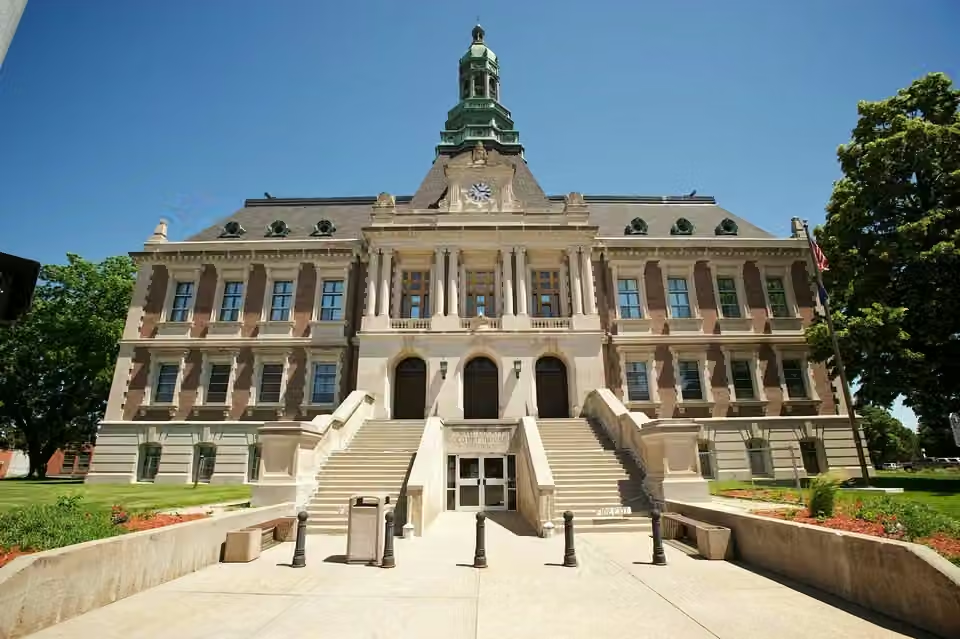
River-valley cities such as Grand Island connect surrounding farms with residents' daily lives. County services, shops, schools, and restaurants give these agricultural regions a full civic life beyond the grain elevators and highways seen in passing.
Biennial reporting: know which year applies.
Limited liability companies
Domestic LLCs and foreign LLCs authorized to operate in Nebraska generally file biennial reports in odd-numbered years, with an April 1 deadline. Registered agent details, principal office addresses and required changes must also be kept current.
Business corporations
Applicable business and professional corporations file biennial occupation tax reports in even-numbered years, due March 1. Different entity types cannot share a single filing calendar.
Based on Nebraska Secretary of State annual and biennial reporting guidance, checked in September 2026. Company searches take place within STATE.REPORT.
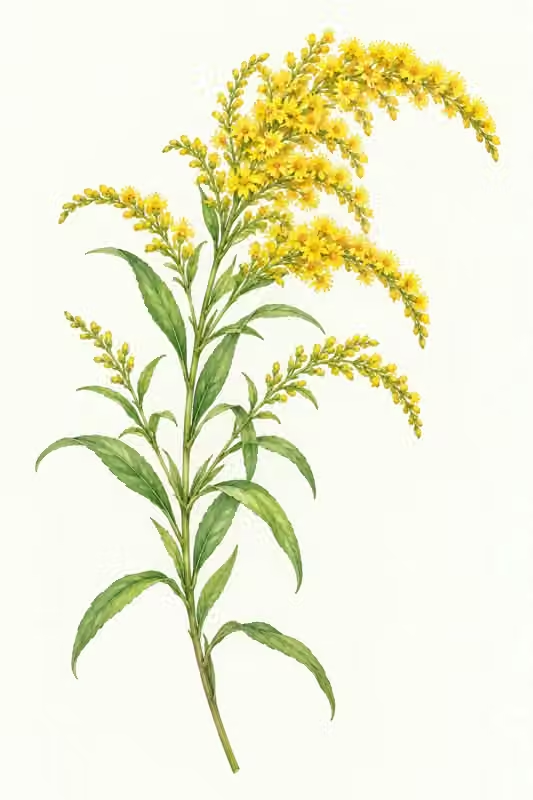
Prairie gold in the smallest flowers.
Goldenrod became the state flower of Nebraska in 1895. A branched flower structure gathers many small flowers, appearing golden from afar but revealing intricate structures up close.
From the flocks of cranes in the Spring Valley to the bookstores and galleries in the towns, this state's story needs to be slowly unfolded. Beneath the wide horizon, there are always specific people, work, and life.
An editorial feature by STATE.REPORT. Image creators and licenses are credited below.
Sources & further reading
U.S. Census Bureau: state population estimates for July 1, 2025.
Nebraska State Tourism: Migration, Staging Areas, and Observation Activities for Sandhill Cranes.
Nebraska State Tourism: River Nests, Field Feeds, and Bird-Watching Etiquette.
Nebraska Game and Parks Commission: groundwater, wetlands and ranchland.
Nebraska Birding Routes: Ecological Districts of Sandhill and Prairies.
National Park Service: six types of ecosystems and valley environments.
National Willa Cather Center: household objects, restoration and literary connections.
The National Endowment for the Arts: A Biographical Overview of a Writer's Life, Migration History, and Novel Setting.
Willa Cather Foundation: Conservation of a 612-acre prairie and cultural programs.
National Park Service: Warehouse District and Urban History.
The Joslyn Art Museum was founded in 1931 and is dedicated to collecting and public education.
International Quilt Museum: University Collection, Research, and Worldwide Traditions of Textiles.
Nebraska State Legislature: Constitutional amendment of 1934 and implementation of 1937.
Nebraska History Society: Ponca Leader, The Case of 1879, and Archives.
National Park Service: Migration Routes, Surface Remnants, and Erosion.
Union Pacific Railroad: Train crews, maintenance facilities, and transportation infrastructure of North Platte.
Nebraska’s tourism organization: beef-and-cabbage buns, Czech pastries and local food traditions.
Nebraska State Historical Society: State flower designated in 1895.
Image credits & licenses
Covered Wagon In Scotts Bluff National Monument, Nebraska.jpg · Podruznik at English Wikipedia · Public domain。
City of Omaha, Nebraska Skyline on the Missouri River (30899969517).jpg · Tony Webster from Minneapolis, Minnesota, United States · CC BY 2.0。
Aerial view of the old Haymarket and West Haymarket, Lincoln, Nebraska, USA.jpg · Hanyou23 · CC BY-SA 4.0。
Hall Co Courthouse 6.jpg · Brad Mellema · CC BY-SA 4.0。
Chimney Rock NE.jpg · Mike Tigas from Columbia, MO, United States · CC BY 2.0。
Sandhill Cranes Flying to Roost on Platte River in Central Nebraska (12781422973).jpg · USFWS Mountain-Prairie · Public domain。
Nebraska Sandhills NE97 Hooker County 1.JPG · Ammodramus · Public domain。
Willa Cather house from SE 1.JPG · Ammodramus · Public domain。
Joslyn Art Museum 2024.jpg · Bubudu57 · CC0。
Bailey Yard at night.JPG · Zeroxysm ( talk ) · Public domain。
Smith Falls, Nebraska 1.JPG · Ammodramus · CC0。
International Quilt Museum, Lincoln, Nebraska, 2026.jpg · CastIronSeasoner · CC BY 4.0。
Nebraska State Capitol, front elevation, north.jpg · Capitolist · CC BY-SA 4.0。