

Nevada
The lights of the city. The depth of the desert night.
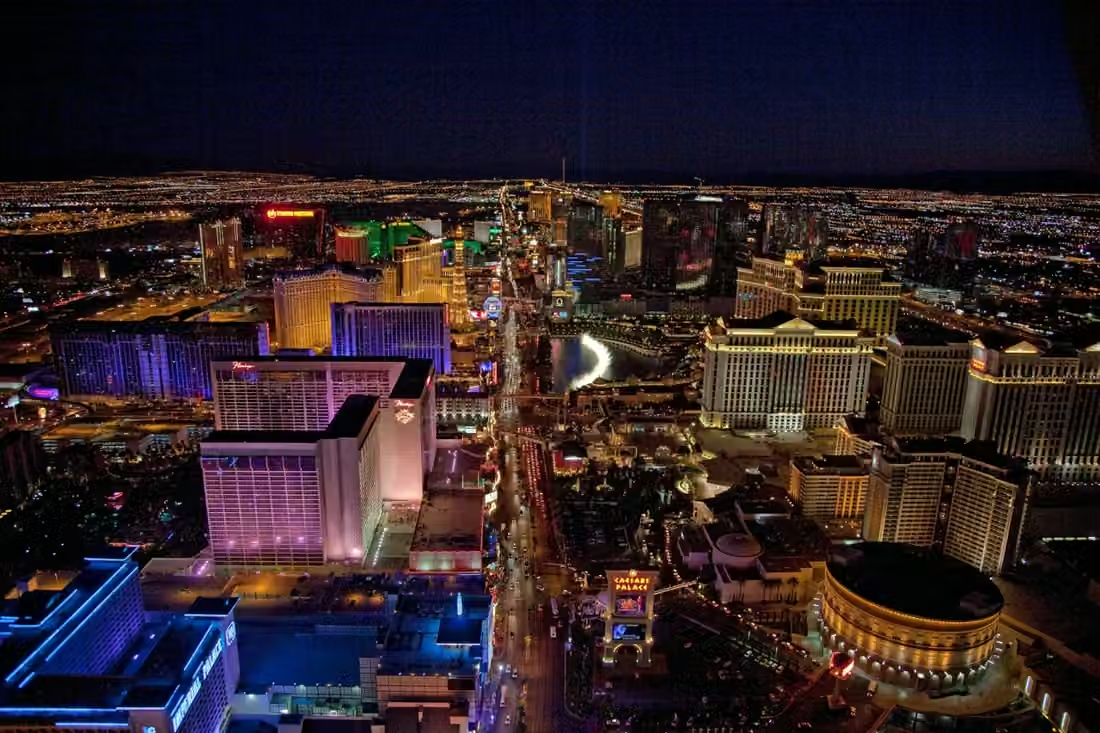
In Las Vegas, night belongs to the stage, the table, and the crowd. In the Great Basin, it returns to the mountains, ancient trees, and stars.
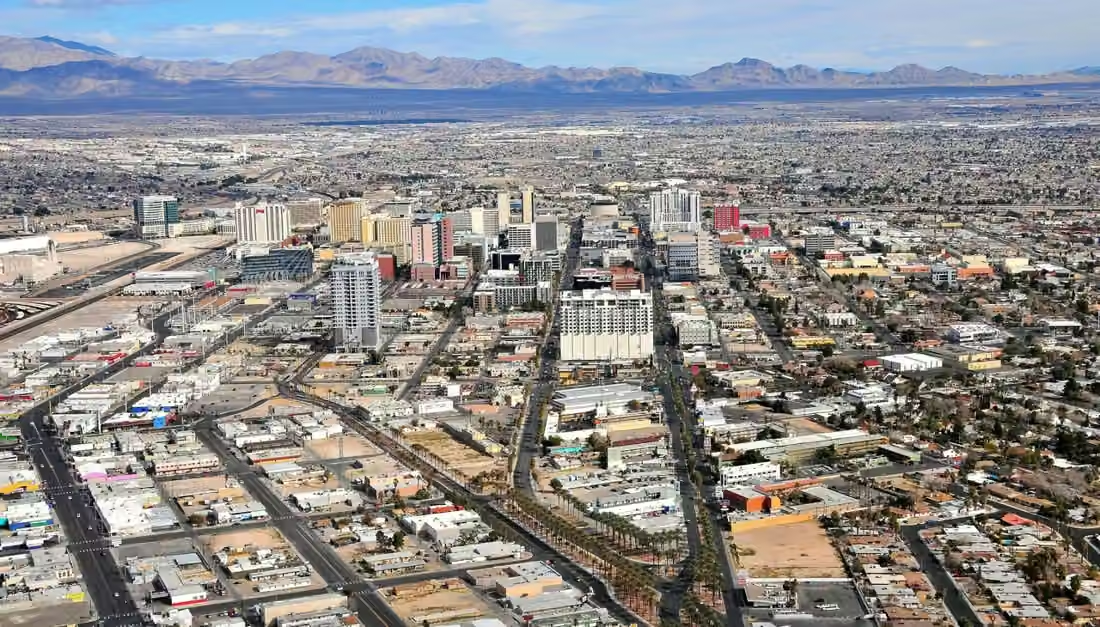
A city that welcomes the world—and goes to work.
Hotels, conventions, dining, and performances give Las Vegas a distinctive destination image. Large venues and room blocks are not isolated entities: arrivals, meetings, restaurants opening, and shows closing all ripple through traffic, supplies, cleaning, and facility maintenance.
Looking outward along the tourism corridor, residents' lives continue. Services such as healthcare, schools, residences, retail, and public services keep the metro area functioning for long periods. A visitor's overnight experience is often the result of many working in shifts.
Therefore, knowing the local business requires separating two types of needs: one that gathers due to trade shows, events, and travel arrangements, and another that caters to those who live there long-term. They meet in the same city but have different rhythms.
Visitor numbers need a place on the calendar.
Las Vegas Convention and Visitors Authority · July 2026 report
Estimated visitor numbers for the first seven months, up 0.5% from a year earlier.
Conventions and leisure travel can follow different trends.
As of July 2026, Las Vegas visitor numbers are slightly higher than the previous year's figures, while attendance at conventions has seen a larger increase. Both statistics describe different activities and cannot be added together to form a new total visitor count.
In July alone, convention attendance fell 5.6% from a year earlier. The tourism authority attributed part of the decline to rotating trade shows and changes in event timing. For setup crews, transport providers, caterers and on-site services, the dates of individual events often matter more than a single month’s rise or fall.
Las Vegas recorded approximately 38.5457 million visits in 2025. This destination measure does not cover all of Nevada. Full-year totals and year-to-date figures should also be kept separate when comparing trends.
Hotel occupancy in the first seven months
The hotel sample in the monthly report covers more than three-quarters of the room inventory in the area. This proportion reflects room utilization; hotel location, weekdays vs. weekends, prices, and activities still bring differences.
Beneath the lights, another network.
Southern Nevada’s water supply is connected to the Colorado River. The regional water authority returns treated indoor wastewater to the system and uses return-flow credits in managing withdrawals. The distinction between indoor reuse and outdoor consumption is central to local water conservation.
Outdoor uses such as lawn irrigation and evaporation typically cannot be recycled in the same manner. Therefore, landscape choices, irrigation methods, and site maintenance all impact daily water usage. Urban life in a desert requires ongoing maintenance of these infrastructures beyond visible buildings.
Flow chart illustration, does not indicate water usage percentage.
Daylight returns the color to the rock.
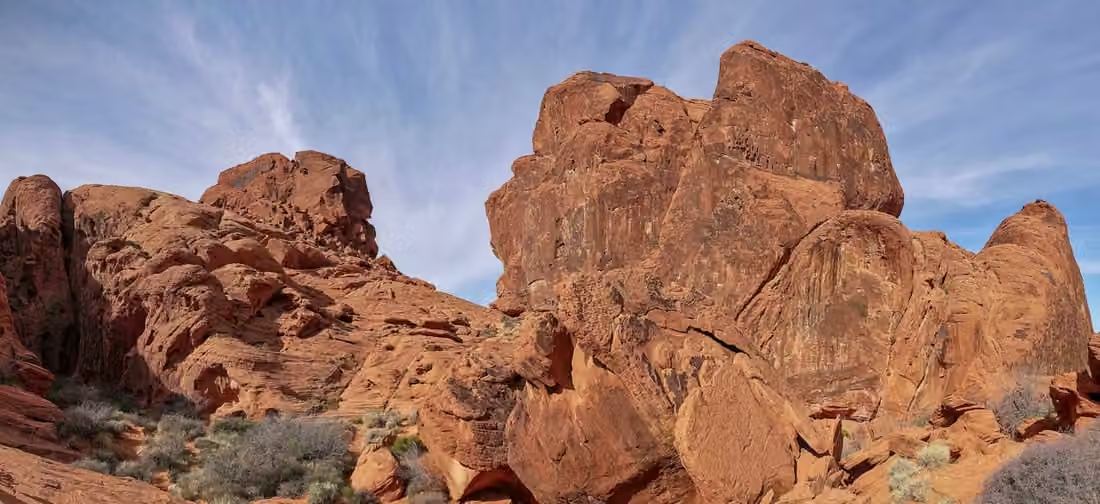
Once-moving sand became the rock that stands here today.
Valley of Fire's red sandstone formed during the Jurassic period, preserving traces of ancient windblown sand. Other rock layers reveal different colors and textures, while wind and water continue to reshape their surfaces.
The history here extends beyond geology. Petroglyphs and other remains record a long human presence, and Southern Paiute communities continue today. Valley of Fire opened to the public in 1934 and received formal legislative designation in 1935.
Layers, historical sites, and contemporary conservation management are different parts of the same landscape. Seeing these relationships beyond color brings one closer to the true thickness of this land.
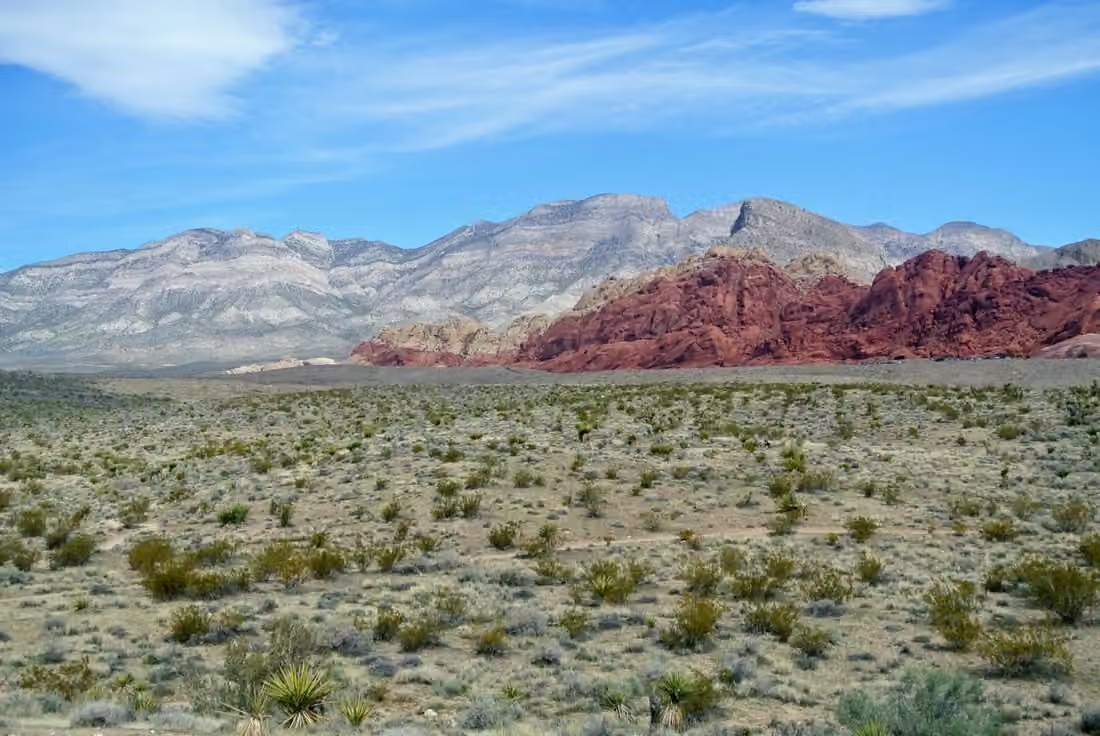
The Great Basin is a landscape of many basins.
Most of Nevada lies within the Great Basin hydrological system: rivers flow into inland lowlands, lakes, or sink into the ground or evaporate, ultimately not emptying into the ocean. In contrast, the Colorado River system in the south is different; the state cannot be considered as a single closed basin.
The long mountain ranges and valleys of the Basin and Range formed through crustal extension and movement along faults. Changes in elevation bring desert shrubland, mountain woodland, and alpine environments close together.
Roads cross successive valleys, and settlements often grew around water and transport. Distance shapes everyday journeys to healthcare, schools, and shops, as well as business deliveries.
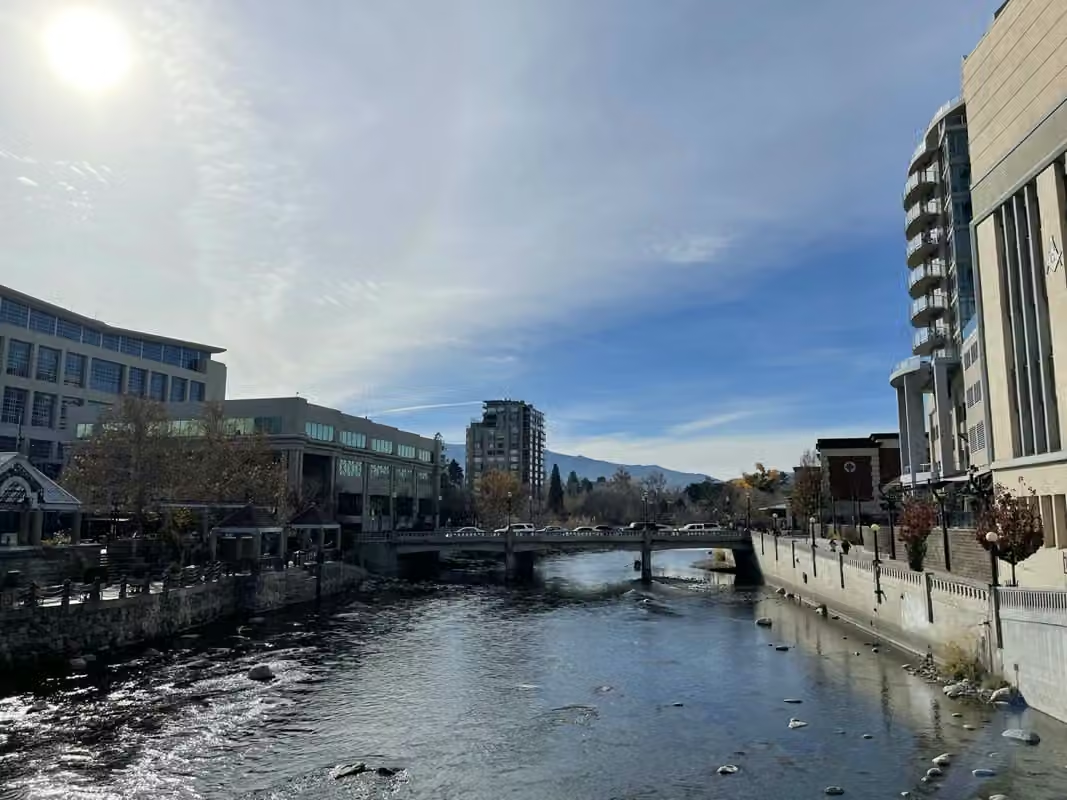
A river through downtown. A railroad at the beginning.
The Truckee River flows through Reno. In the 19th century, the development of the nearby Comstock mines made the river crossing and surrounding trade increasingly important. In 1868, the railroad arrived and Reno officially established that same year.
Later, universities, stores, hotels, and public buildings began to integrate into the city's life. The main campus of Nevada University was located in the northern highlands in 1885, becoming a part of Reno's identity.
The city beyond its visitor image.
Today's Riverfront Trail and downtown area connects recreational, commuter, and community activities. Reno has a different background compared to Las Vegas; its rivers, railroads, and university exist, preventing it from being solely understood as another city of entertainment venues.
Life at the foot of the mountains.
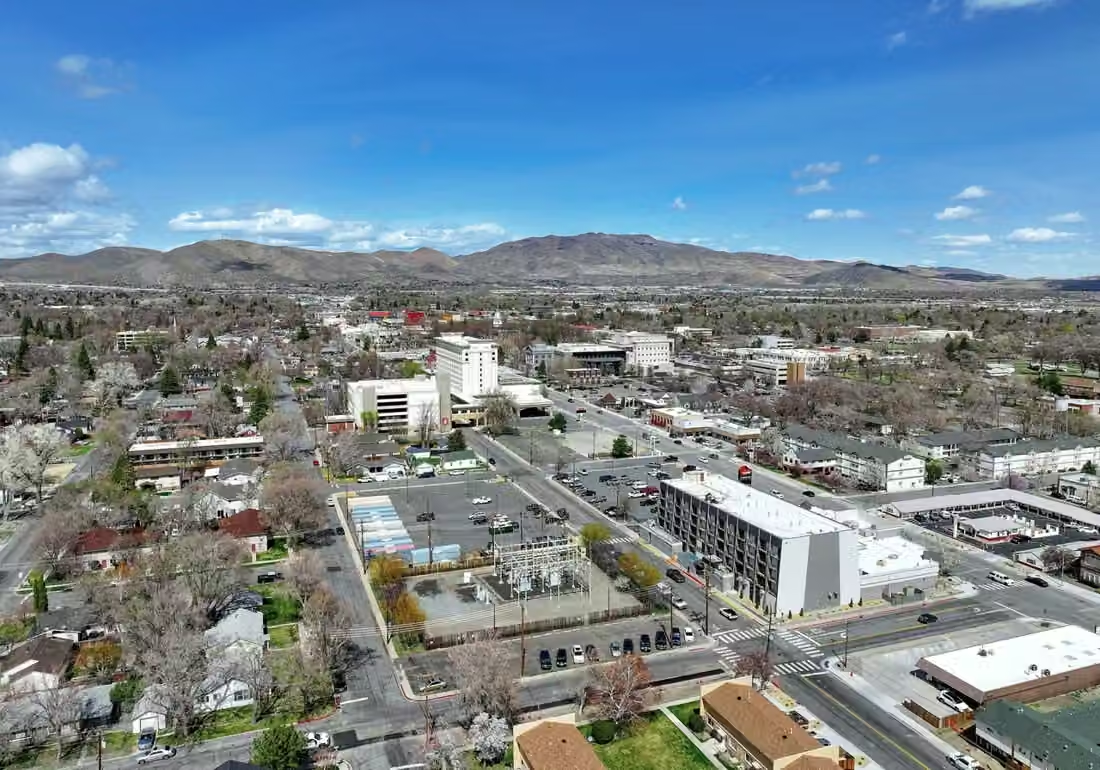
State Capitol completed
Carson City’s State Capitol was built with locally quarried sandstone, its dome marking the seat of state government. The capital is not Nevada’s largest city; public administration and historic streets give it a different scale of life.
Regional history is also tied to mining transport. Built between 1868 and 1872, the Virginia & Truckee Railroad connected Comstock mining and milling communities with the rail network through Reno. The movement of ore, equipment and people linked these towns together.
Mining and geothermal energy are rooted in place.
Metals, minerals, and local work
Nevada's resource industries include gold, silver, copper, lithium, and industrial minerals. The location and geological conditions of the mines determine where exploration, engineering, equipment, and transportation work are conducted in different regions.
The Nevada Bureau of Mines and Geology continues to publish mineral, energy, and geological maps. Customers, sites, and conditions for field work vary greatly between mining and tourism cities across the state, and one cannot apply southern city tourism metrics to the entire state.
The geology beneath the hot water
Geothermal exploration requires understanding subsurface heat, fluids, and fractures in rock. Researchers use methods like geological mapping to identify favorable conditions and assess drilling risks. The presence of geothermal springs does not necessarily mean a location is already suitable for a power project.
From research, exploration to operation, there are different stages. Observations on local industries should also differentiate existing facilities from development plans, focusing on actual construction, power supply, and service activities.
Source: Nevada Bureau of Mines and Geology, University of Nevada, Reno: Mineral and geothermal research and geological mapping.
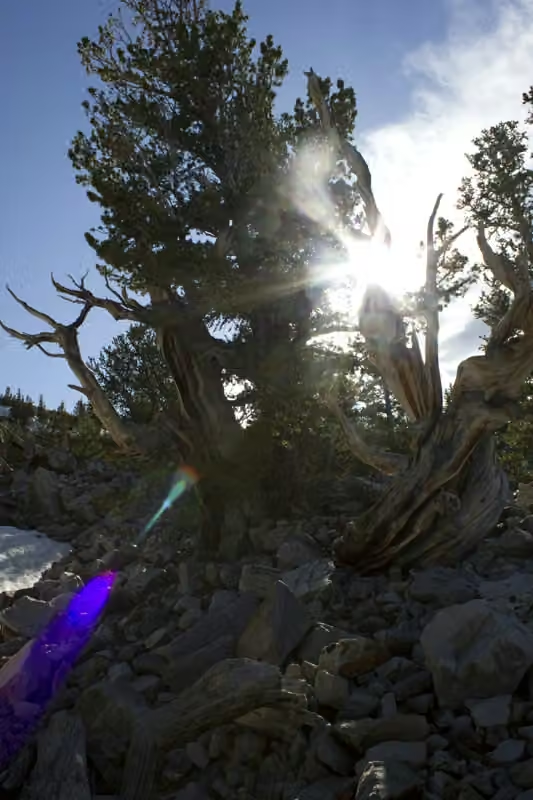
Wind shapes the trunk. Tree rings hold the years.
Great Basin bristlecone pines grow at high elevations, and some live for thousands of years. Strong winds, cold temperatures and short growing seasons slow their growth and shape their twisted, enduring forms.
Slow growth that results in dense wood helps protect against pests and decay. Some old trees have only a few living parts left but can still grow; being physically old does not always mean the entire tree is dead.
Tree rings are also a clue for studying environmental changes. Scientists read past growth conditions from wood, and what the park protects are not just standing trees but also ancient wood on the ground that holds research value.
The open country has always been inhabited.
The Native American Affairs department of Nevada introduces the tribes as Washo, Northern Paiute, Western Shoshone, Southern Paiute, and Mohave. Each tribe, reservation, and urban community has its own history and contemporary life. Nevada is not a blank slate waiting to be discovered, and narratives of place should not end with the arrival of railroads and mining.
As the city lights fade, the stars appear.
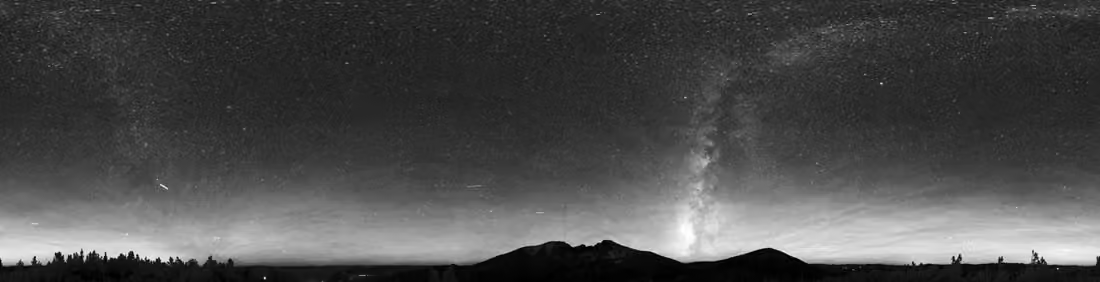
Far from the bright lights of big cities, and with its elevation, air quality, and humidity, the basin provides a good environment for stargazing and astronomical research. The park adjusts lighting and reduces unnecessary lights to protect this dark-sky resource.
Seeing the Milky Way also depends on cloud cover, the phase of the moon, and the season, not every night offering the same sky. From Las Vegas's glow to here, Nevada presents two distinctly different yet equally worthy nighttime experiences.
The desert’s quieter colors.
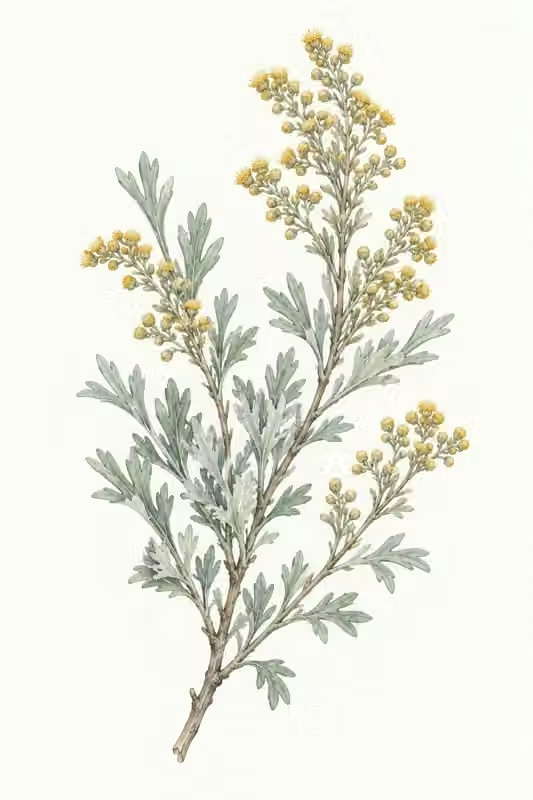
Nevada’s state flower comes from big sagebrush. Its gray-green foliage and small flower clusters belong to the high desert landscape, offering a quieter beauty than large petals.
Big sagebrush also appears on the state flag. Seen alongside city lights, red rock and ancient pines, it connects a public symbol with the actual landscape. Nevada’s beauty extends beyond its brightest lights.
Beyond the visitor centers, everyday Nevada.
Industries & establishments · 2023
The work that keeps communities running.
Accommodation and food services are important parts of Nevada's employment structure, but residents in healthcare, retail, construction, and business services also provide a significant number of jobs. This annual report covers establishments and can be read in conjunction with the recent Las Vegas tourism update.
The state recorded 77,297 employer establishments and 1,345,222 paid employees. A single company may operate several stores, offices, or factories, so establishments are not a count of registered companies.
U.S. Census Bureau, 2023 County Business Patterns. The series primarily covers private, nonfarm establishments with paid employees. Employment is measured for the pay period that includes March 12. The 2023 release was the latest in this series available when checked; it is not a measure of current monthly employment.
An editorial feature by STATE.REPORT. Image creators and licenses are credited below.
Sources & further reading
U.S. Census Bureau: state population estimates for July 1, 2025.
National Park Service: A system of protected areas encompassing desert basins, mountain ranges, and diverse altitudinal ecosystems.
National Park Service: Crustal extension, fault blocks, and Basin and Range topography.
Nevada State Parks Department: Jurassic Sandstone, Petroglyphs, and Park History.
National Park Service: Studies on Ancient Tree Growth, Wood Characteristics, and Age.
National Park Service: Dark Sky Protection and Stargazing Environments.
National Park Service: High altitude, low humidity, and astronomical observation.
City of Reno: The river, railroad, and university.
Carson City government: a sandstone building that was constructed in 1871.
Nevada State Historic Preservation Office: Comstock Mining District and Transportation Network.
Nevada’s Indigenous affairs agency: distinct peoples, tribes and urban communities.
Southern Nevada Water Authority: water supply, indoor water recycling and outdoor conservation.
Nevada Legislature: big sagebrush and other statutory state symbols.
Image credits & licenses
Night aerial view, Las Vegas, Nevada, 04649u.jpg · Carol M. Highsmith · Public domain。
Las Vegas from above (40064746644).jpg · Mike McBey · CC BY 2.0。
Truckee River in downtown Reno - 2021-11-14 - Sarah Stierch.jpg · Missvain · CC BY 4.0。
Skyline of Carson City, NV.jpg · Quintin Soloviev · CC BY 4.0。
Red Rock Canyon National Conservation Area view 031513.JPG · Wilson44691 · CC0。
Black and white view of the Milky Way and starry night sky over Great Basin National Park, Nevada. (0d531812-1dd8-b71b-0be5-9d415b31201d).jpg · NPS · Public domain。
Great Basin 03.jpg · AndrewKPepper · CC BY-SA 4.0。
Aztec Sandstone - Valley of Fire.jpg · The Cosmonaut · CC BY-SA 2.5 ca。