

New Hampshire
Voices in the forest. Light along the shore.
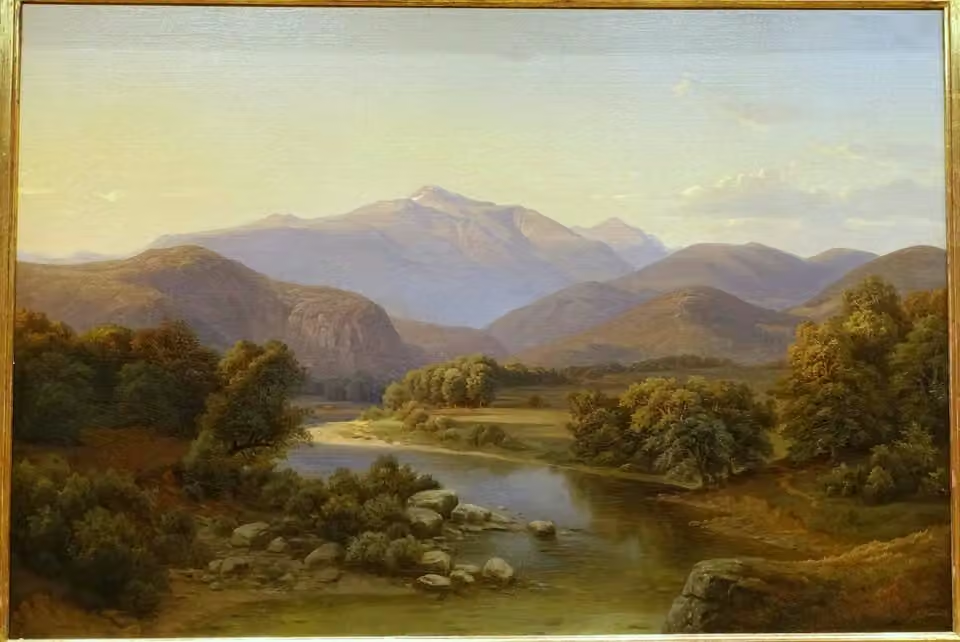
With seasonal colors.Closer to homeFarms and studios
In the realm of personal creation in everyday life.Toward the seaOld neighborhoods and islands
With new observations
The White Mountains, lake country, river cities, and a short coastline bring different scales of life into one state. Mountain streams once powered factories; harbors connected distant places; farmhouses and gardens became workplaces for poets, painters, and sculptors.
Into the mountains, following the sound of water.
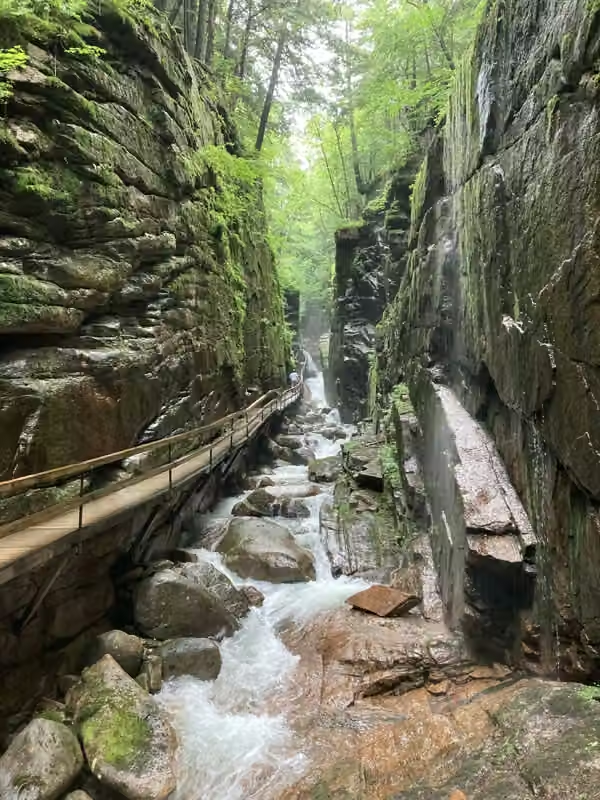
A narrow path through granite.
The gorge extends about 244 meters along the foot of Mount Liberty. Its walls rise approximately 21–27 meters, narrowing to only a few meters apart in places. The boardwalk follows the rock and stream through the passage.
The more susceptible basaltic veins once entered the granite fissures. As the overlying strata disappeared, water, freeze-thaw cycles, and long-term weathering continued to expand the channels, gradually forming today's canyon.
Mosses, ferns, and small trees cling to crevices. Closer inspection reveals the mountain landscape as a mosaic of temperature, humidity, and ever-changing textures at our feet.
Autumn on the water. Life along the shore.
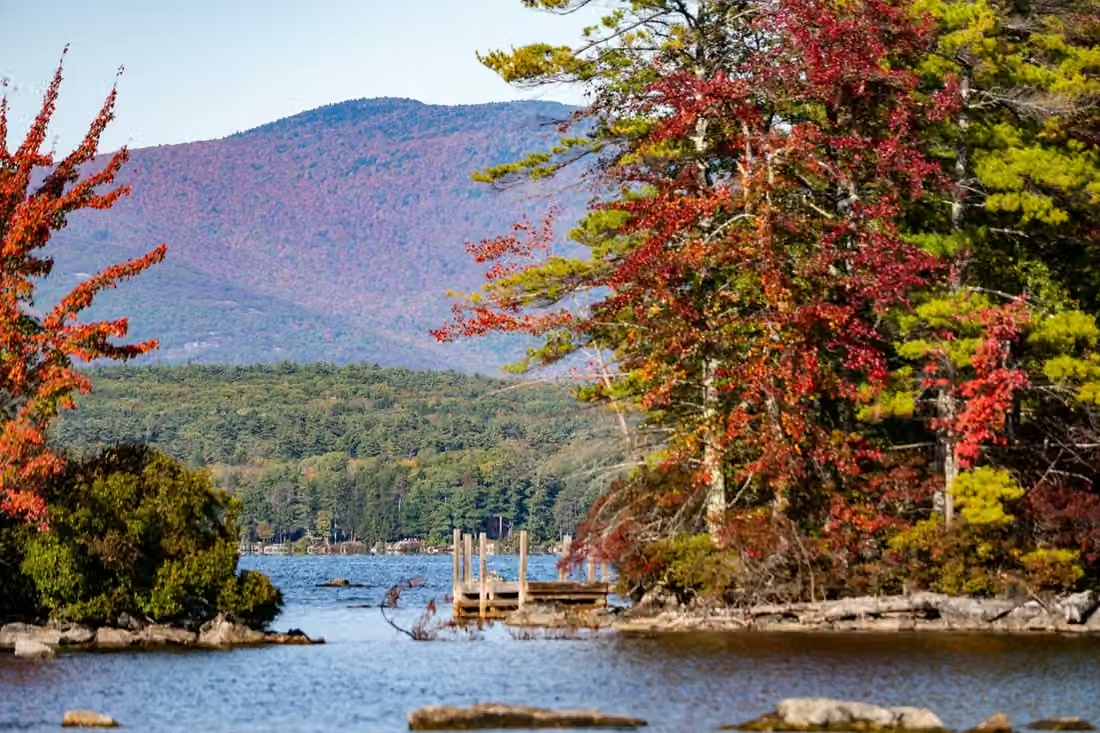
Lake bays, islands, and coastal towns divide the same stretch of water into different scenes of life. Summer sees a concentration of boats, vacation homes, and dining activities, while the autumn foliage transforms the shoreline anew.
Lake protection also occurs far from the water's surface. Runoff from rain, shoreline erosion, septic systems, and nutrient input can all affect water quality; local protection organizations continue their work through monitoring, restoration, and public education.
Seeing clear lake waters does not mean the problem has been solved. Long-term sampling and watershed management allow residents to know where changes occur and help maintain the daily use of this body of water.
A poem may begin on the path outside the door.
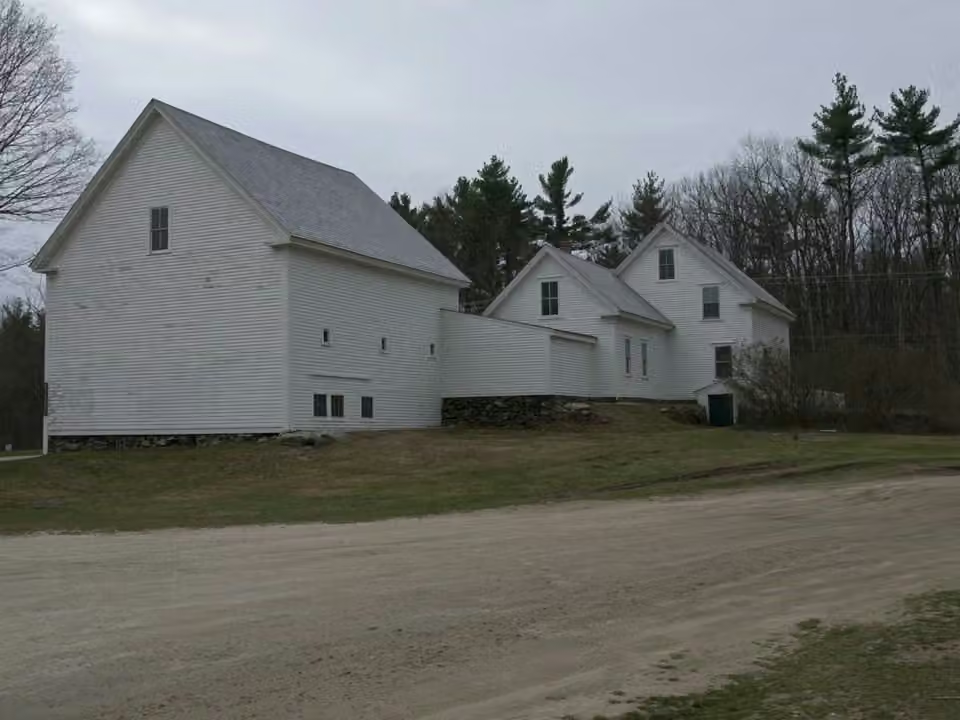
The Frost family arrived on this farm in 1900 and lived there until 1909, after which they sold the property in 1911. Poultry farming, farming, fruit orchards, and teaching at the nearby school constituted life during this period.
The fields, forests, and spring waters entered his observations, helping him form the familiar poetic voice he would later be known for. In the ordinary scenes, the distances, choices, and questions between people gradually emerged.
In 1965, the state government purchased the historic home and part of the land; the restoration process proceeded with the involvement of the family and trustees, and it opened to the public in 1975. Today's Nature and Poems Trail allows reading to return to the outdoors.
Not every tree needs to be a symbol.
Farmhouses first served as a place where a family lived and worked. The remaining houses, orchards, and forest edges provide identifiable spaces for the experiences of the writer.
Sculpture in the garden. Homes in the neighborhood.
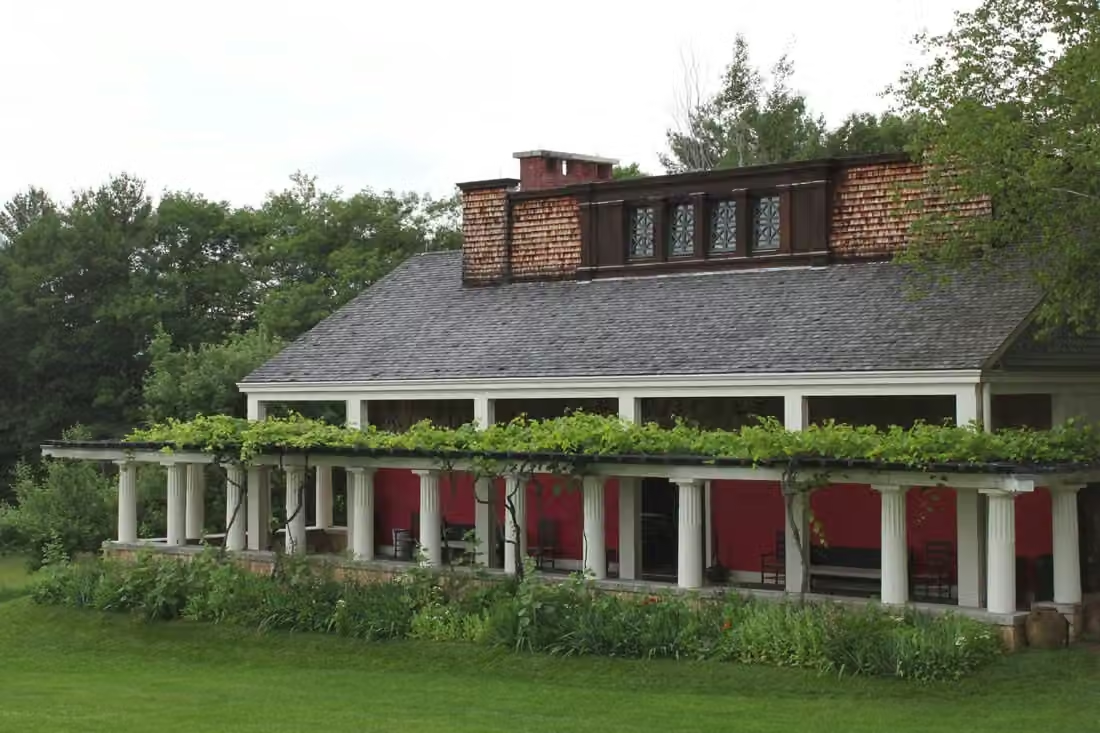
Art at home in a mountain village.
Augustus Saint-Gaudens came to Cornish in 1885 and converted an old barn into a sculpture workspace. Artists, writers and landscape designers later settled nearby, forming an influential artistic community.
The environment preserved by the small studio, garden, and residence allows for an accessible scale to view the model, behind-the-scenes work, trials, and daily work that underlie public commemorative sculptures.
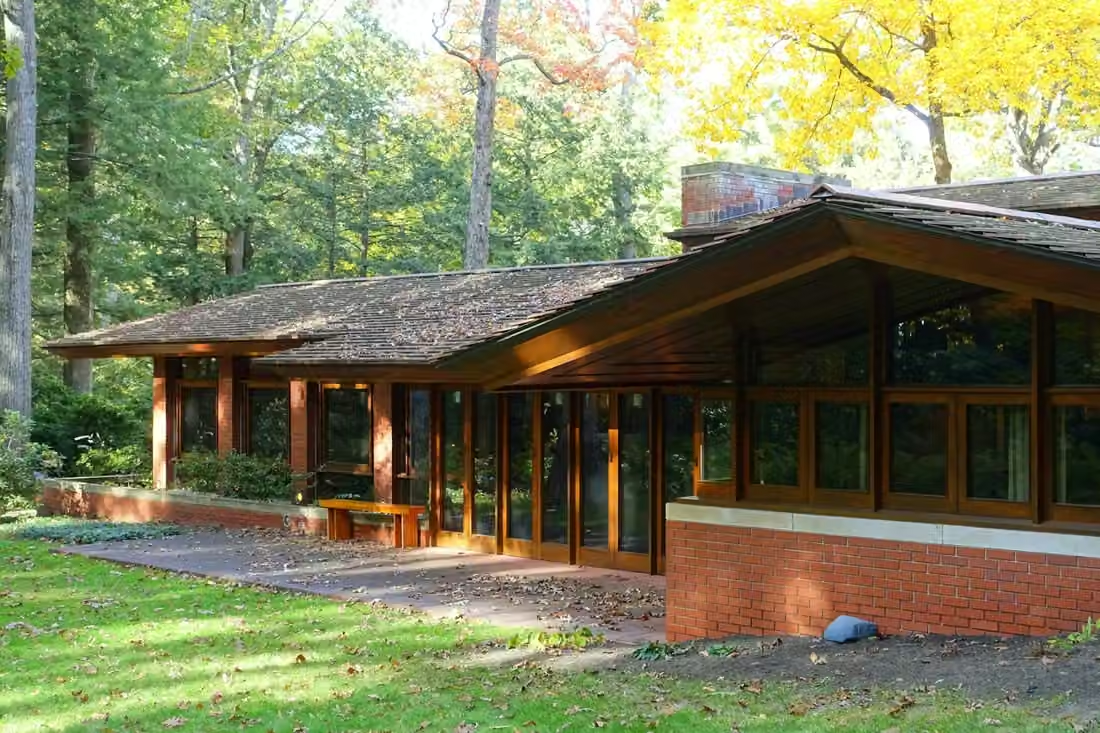
A window onto a new way of living.
The Zimmerman House was designed by Frank Lloyd Wright. The low-pitched roof, brick walls, wood, and garden relationship demonstrate his concern for the overall space of living areas.
The living scale is smaller than that of monumental buildings, yet it directly faces the way of lighting, storage, living, and viewing the garden. It adds a quiet and meticulous architectural experience to the industrial city.
Generations of work behind the brick walls.
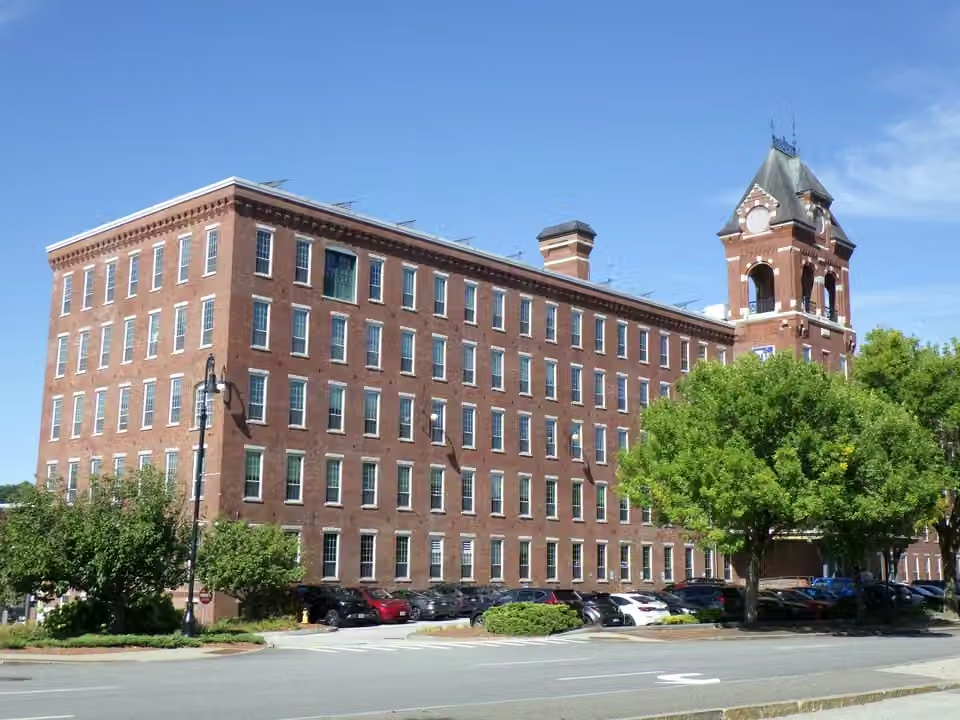
The Amoskeag mill complex developed alongside the river, canals, dams, and railways. Textile production required buildings, power, and transport, drawing workers and families into the city.
Manchester Historical Society records these changes through objects, photos, and corporate and family archives. Beyond the machines and factories, the lives of workers, immigrant experiences, and community organizations are equally important.
The former industrial area later found new uses. To understand a city that was once industrial, one must look at how buildings are preserved, as well as how jobs, skills, and services evolve with the times.
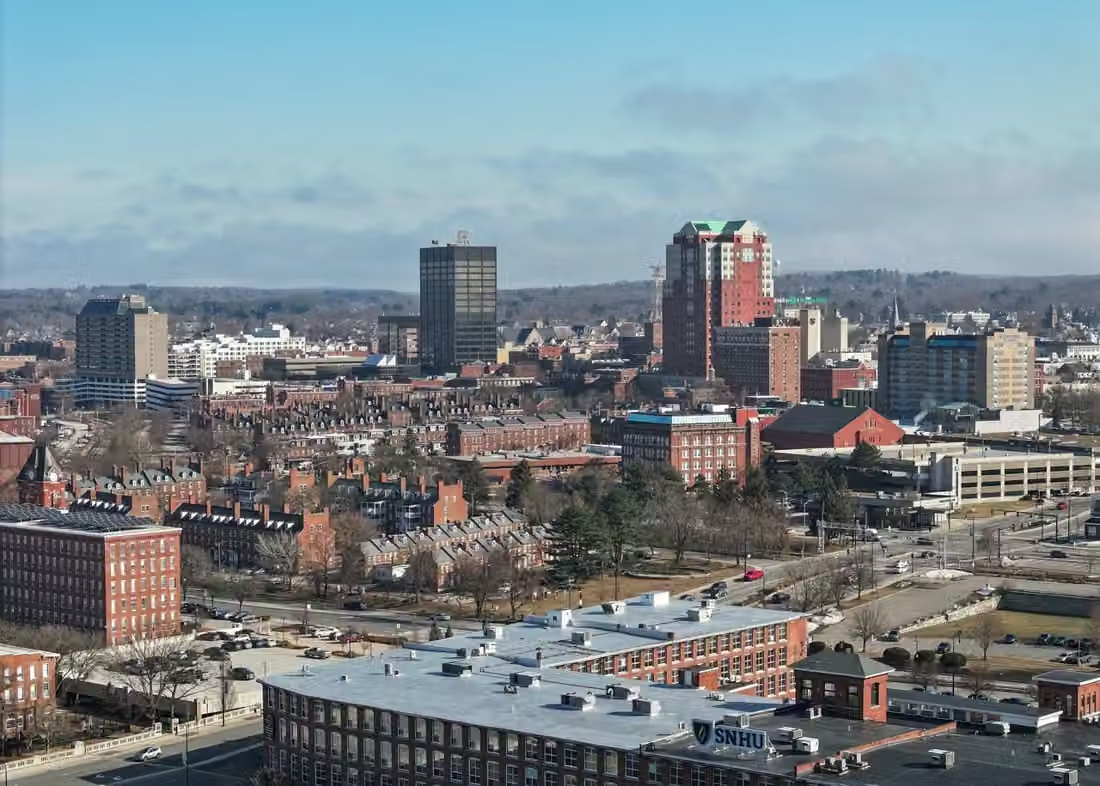
New products reach distant markets.
The latest June report by the state government shows aerospace and components exports at approximately $880 million, industrial machinery with computers at about $852 million, and electrical equipment at around $838 million. Each category corresponds to different processes, suppliers, and customers.
Germany, Canada, and Mexico were the top three destinations at the same time. Export statistics reflect cross-border movement of goods, cannot be directly equated with corporate profits, and does not represent that all stages are completed in the same city.
New Hampshire's Department of Business and Economic Affairs reports June 2026 export statistics using U.S. Census Bureau trade data; amounts are shown in round numbers. Total goods exports for the full year 2025 were approximately $7.197 billion.
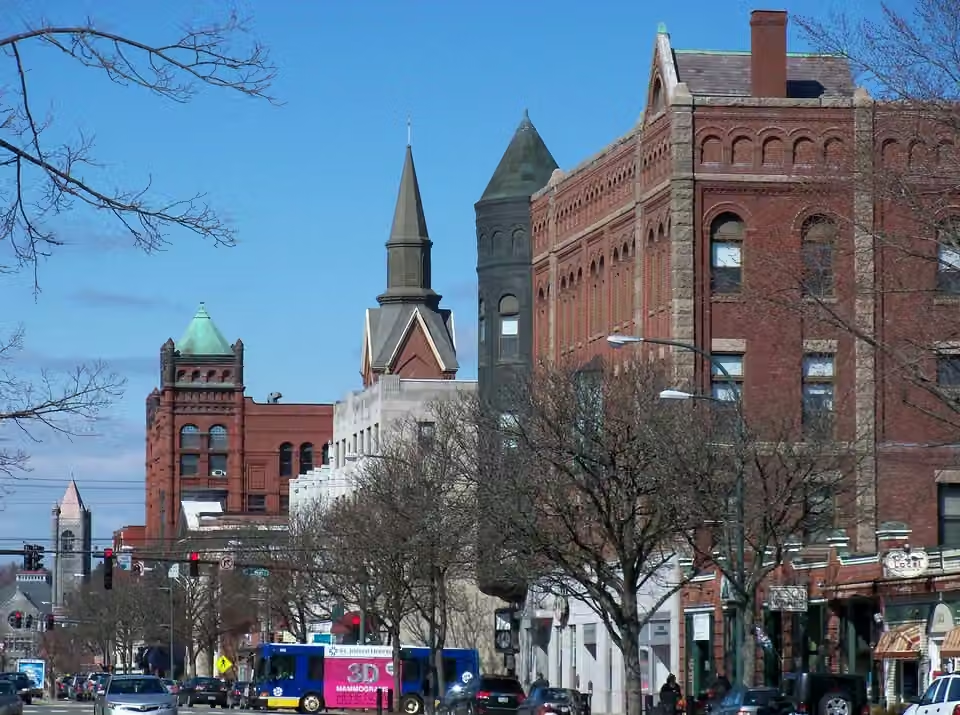
Beyond Main Street, a network of commuters and services.
Southern cities connect with the lifestyle and work circles of Massachusetts. Main Street businesses, residential areas, and workplaces are connected with cross-state commutes, forming a different daily rhythm from the northern mountain regions.
Where residents live, work, and spend their time can affect business hours and location for restaurants, retail, and local services. For business-to-business operations, it's important to understand the actual equipment, venues, and supply chains used by customers.
Down 1,500 jobs from July. Manufacturing employed about 67,800, up 200 from July. Statewide and individual industry trends did not move in the same direction.
U.S. Bureau of Labor Statistics, released September 18, 2026; seasonally adjusted, with preliminary August figures.
Industries & establishments · 2023
The work that keeps communities running.
Mountain tourism, southern cities, and coastal communities have different customer bases and seasonal rhythms. Industries such as healthcare, retail, professional services, and manufacturing form the foundation of local jobs.
The state recorded 39,298 employer establishments and 628,166 paid employees. A single company may operate several stores, offices, or factories, so establishments are not a count of registered companies.
U.S. Census Bureau, 2023 County Business Patterns. The series primarily covers private, nonfarm establishments with paid employees. Employment is measured for the pay period that includes March 12. The 2023 release was the latest in this series available when checked; it is not a measure of current monthly employment.
A short coastline with a long history.
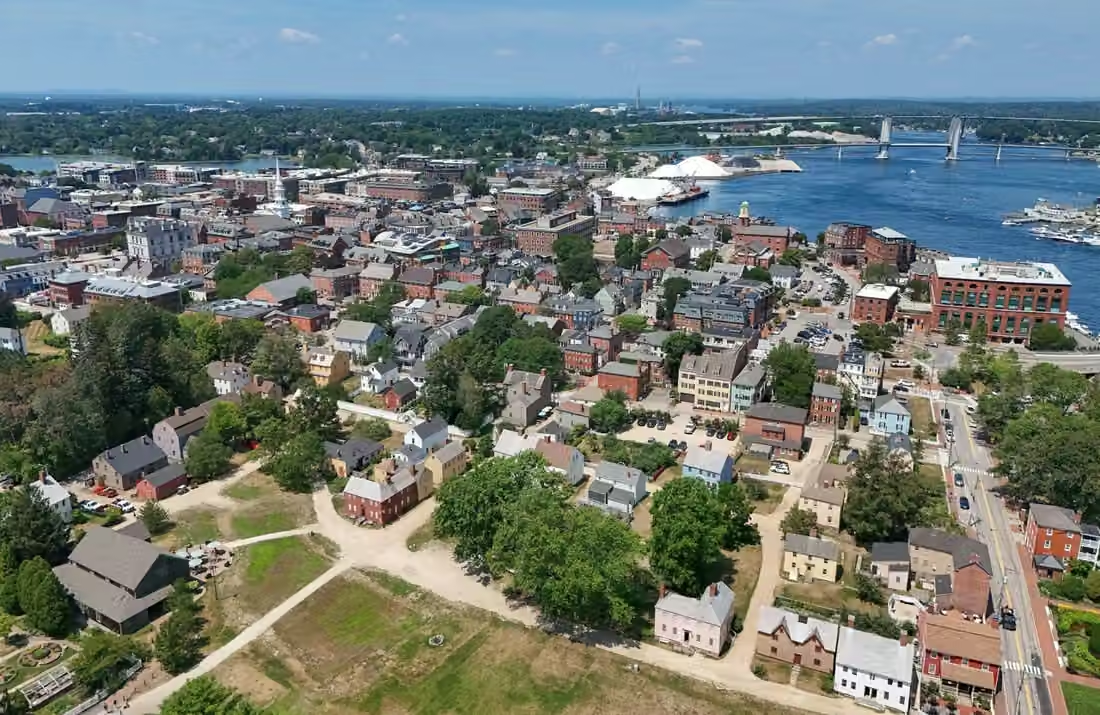
Time unfolds within a single neighborhood.
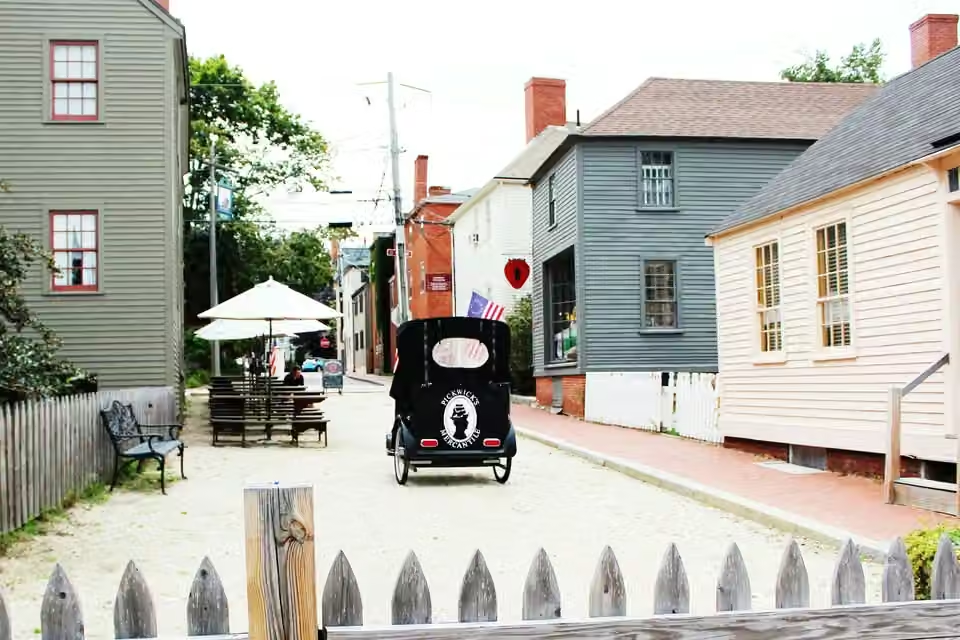
Strawbery Banke Museum preserves the buildings, gardens, and life stories of the Puddle Dock neighborhood. Many houses remain on their original sites, allowing visitors to compare family experiences across generations in the same streets.
Its creation is also tied to twentieth-century debates over urban renewal. Faced with demolition, local preservationists worked to save historic buildings. The site opened to the public as an outdoor history museum in 1965.
Stores, kitchens, porches, and rooms were supplemented by the grand narrative of port cities. Sea trade changed the city and entered ordinary people's lives through food, occupations, and housing.
A classroom out at sea.
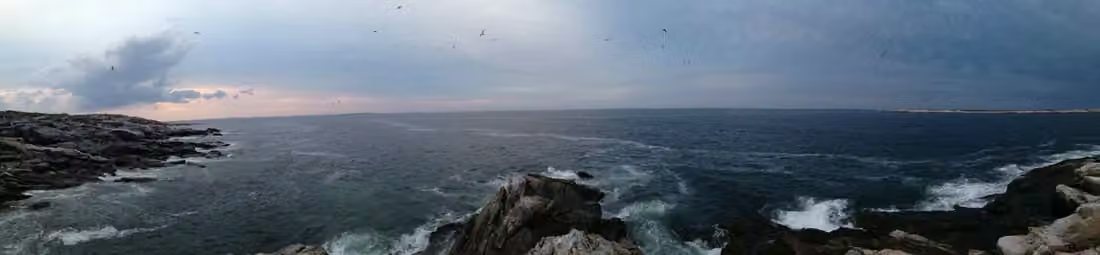
Island life is part of the lesson.
Shoals Marine Laboratory is operated jointly by the University of New Hampshire and Cornell University. Its island classroom covers marine life, intertidal habitats, birds, and sustainable engineering, with students learning observation and sampling in the field.
Appledore Island lies in Maine, while its educational and research partnerships cross state lines. Wind power, solar energy, and island infrastructure are also practical subjects for field teaching.
New ocean sensors in 2026.
On August 31, 2026, the university reported that its researchers and partners had deployed a cabled ocean observing system near the Isles of Shoals that summer. It transmits acoustic and environmental data in real time.
The project connects underwater sensors, submarine cables, and island data facilities to observe changes in temperature, salinity, currents, and acoustic activity. Universities, engineering firms, and island stations participate in the same long-term observation.
The sweetness of spring begins with changing temperatures.
University of New Hampshire Extension explains that freezing nights followed by warmer days favor maple sap flow. The collected sap must be evaporated and concentrated to become the syrup familiar at the table.
The woods, equipment, fuel, and weather determine the pace of production. The steam from the sugar shacks, family workshops, and seasonal visits make the forest products an integral part of the community culture.
A little spring beside the stone wall.
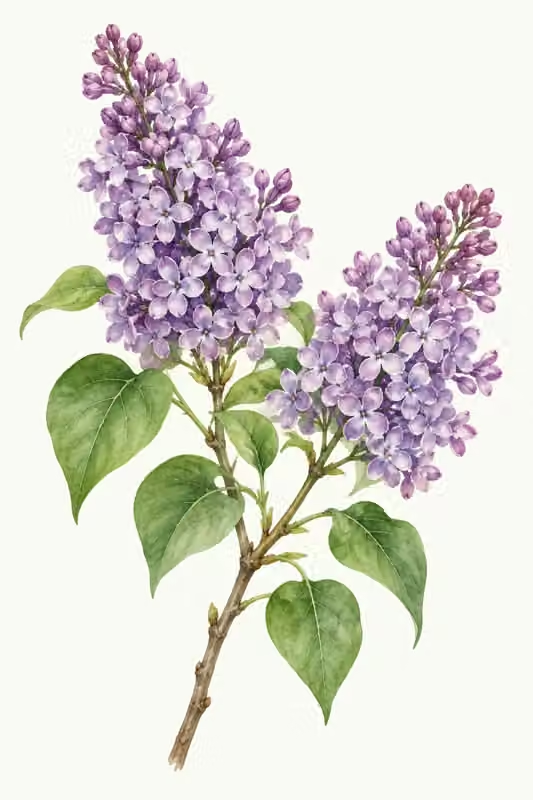
Purple lilac is the official state flower of New Hampshire. Its dense panicles and pale purple hue make it a gentle identifier for the woods, villages, and gardens between.
New Hampshire's beauty is both distant and close: a gorge, an old mill, a farmhouse, and instruments recording change beneath the sea all belong to its present-day story.
An editorial feature by STATE.REPORT. Image creators and licenses are credited below.
Sources & further reading
U.S. Census Bureau: state population estimates for July 1, 2025.
New Hampshire State Parks: granite, dikes, running water and gorge trails.
Mount Washington Weather Observatory: Scientific Observations Resumed at the Summit in 1932.
Lake Winnipesaukee Alliance: Water-quality monitoring, watershed restoration, and public education.
The Frost Farm Trustees: Family Life, Education, and Historic Preservation.
National Park Service: Augustus Saint-Gaudens and the local artist community.
National Park Service: Workspace and Sculpture Creation.
Frank Lloyd Wright Foundation: Residential Design and Living History.
Manchester Historical Society: Rivers, factories, transportation, and local life.
Strawbery Banke Museum: Puddle Dock, urban renewal, and preservation.
Strawbery Banke Museum: Buildings on their original sites, family histories, and change over time.
University of New Hampshire: Marine Ecology, Island Facilities, and Teaching.
New Hampshire University, August 31, 2026: Near Sea Sensors, Cables, and Real-Time Data.
University of New Hampshire Extension Service: Day and night temperature differences, sap collection and sugaring.
New Hampshire law § 3:5: Official name of the state flower.
Image credits & licenses
Mount Washington by Ann Sophia Towne Darrah, 1857, oil on canvas - Currier Museum of Art - Manchester, NH - DSC07516.jpg · Daderot · Public domain。
Manchester, New Hampshire skyline.jpg · Quintin Soloviev · CC BY 4.0。
Nashua NH Main Street 50.JPG · Jon Platek · CC BY-SA 3.0。
Portsmouth, NH.jpg · Quintin Soloviev · CC BY 4.0。
Saint-Gauden Little Studio.jpg · Beth Stiner · CC BY-SA 3.0。
Flume Gorge July 2023.jpg · MyCatIsAChonk · CC BY-SA 4.0。
Robert Frost Farm1.jpg · Ymblanter · CC BY-SA 3.0。
Lake Winnipesaukee - Fall Foliage (54048519759).jpg · Accidental Nomad from Between States, USA · CC BY 2.0。
A Real Store in the Strawbery Banke Historic District.jpg · Julia Fey · CC BY-SA 4.0。
Amoskeag (Manchester Mills No. 2) - Manchester, NH (1).jpg · Bmzuckerman · CC BY 4.0。
Zimmerman House - Manchester, New Hampshire - DSC07796.jpg · Daderot · CC0。
Appledore Island Panorama.JPG · Opakapaka · CC BY-SA 4.0。