

to a wider world.
Ohio
Build an airplane. Blow a piece of glass. Give a song a wider audience.
A Dayton bicycle shop, Toledo’s glass furnaces, and Cleveland’s music broadcasts tell different stories of invention. Beyond them lie ancient earthworks, riverside markets, and wooded gorges. Ohio comes into focus where these worlds meet.
Before flight, a problem on the workbench.
Air experiments in a bicycle shop.
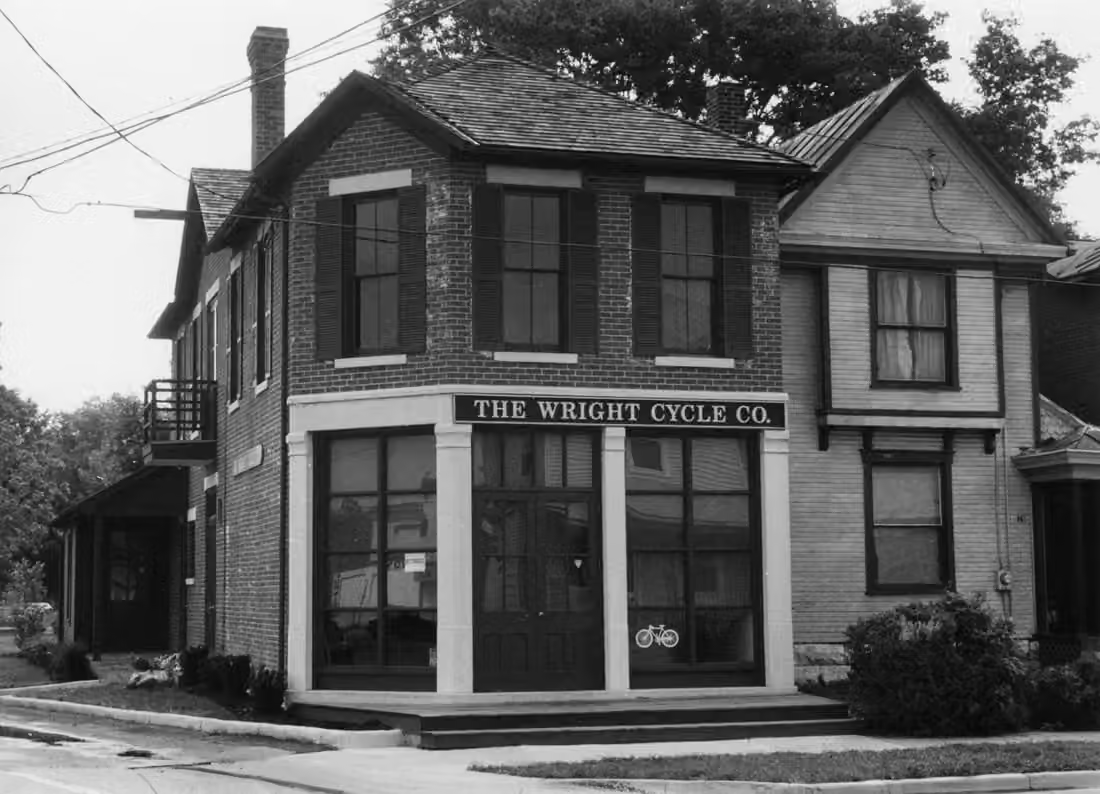
In 1901, the Wright brothers discovered that the performance of their glider did not match the calculations they had. So they decided to measure lift and drag themselves. In Dayton, they used tools from the store and a power source to build a box-shaped wind tunnel and create wing models.
Repeating tests allow them to compare shapes, arcs, and angles, rather than relying on a single flight impression. Here, breakthroughs in aviation manifest as routine tasks of measuring, machining, recording, and correcting.
From leaving the ground to controlling the turn.
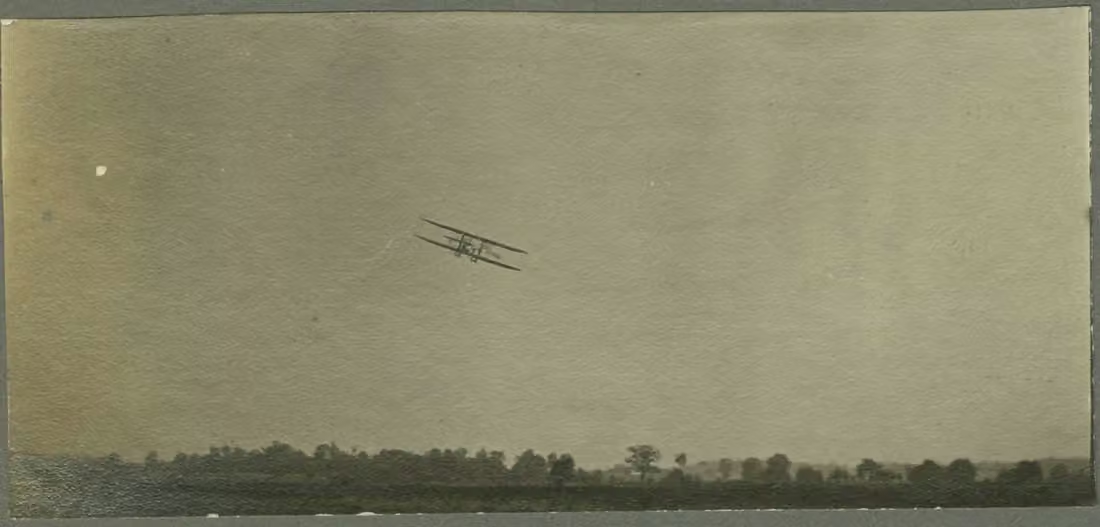
The history of aircraft and flight tests on the prairie brings a grand aviation story back to its specific location. Dayton's significance is not just the birthplace of an invention but also where continuous testing and improvement took place.
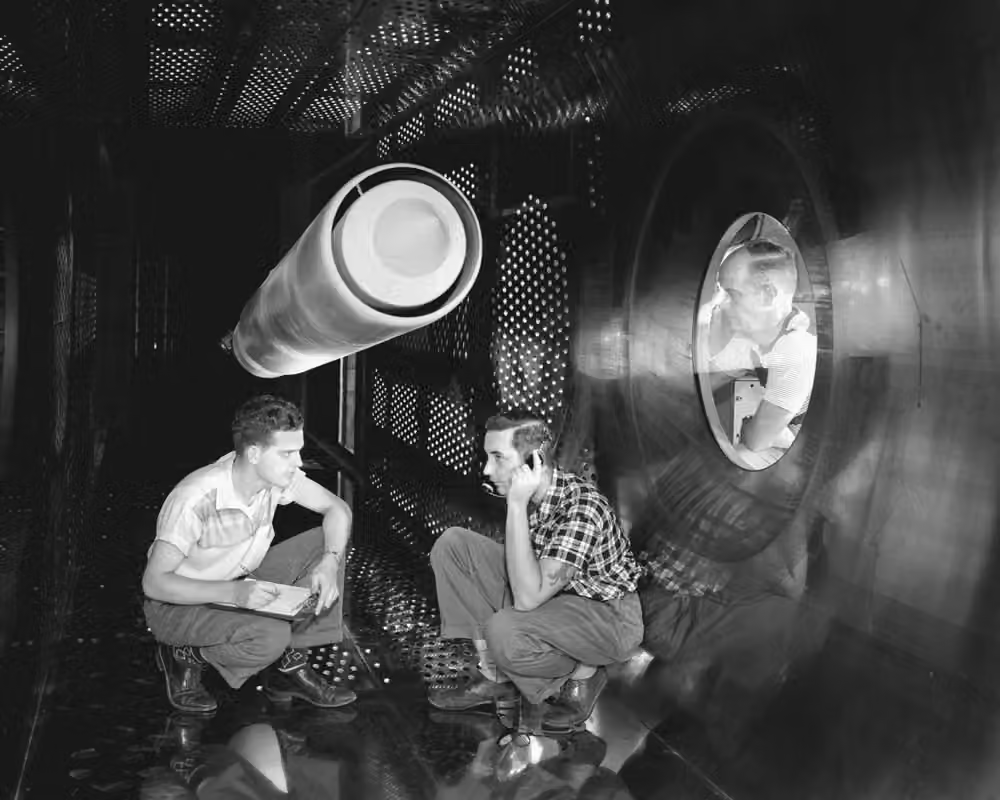
Today, the Glenn Research Center in Cleveland boasts wind tunnels, drop towers, and vacuum test facilities. Research ranges from air-breathing components to space environments. Furthering technology to practical application still requires collaboration between equipment, materials, and professionals from various disciplines.
An industrial material in an artist’s hands.
In 1962, the workshops on Toledo Art Museum grounds became an important starting point for the American Studio Glass Movement. People attempted to melt glass in smaller kilns so that artists could work directly with the material in their studios.
Early trials were not always successful. A small vase preserved in the museum records difficulties in raw material selection and annealing, and also traces the journey from trial to maturity of the technique.
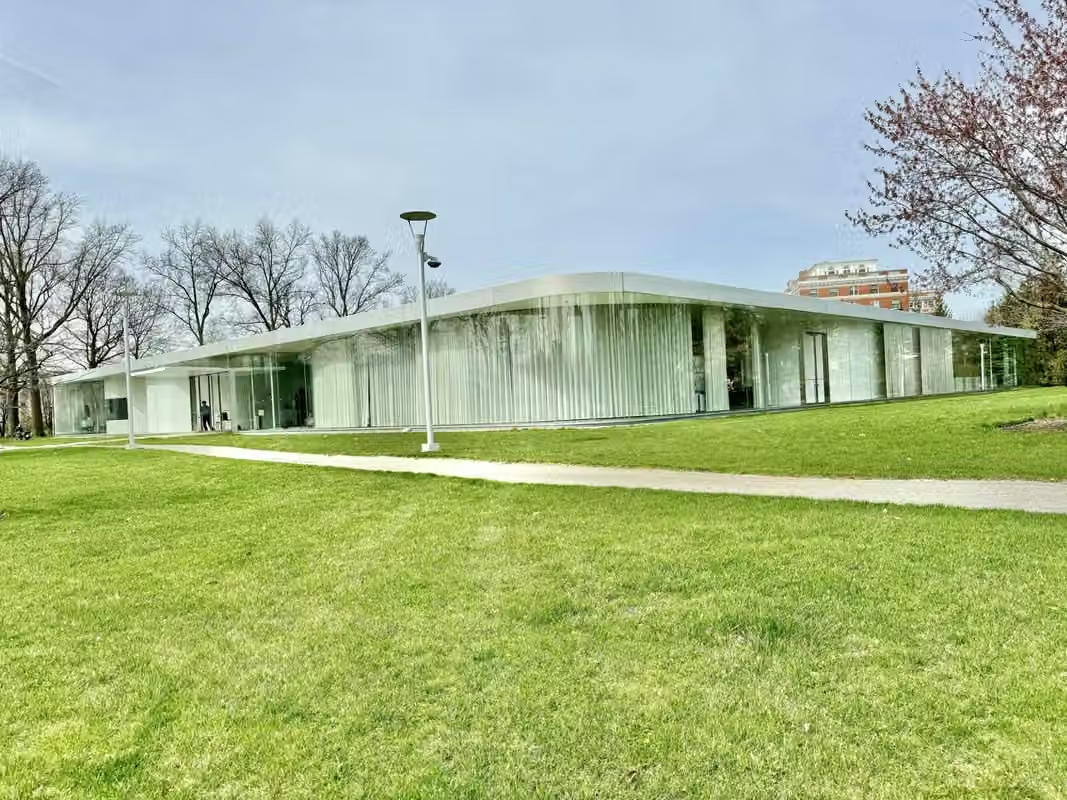
The Glass Pavilion connects collecting, viewing, and making. The transparent building responds to its materials, and it reminds us that a seemingly light piece of work has warmth, time, and long practice behind it.
A city with more than one sound.
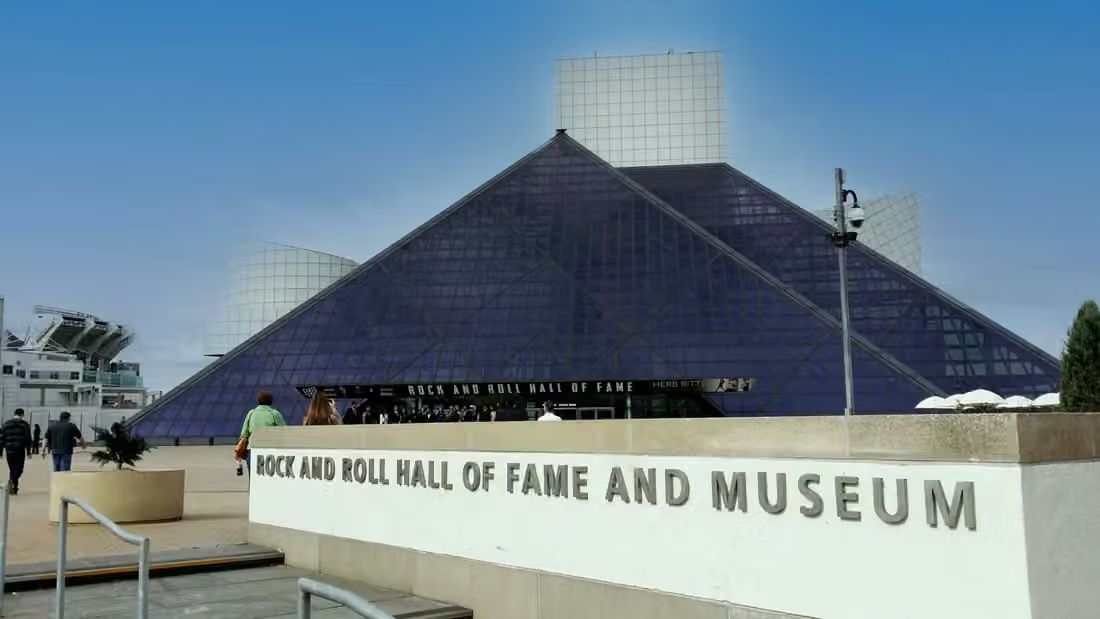
Musical traditions meet as they travel.
In the early 1950s, Cleveland radio host Alan Freed promoted rhythm and blues and the term "rock and roll" on his show. The record industry, radio stations, dance halls, and audiences all contributed to changing the scope of music dissemination.
Rock history is not a single line. The black music tradition, various performance styles from different regions, and new recording technologies have continuously shaped its sound.
The stories beyond the stage.
The Rock and Roll Hall of Fame's Northeast Ohio Music Archives not only collect memorabilia of famous musicians but also preserve records of recording studios, record labels, venues, radio stations, and performance organizations.
These jobs make a song recorded, released, and performed. A city's cultural industry is also made up of many people who do not stand in the spotlight.
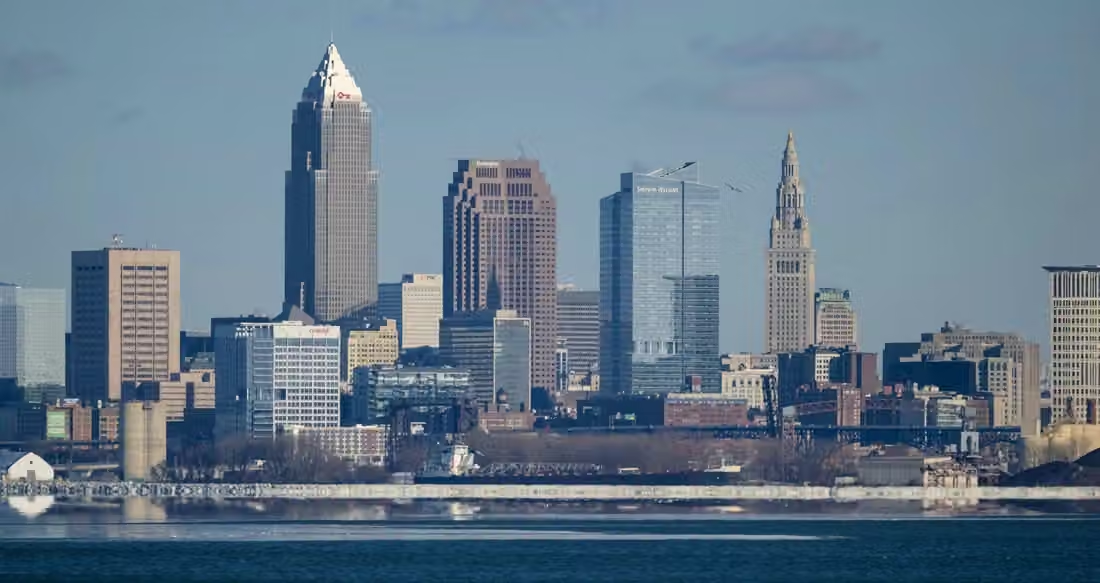
Lake Erie gives Cleveland an expansive skyline and distinct seasonal changes. The city's public waterfront spaces, urban living, and industrial history create its daily backdrop.
An old market still serving the city.
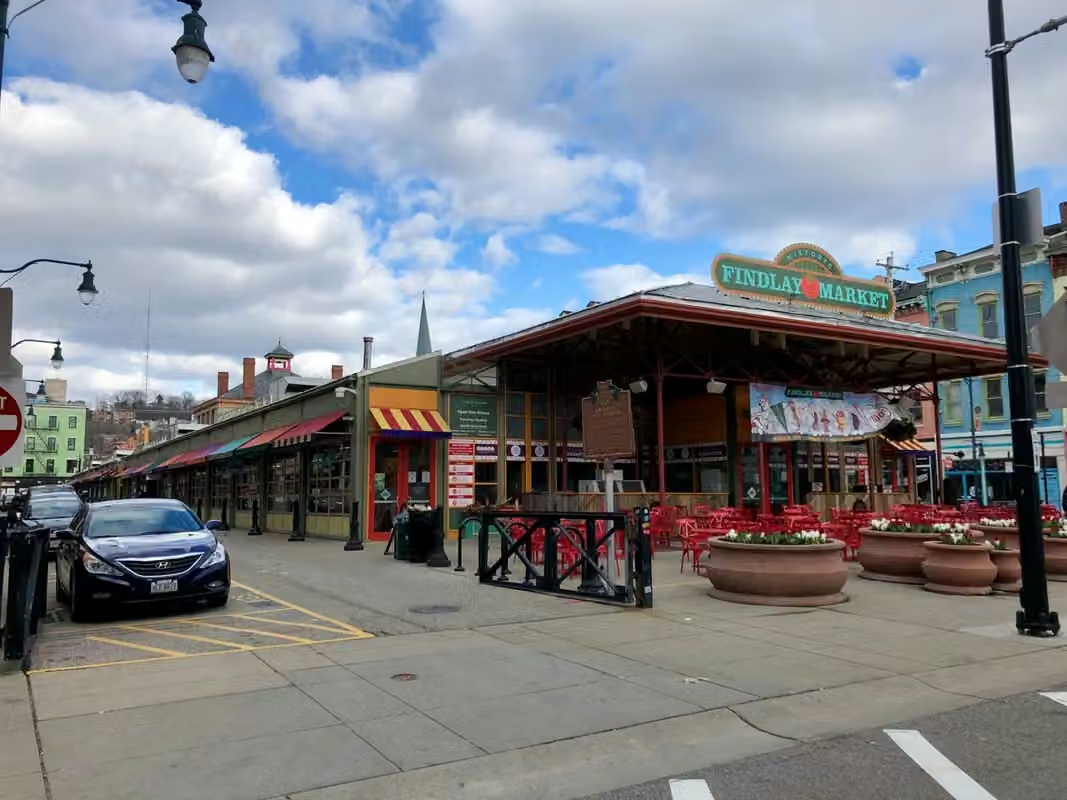
From an iron frame to the dinner table.
Findlay Market opened in 1855 and remains one of Cincinnati's historic public markets. Its originally open iron structure later gained walls, water service, and refrigeration as food storage and city life changed.
Today, people come here to shop, eat, and meet neighbors. Fresh produce and small businesses keep historic buildings functional as more than just a viewed landmark, preserving their living function.
Running a food business involves more than the market stall: sourcing, refrigeration, preparation, hygiene and customer flow all matter. A thriving neighborhood depends on sustained, practical relationships between businesses and the community.
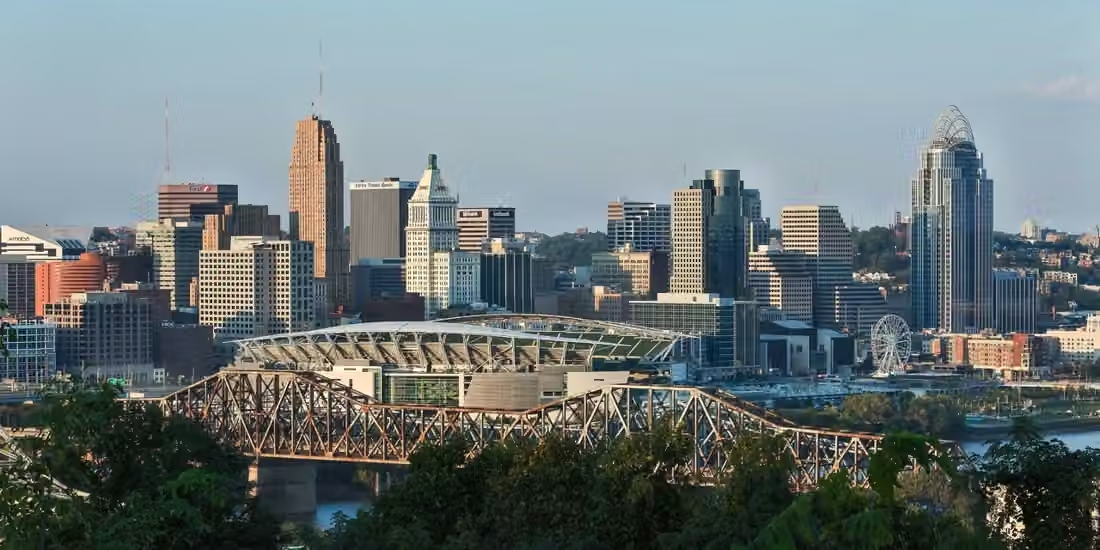
Rivers connect the cities.
Cincinnati faces the Ohio River, with Kentucky on the opposite bank. Bridges and commuting connect everyday life on both sides, while business locations, employees, and tax obligations still belong to distinct jurisdictions.
This also shows that state lines do not necessarily coincide with market boundaries. To understand a city, one should look at riverbanks, neighborhoods, thoroughfares, and the actual service areas together.
Earlier creations, between earth and sky.
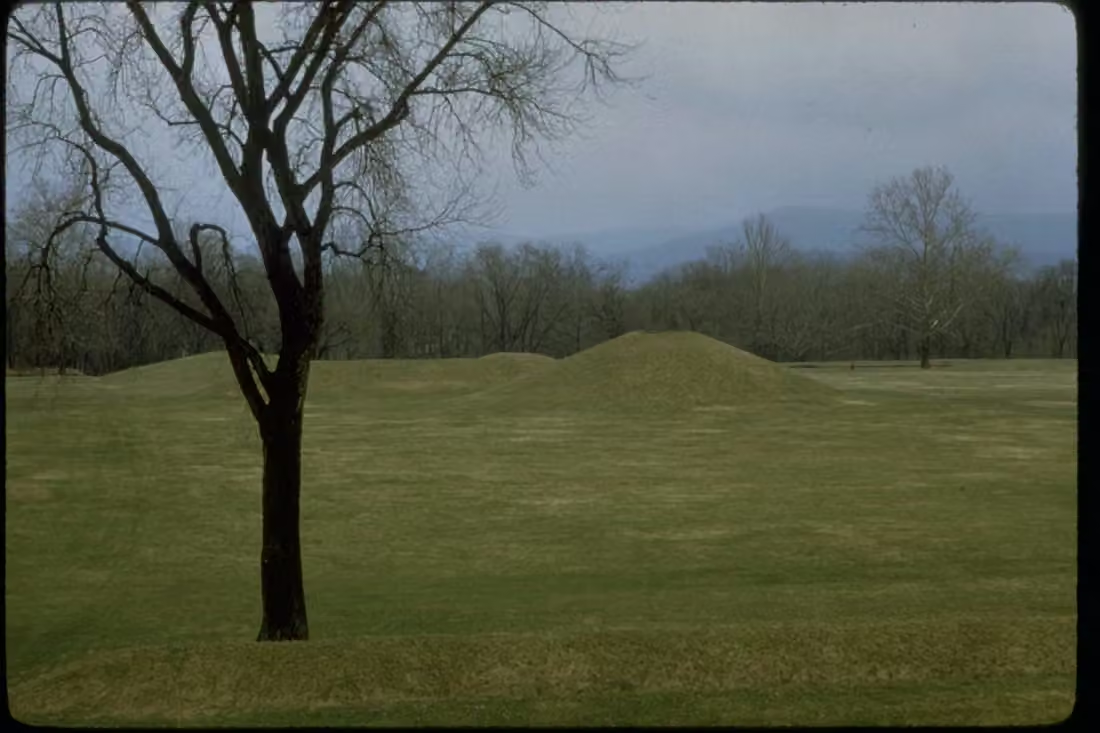
About two thousand to sixteen hundred years ago, indigenous communities constructed large earthen mounds along the tributaries of the Ohio River. Circular, square, and octagonal shapes demonstrate precise organization and align with the cycles of the sun and the moon.
Eight sites were jointly listed as World Heritage in 2023. Materials from distant regions and finely crafted objects show these places were both ceremonial centers and connected to extensive networks of exchange.
Viewing these earthen structures, one should acknowledge the knowledge and organization of the builders rather than treating them as inexplicable "mystical landscapes." The gentle undulations on the ground preserve a complex and long-lasting history.
Beyond the streets, water keeps shaping the land.
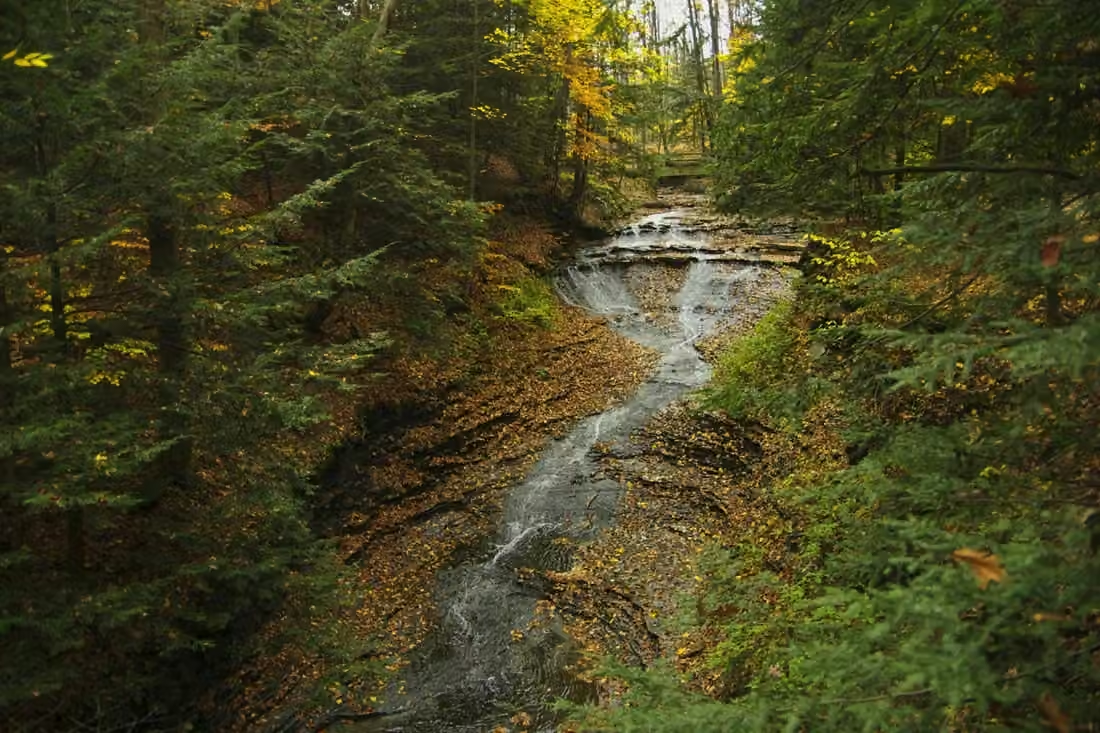
An industrial river’s recovery.
Ohio-Erie Canal brought trade and industrial development. The fire on the Cuyahoga River north of the park in 1969 became an important symbol for environmental protection.
Today's valley connects forest, wetlands, historic farms, and remnants of canals. Protection is not erasing industrial history, but reorganizing human interaction with water based on an understanding of the past.
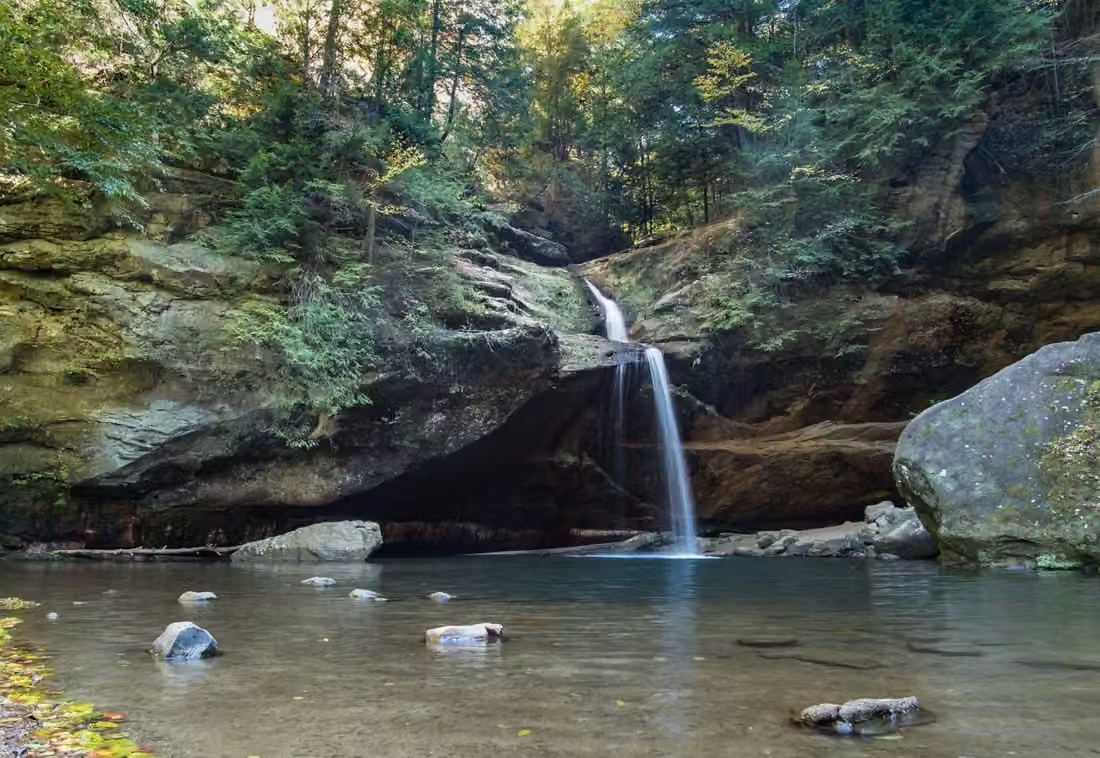
Canyons carved in sandstone.
The Blackhand sandstone of Hocking Hills varies in hardness. Softer middle layers erode more readily, creating recesses, rock shelters, and spaces around waterfalls.
Many features called caves here are open rock shelters rather than passages winding deep underground. Noticing the differences in the stone reveals more than a name alone.
Words can change the world.
Born in Dayton, Dunbar is not only a poet but also writes novels, plays, and lyrics. His works present the lives, desires, and circumstances of African Americans, influencing writers during the Harlem Renaissance era.
Considering literature and aviation together reveals another side of Dayton: some people changed how we move, while others changed how we understand one another. Technology and culture both begin with particular lives.
The steady work behind invention.
Up about 2,100 jobs from July. The statewide total gives context, but does not describe every city, industry, or business.
Down about 700 jobs from July. Manufacturing retains a substantial employment base; its size and its monthly trend are separate measures.
The unemployment rate comes from labor statistics, while the number of jobs comes from establishment surveys. These cannot be directly divided or substituted for each other.
Bureau of Labor Statistics, September 18, 2026 release; seasonally adjusted, August is the preliminary value. Numbers are converted from the statistical table, and monthly changes are rounded numbers.
An industry and the city around it.
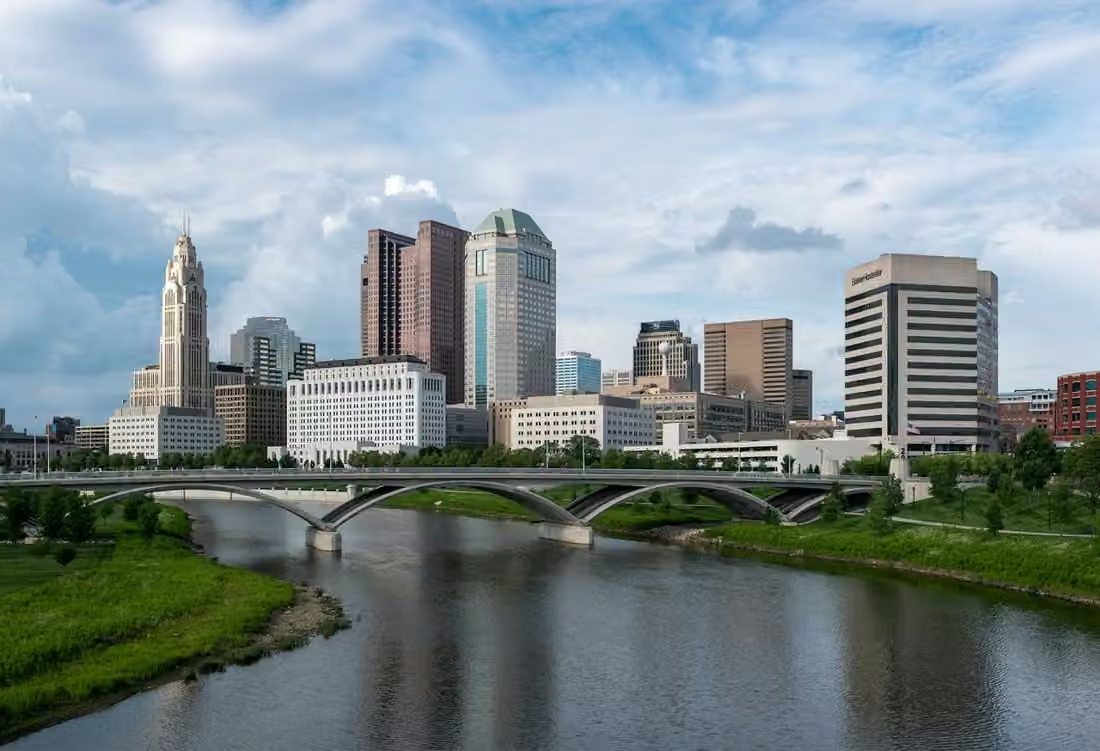
Research and materials processing, food operations, and cultural activities require different requirements for space, equipment, and personnel. The state capital functions and city services of Columbus are connected to both industrial cities along the lake and river port neighborhoods.
When choosing a location, businesses need to compare factors such as clients, suppliers, skilled talent, transportation, and day-to-day operational conditions. The size of a state's manufacturing sector cannot be substituted for the equipment capacity, quality requirements, and delivery arrangements specific to a particular project.
Industries & establishments · 2023
The work that keeps communities running.
State establishments include structures that encompass healthcare, retail, manufacturing, and professional services. Work in mature industrial areas also depends on residential living and institutional services, and cannot be summarized solely by the number of factories.
The state recorded 255,049 employer establishments and 5,081,279 paid employees. A single company may operate several stores, offices, or factories, so establishments are not a count of registered companies.
U.S. Census Bureau, 2023 County Business Patterns. The series primarily covers private, nonfarm establishments with paid employees. Employment is measured for the pay period that includes March 12. The 2023 release was the latest in this series available when checked; it is not a measure of current monthly employment.
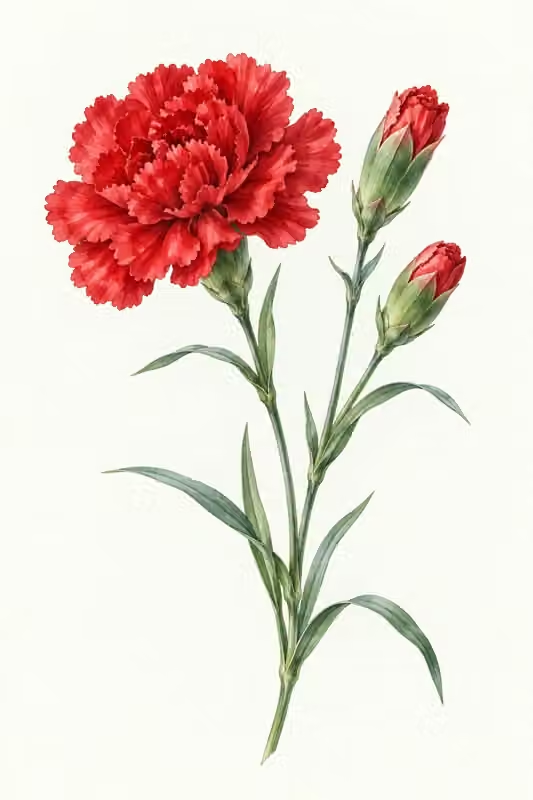
A bright red flower for everyday life.
The red carnation became Ohio's state flower in 1904 in memory of Ohio-born William McKinley. It also has ties to the growing and festival traditions of Alliance.
From the glow of a glass furnace to the music by the lakeside, from curvaceous earth buildings to corner markets, Ohio's charm isn't contained in one scene. A visitor who stays a bit longer will discover its different facets.
An editorial feature by STATE.REPORT. Image creators and licenses are credited below.
Sources & further reading
U.S. Census Bureau: state population estimates for July 1, 2025.
NASA: Model, Measurement, and Wing Testing in 1901.
NASA: Aerospace research facility in Cleveland.
NASA: Purpose of Testing Propulsion Systems and Components.
Toledo Art Museum: Workshop and Studio Glass Movement in 1962.
Toledo Art Museum Collection Record: Materials, Annealing, and Art Practice.
Rock & Roll Hall of Fame: rhythm and blues, radio and music history.
Rock & Roll Hall of Fame Library: Northeast Ohio musicians, venues, studios and record labels.
Official market records state that it opened in 1855, featuring iron structure, and underwent community changes.
Official market materials: Fresh produce, public spaces, and small vendors.
UNESCO: Eight sites, geometric forms, and astronomical knowledge.
National Park Service: Canals, Industry, and Environment Protection.
Ohio Natural Resources Department: Layer Variations, Erosion, and Rock Piles.
National Park Service: The Life and Literary Impact of Dayton Author.
The Ohio Historical Society: State Flower, McKinley, and Local Celebrations.
Image credits & licenses
Cuyahoga Valley National Park 20.jpg · Niagara66 · CC BY-SA 4.0。
Downtown Columbus View from Main St Bridge - edit1.jpg · Paul Wasneski · Public domain。
Cleveland skyline from Lakewood Park, January 2026.jpg · Erik Drost · CC BY 4.0。
Downtown Cincinnati viewed from Devou Park (cropped).jpg · EEJCC · CC BY-SA 4.0。
Wright Cycle Company, c. 1990 (9e8e6a1f-1dd8-b71b-0b7f-648ecb47291e).jpg · NPS Photo · Public domain。
Supersonic Wind Tunnel Test Section - GPN-2000-000624.jpg · NASA/GRC · Public domain。
Rock and Roll Hall of Fame - October 2015.jpg · Eric Friedebach · CC BY 2.0。
Glass Pavilion, Toledo Museum of Art, Monroe Street, Old West End, Toledo, OH - 53666570751.jpg · Warren LeMay · CC BY-SA 2.0。
Findlay Market, Over-the-Rhine, Cincinnati, OH (40608265293).jpg · Warren LeMay from Cincinnati, OH, United States · CC0。
Old Man's Cave (23067).jpg · Rhododendrites · CC BY-SA 4.0。
Hopewell Culture National Historical Park HOCU0412.jpg · National Park Service Digital Image Archives · Public domain。
Wright B Flyer in the air above Huffman Prairie (3aa6d99e-1dd8-b71b-0bd3-2c091370f328).jpg · NPS Photo · Public domain。