

Pennsylvania
Ideas on paper. Life in the making.
From a meeting room in Philadelphia to riverside factories in Pittsburgh, from farmland and neighborhoods to a house deep in the woods, Pennsylvania’s story continues through many kinds of work and life.
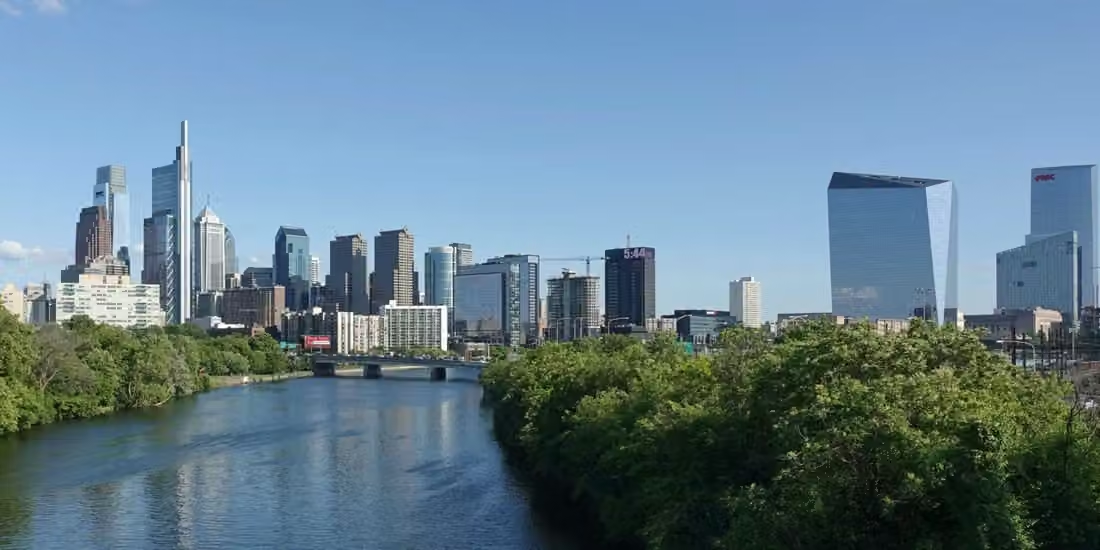
Words debated here would change a nation.
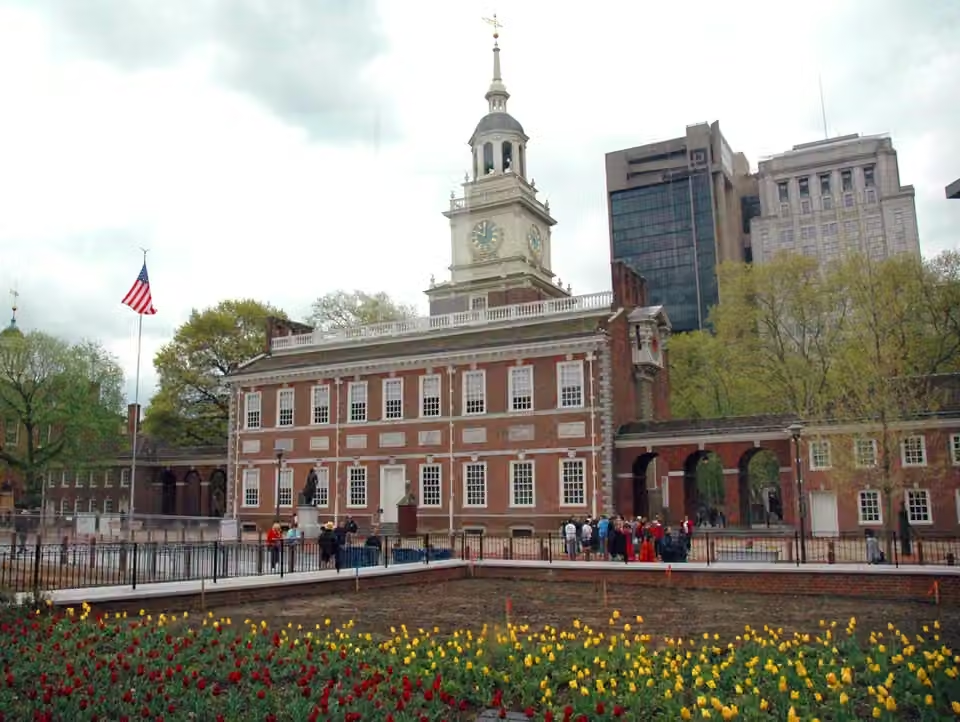
A place for public affairs.
Independence Hall originally served as the legislative building for the Pennsylvania colony, construction beginning in 1732. It once held legislative, executive, and judicial functions, not being constructed initially as a building to commemorate the founding.
The case for independence.
The Second Continental Congress held its meetings here. The Declaration of Independence was debated and signed in this building, transforming a room originally used for local affairs into an important site in American founding history.
Debating a new system of government.
The Constitutional Convention later used the same assembly room. Independence Hall can be understood through its architecture and documents, and through the ways its ideals were subsequently interpreted, practiced and contested.
Preserving history has a history of its own.
Independence Hall has changed use and undergone repairs and restoration. Nineteenth-century preservation and public commemorations helped establish its present symbolic role. Its fabric contains both early materials and later choices about how to preserve them.
From historic streets to galleries and docks.
A museum extends the city’s classroom.
The Philadelphia Museum of Art has a deep connection to the Centennial Exhibition of 1876 and its main building, which was activated in 1928, later became an important landmark for the city.
Architecture, painting, sculpture, and craft collections come together in the museum. For a city, such an institution not only preserves works but also connects people with art from different eras through exhibitions, education, and public spaces.
The journey continues after the cargo lands.
Philadelphia Port's operations highlighted the connection between the city and its hinterland: after goods leave the docks, they still need to enter storage, processing, wholesale, and distribution networks.
Food and other perishables depend on temperature control, timing, and handover records. A port's value extends beyond docking into every dependable stage of onward transport and storage.
The share of that year’s containerized imports carried as refrigerated cargo.
Philadelphia Harbor's annual report released in January 2026 shows that temperature-controlled goods are a distinctive feature of their business. TEUs are used to calculate the quantity of containerized transport, not tonnage, sales volume, or number of companies.
An uneven landscape makes connection an art.
Bridges cross the valleys. Inclines climb the hills. Transportation offers a way to understand the city itself.
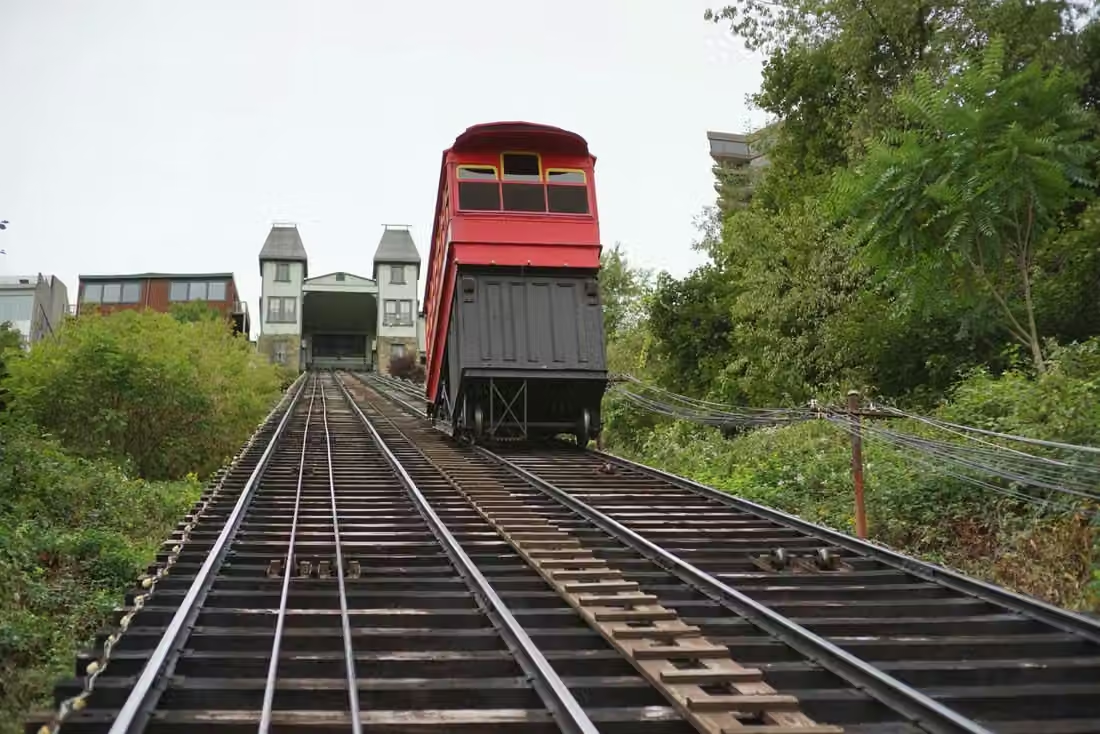
An incline into everyday life.
The Duquesne Incline opened in May 1877, an engineering response to an industrial city's steep terrain. Views from its cars and stations reveal the changing levels of roads, riverbanks, and buildings.
Bridges between neighborhoods shaped by terrain.
Allegheny River and Monongahela River converge here to form the Ohio River. Tributaries, valleys, and hillsides make crossing a daily necessity; the "City of Bridges" image stems from these geographic conditions.
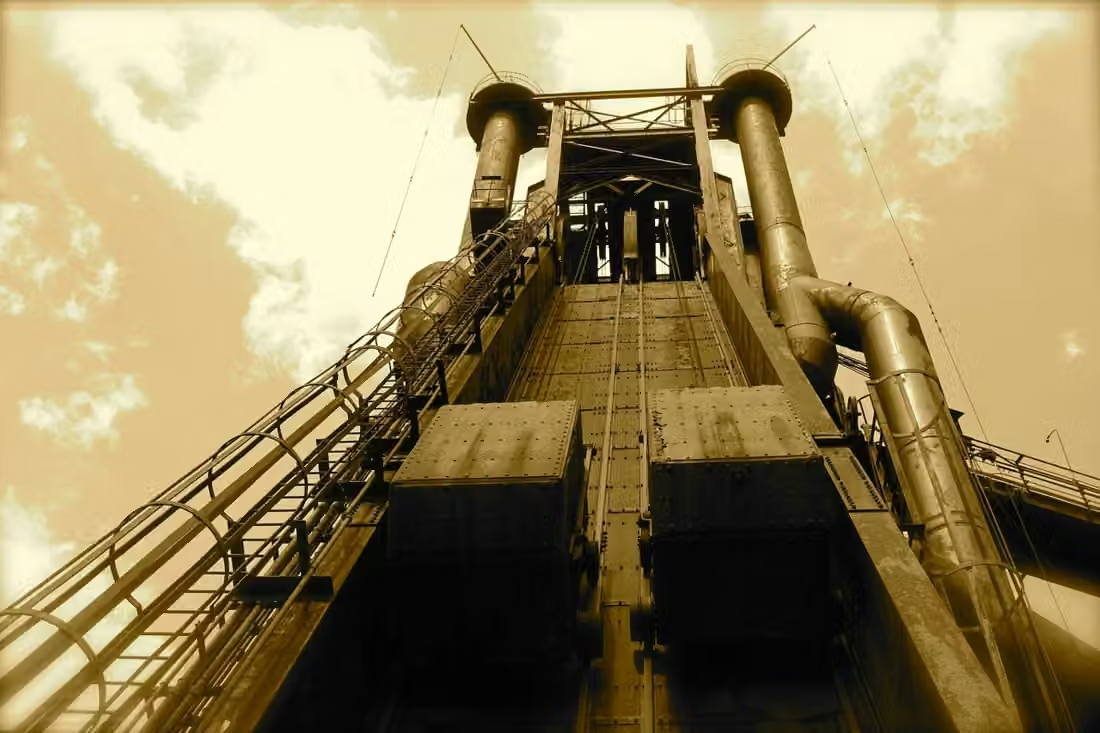
The blast furnaces make industry visible again.
The Carrie Blast Furnaces once supplied molten iron to the Homestead steelworks across the river. The furnaces, pipes and transport facilities preserve more than an industrial outline: they reveal how raw materials, energy, production stages and labor were organized.
The decline of steel production once profoundly affected valley towns. Today, heritage institutions reconnect people with this history through preservation, interpretation, and industrial arts activities, and also familiarize them with the changes in the experiences of workers and communities.
Look to industrial heritage, and don't limit it to just "glory" or "decline." How facilities operate, who works there, and how towns continue to live after a shutdown are more specific questions.
From machinery to sensing and control.
CMU's Robotics Institute was established in 1979 to conduct fundamental and applied research on tasks for industry and society. Here, mechanics, perception, computation, and control come together to provide a specific entry point for understanding contemporary technological activities in Pittsburgh.
There are still stages such as product validation, personnel, equipment, and customer demand between research capabilities and business operations. For engineering services and manufacturing support, clearly addressing which specific problems can be solved is more meaningful than simply using the title of "technological city" broadly.
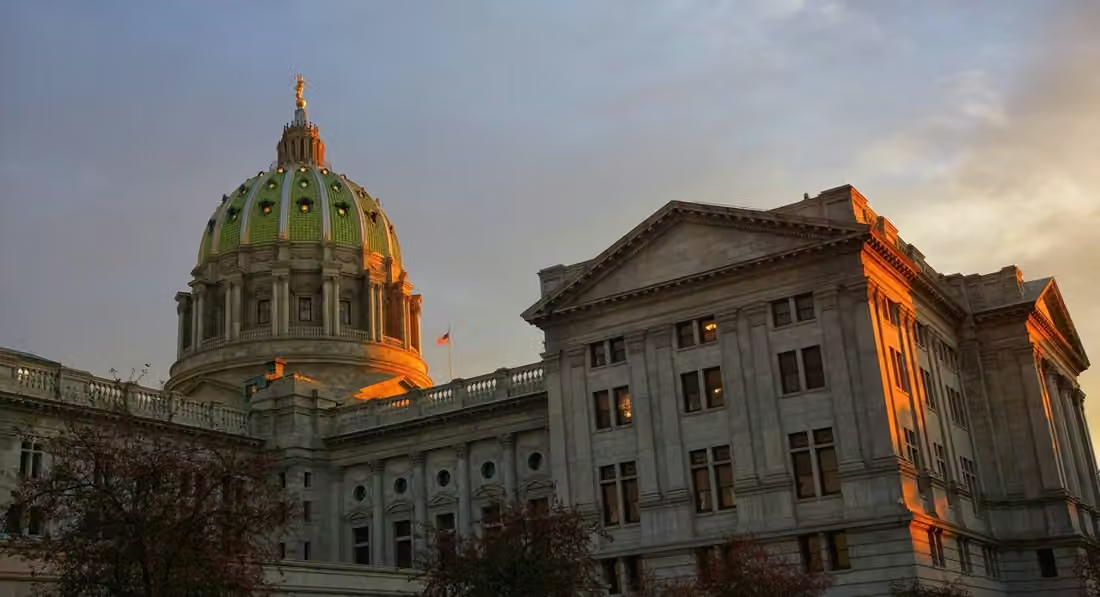
Stone, murals, and a dome tell a state’s story.
Pennsylvania’s capitol in Harrisburg was dedicated in 1906. Architect Joseph Huston combined several architectural traditions with themes drawn from the state’s labor, industry, and history.
Art here extends beyond the murals overhead. Henry Mercer's floor tiles and mosaics bring local history into the spaces people walk through.
Philadelphia's founding memory, Pittsburgh's industrial experience, and the daily handling of public affairs by the state capital each contribute to an understanding of Pennsylvania.
A different working rhythm in the fields.
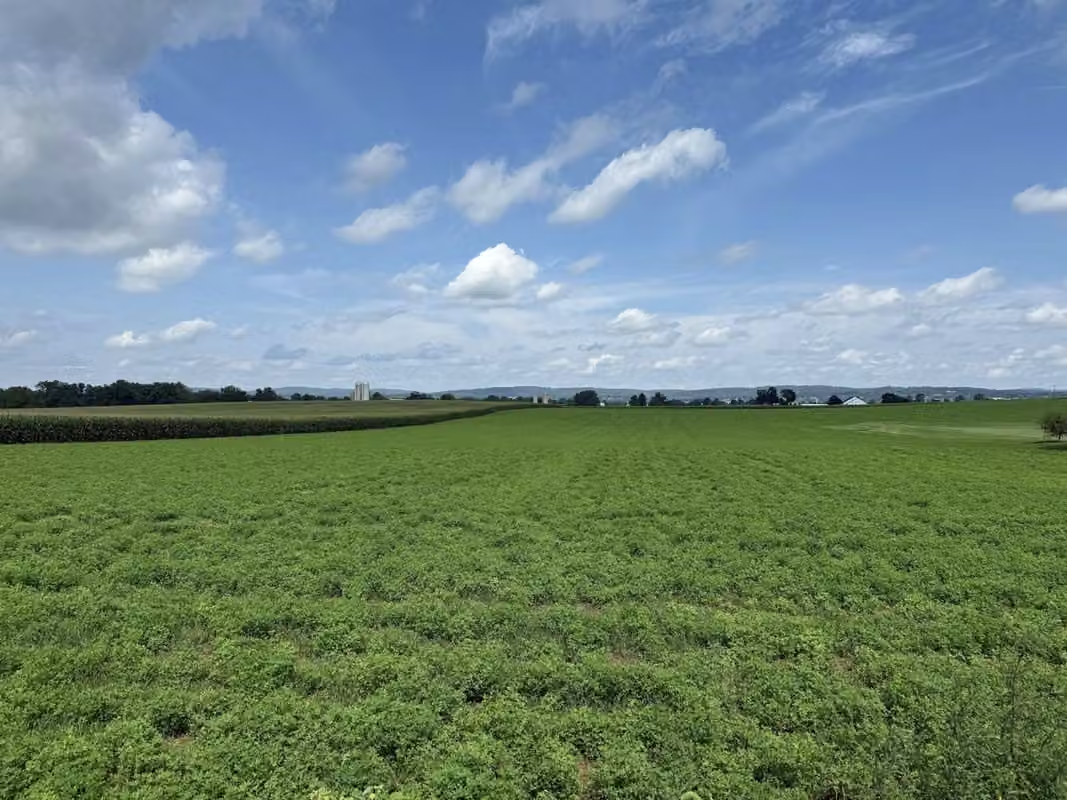
Growing, raising, and processing.
Farm lands are not a static backdrop outside of cities. Crops and livestock require ongoing management, and after harvesting, they need to be stored, processed, and transported before reaching dinner tables.
For example, with dairy, milk production connects feed, farming, harvesting, and processing. Stable quality, temperature control, and delivery arrangements have actual impacts on this process.
Lancaster’s fields show one regional form of Pennsylvania agriculture. They do not represent every part of the state, and a photograph alone cannot establish how a particular farm operates.
Agricultural operation unit
Yearly Milk Production
Food businesses differ by product and process.
Acquiring agricultural products, processing dairy, cold chain logistics, and terminal retail each entail different responsibilities. When researching a project, it must separately verify the supply sources, processing conditions, storage and transportation capabilities, and sales channels. A port cold chain and local agriculture can be understood on the same supply chain diagram, but one cannot assume that all logistics flows between the two.
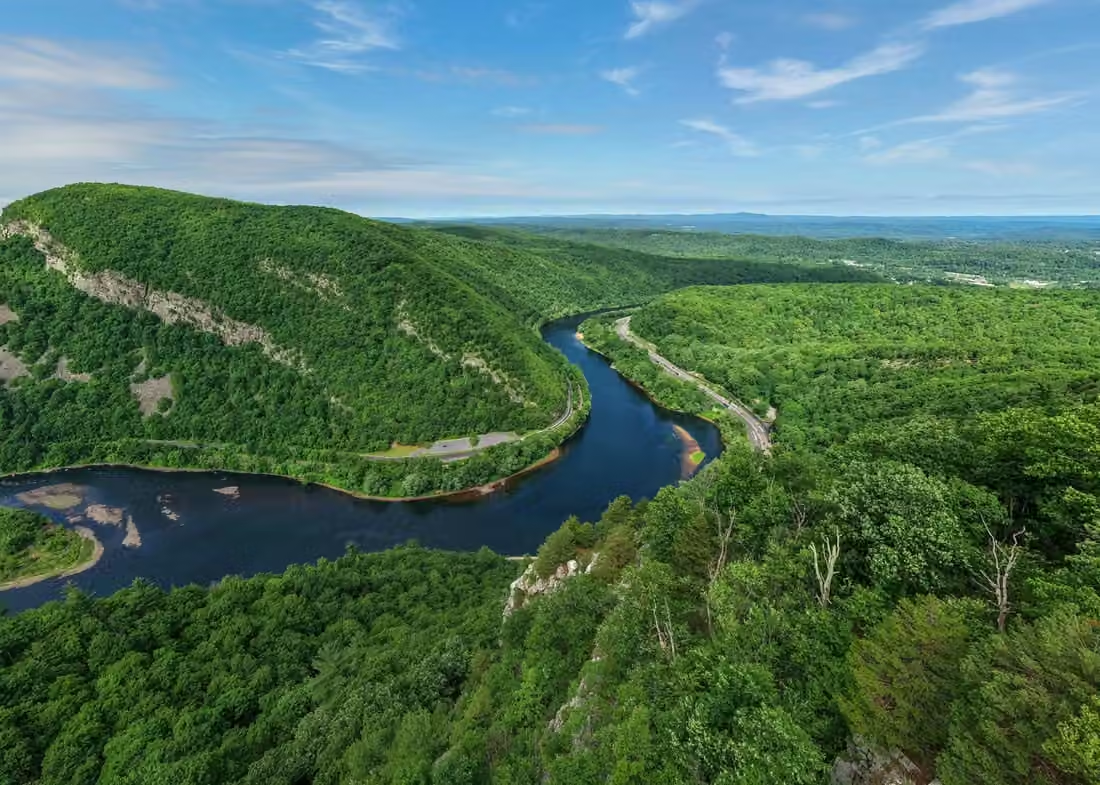
A river opens a way through the mountains.
The Delaware River cuts through a gorge between the Kittatinny Ridge, with one side belonging to Pennsylvania and the other to New Jersey. This area is part of the Valley and Ridge physiographic region of the Appalachian Mountains, where the ridge and river create a distinctive landscape.
Between forests, streams, waterfalls, and riverbanks, there remains a rich natural environment with traces of human activity. For densely populated northeastern United States, this valley also provides access to the woods.
A house within nature. Nature within a home.
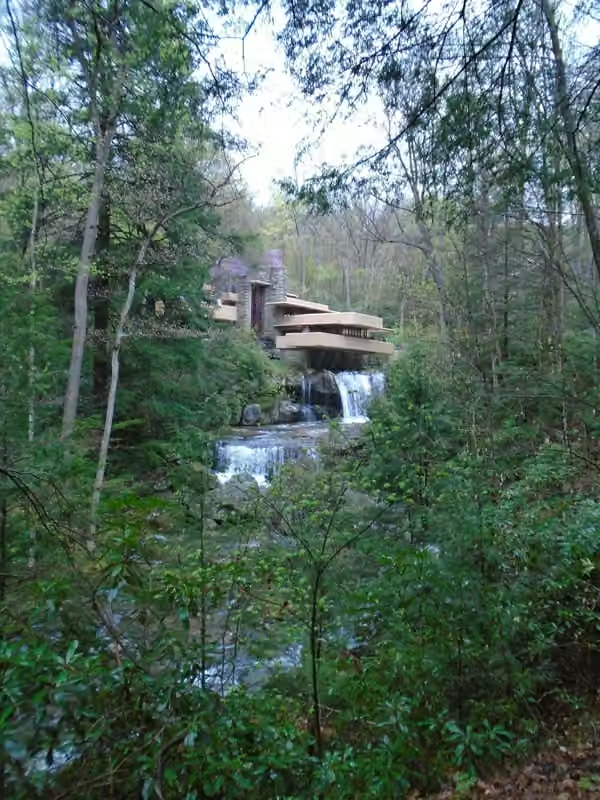
Wright designed this weekend residence for the Kaufmann family in 1935. The relationship between the stream, rocks, woods, and terrace became the most prominent feature of the building. The house is not merely a container for viewing waterfalls from afar.
Concrete terraces project outward while stonework echoes the natural terrain. The main house and later guest house extend domestic life across the wooded hillside.
In 1963, the house and associated land were entrusted to the Western Pennsylvania Conservancy. Preserving such a building requires care for its structure, collections and natural surroundings. Conservation is itself a continuing professional endeavor.
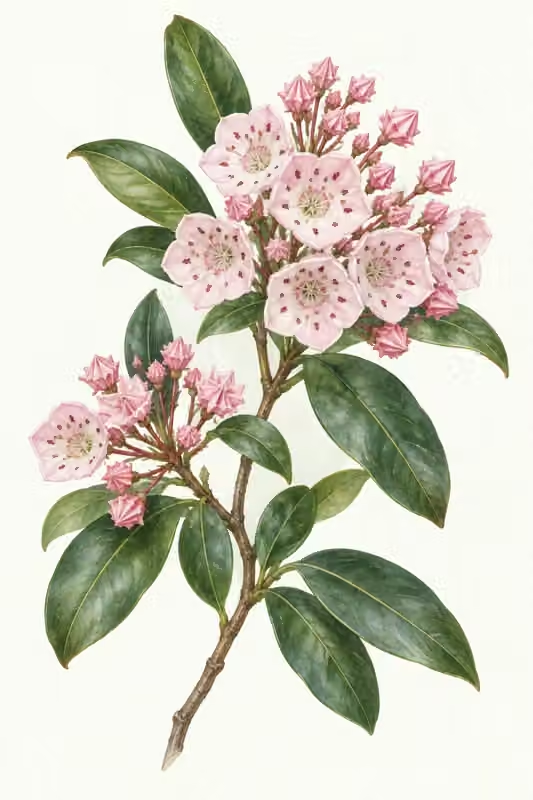
Mountain laurel brings pale color to the woods.
Mountain Laurel is the state flower of Pennsylvania, officially designated in 1933. An art illustration shows the flower branches, reflecting the natural image of Pennsylvania's forests.
From the public ideal of Independence Hall to the blast furnaces, farmland, and country cottages, Pennsylvania presents a variety of faces. To understand the state is to understand how its people discuss, build, work, and carry on their lives.
Local specialties within a statewide economy.
In August 2026, seasonally adjusted statewide nonfarm employment was 6,206,700. The unemployment rate was 3.7%, down 0.2 percentage points from July.
The Bureau of Labor Statistics released the above data on September 18. Job numbers and resident unemployment rates come from different surveys, and state-level data cannot replace specific regional and industry judgments.
Industries & establishments · 2023
The work that keeps communities running.
Healthcare, retail, manufacturing, restaurants, and professional services together support local employment. The annual figures below describe industries with paid employees; they should be read separately from the port, agriculture, and recent monthly employment figures above.
The state recorded 307,065 employer establishments and 5,713,846 paid employees. A single company may operate several stores, offices, or factories, so establishments are not a count of registered companies.
U.S. Census Bureau, 2023 County Business Patterns. The series primarily covers private, nonfarm establishments with paid employees. Employment is measured for the pay period that includes March 12. The 2023 release was the latest in this series available when checked; it is not a measure of current monthly employment.
Business sources: PhilaPort annual announcement, January 13, 2026; USDA National Agricultural Statistics Service, 2025 state agriculture overview; Bureau of Labor Statistics state employment report, September 18, 2026.
An editorial feature by STATE.REPORT. Image creators and licenses are credited below.
Sources & further reading
U.S. Census Bureau: state population estimates for July 1, 2025.
National Park Service: Originally designed for its original building purpose and to host meetings during the founding period.
National Park Service: Building alterations, restoration, and public memory.
The Philadelphia Museum of Art: Originating from the 1876 Centennial Exhibition and the development of the institution.
Philadelphia Museum of Art: Founded in 1928 with the main building and design participants.
American Society of Mechanical Engineers: The hillside transport system opened in 1877.
Pittsburgh's government: River valley terrain and bridge management.
River of Steel Heritage Commission: Protection and Public Use of Industrial Facilities.
Carnegie Mellon University: the historical connection between Carrie Blast Furnaces and the Homestead steelworks.
Carnegie Mellon University: Established in 1979, conducting basic and applied research.
State Capitol Management: Completed in 1906 and featuring artistic architecture.
State Capitol Management: Murals, sculptures, and historical tile designs.
National Park Service: Cross-state river valleys, ridges, and natural environments.
National Park Service: The geological background of the Appalachian Mountains.
Western Pennsylvania Conservancy: Architectural design, materials, and preservation.
Western Pennsylvania Conservancy: The Kaufmann family and their woodland home.
Pennsylvania Department of Natural Resources: Local Plants and State Flower.
National Park Service: The Ohio River begins at Pittsburgh.
Image credits & licenses
Delaware Water Gap aerial view.jpg · Quintin Soloviev · CC BY 4.0。
Philadelphia skyline 20240528 (cropped 2-1).jpg · Yiyuanju · CC BY-SA 4.0。
Ascending the Duquesne Incline.jpg · Dllu · CC BY-SA 4.0。
PA State Capitol Building twilight.jpg · Ted Van Pelt · CC BY 2.0。
Independence Hall.jpg · Rdsmith4 · CC BY-SA 2.5。
Blast furnace, Carrie Furnaces, Rankin PA (8907655873).jpg · Roy Luck · CC BY 2.0。
Farmland viewed from Stevens Road in Ephrata Township PA.jpeg · Dough4872 · CC BY-SA 4.0。
Fallingwater, the classic view.jpg · AaronBarlow · CC BY-SA 4.0。