

Texas
A vast landscape. Room for many stories.
Canyon country, metropolitan streets, and a place at the table. Different places reveal the many lives of Texas.
Start exploringLand
One state, many ways of life.
Texas reaches west into dry plateaus and deserts, east into woodland, and south to the Gulf and the U.S.–Mexico border. Austin is the capital, but government and industry do not share a single center: Houston, Dallas–Fort Worth, San Antonio, and the border cities each have distinct networks of work and trade.
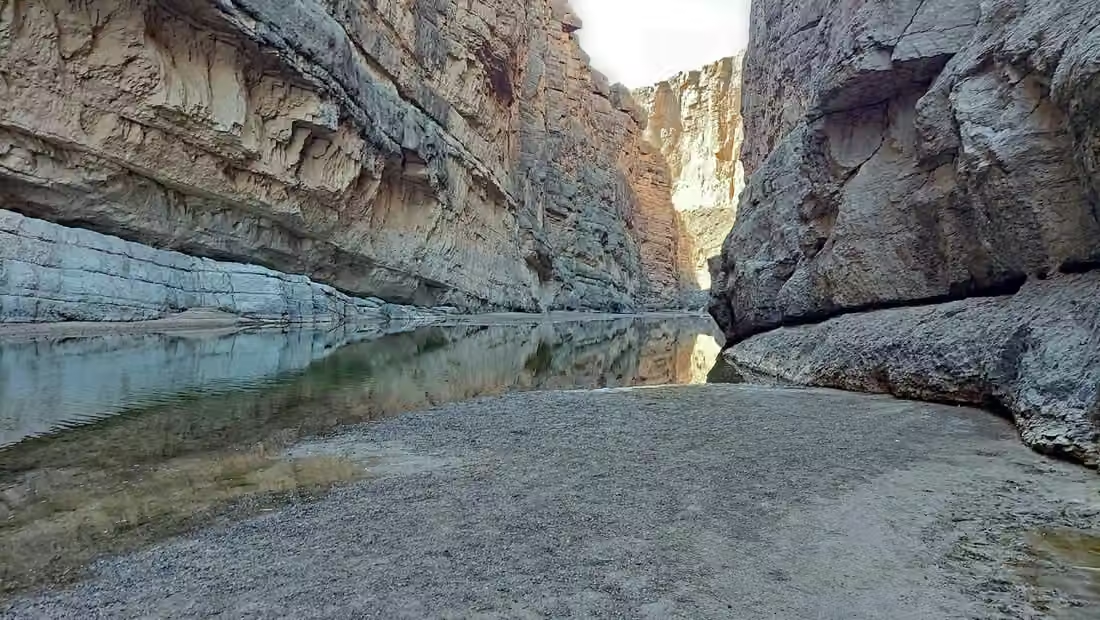
Big Bend National Park brings river, desert, and mountains into one landscape. Ancient seas left sedimentary rock; later tectonic movement, volcanism, and flowing water continued to reshape the land. Even nearby places can differ sharply in temperature, vegetation, and water supply.
Treating Texas as a single market overlooks these differences. Travel times between cities, service areas, and water supplies shape everyday life and influence business locations and delivery plans.
Different kinds of work beneath the skyline.
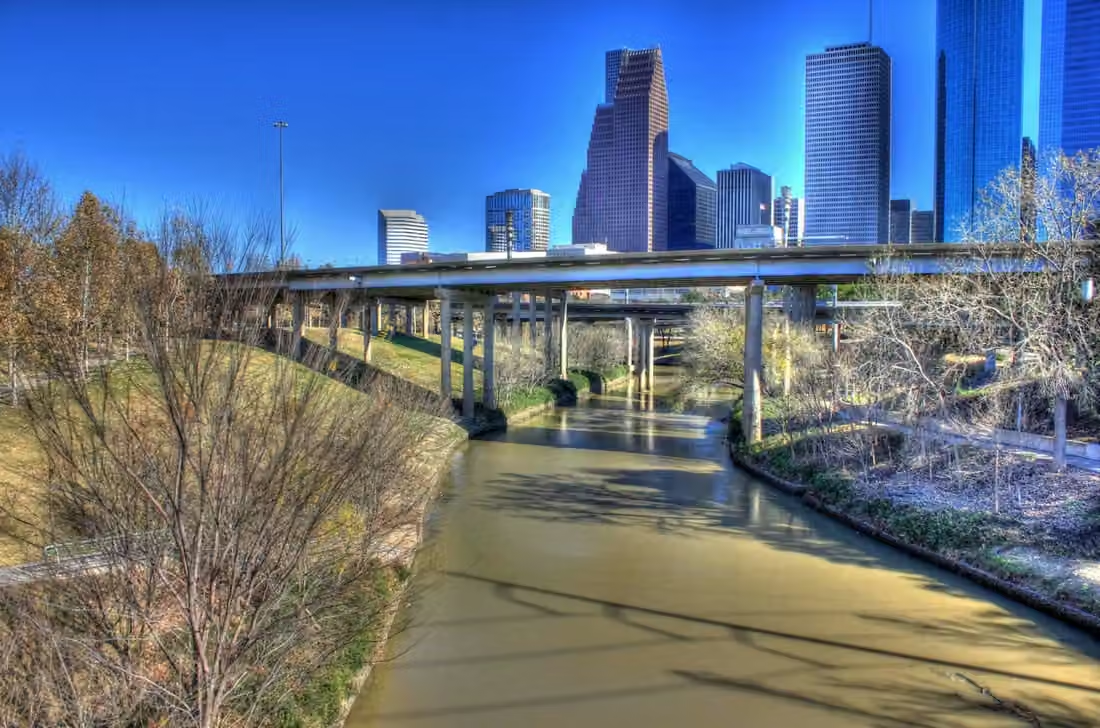
Energy, ports, engineering, healthcare, and spaceflight connect Houston with factories, laboratories, and international clients. Business services depend on customers' sites and supply chains; neighborhood shops depend more on nearby streets, access, and community needs.
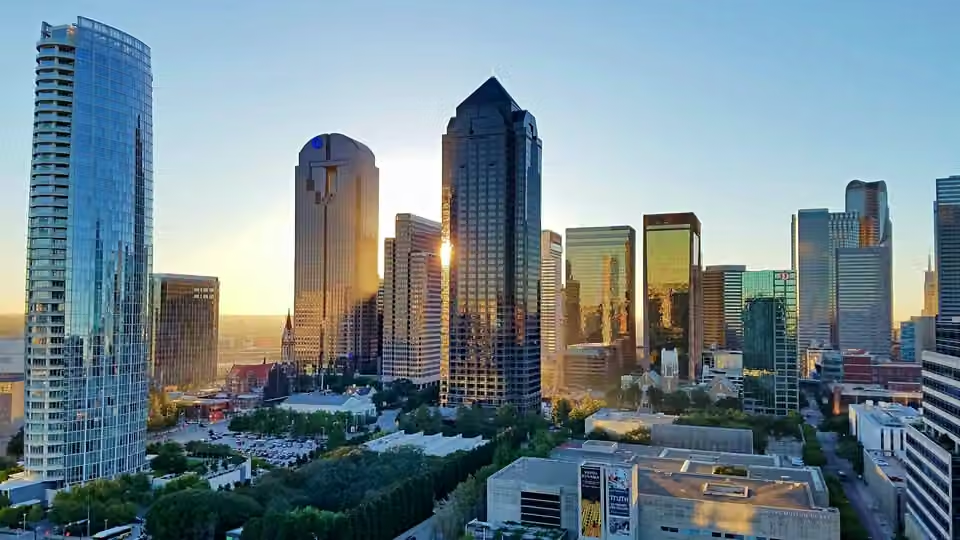
Business offices, air transport, delivery services, and professional services are interconnected in the urban area. The art museums in Dallas and the historical district of Fort Worth also remind us that urban life is not solely composed of office buildings.
Commands sent to space. Collaboration on Earth.
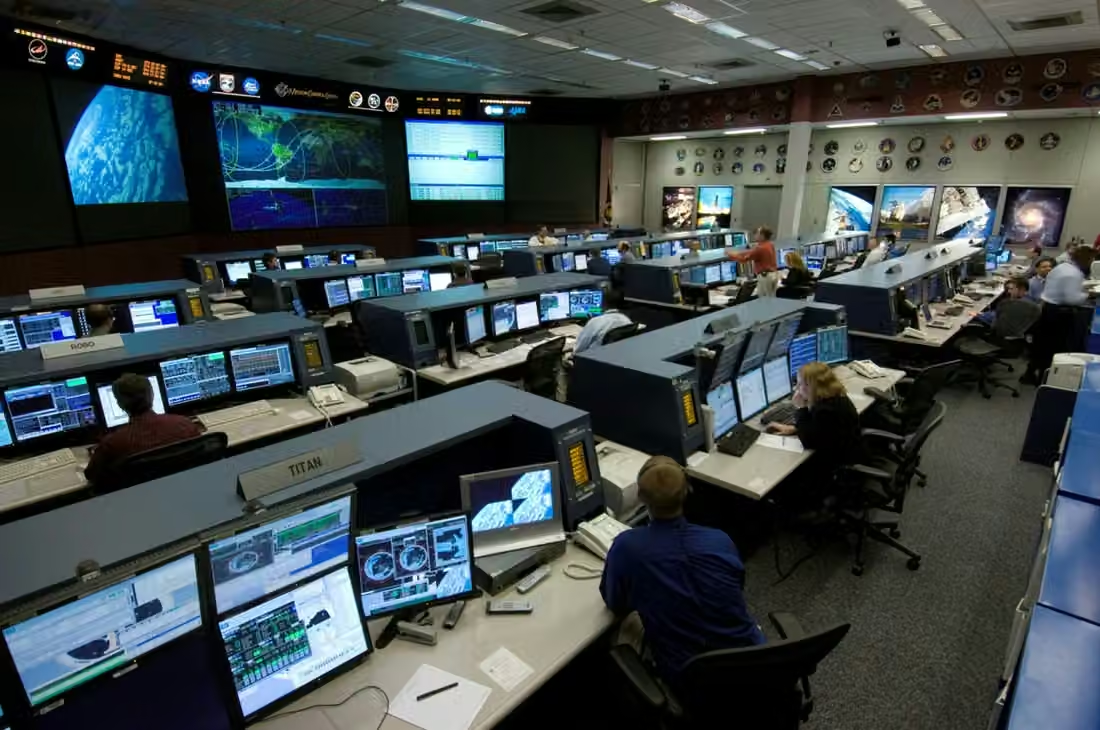
Understanding spaceflight from Mission Control.
Johnson Space Center developed in the 1960s and is responsible for astronaut training, spacecraft development and testing, and human mission control. Success depends on the continuous coordination of many roles, not just at launch.
Understanding a city through engineering.
Materials, communications, software, equipment maintenance, and medical support all connect in aerospace activities. Research institutions, contractors, and specialized talent have long gathered, giving Houston's industry story a face both scientific and manufacturing.
Beyond the stone walls, a history of water and people.
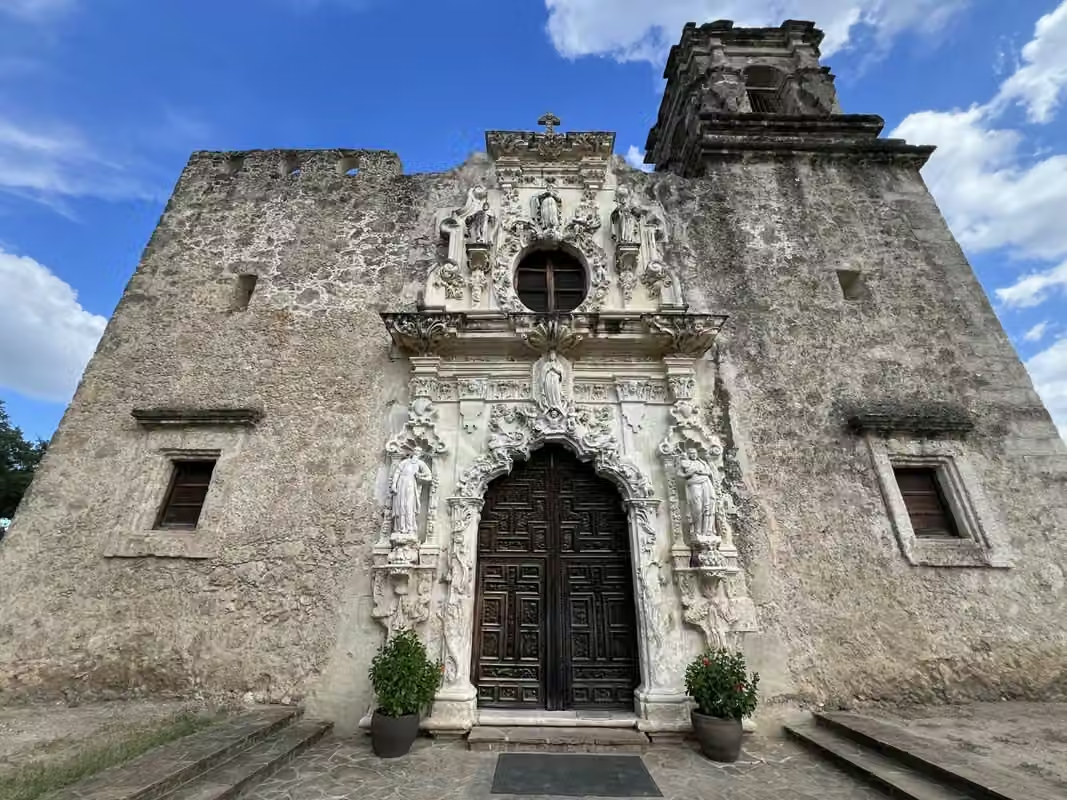
San Antonio Missions consist of a church, living quarters, farmland, and irrigation systems. Early residents had already dug irrigation channels to divert river water to the fields before the stone buildings were completed.
These legacies also document colonial expansion, forced changes in indigenous ways of life, and encounters between different cultures. To understand mission stations, one must look at the buildings, but also at who is working, how land is distributed, and how communities endure.
San Antonio still retains a distinctly Mexican culture. Language, festivals, cuisine, and family life keep history not confined to memorials but alive in the daily life of the city.
The cattle passed through. The city stayed.
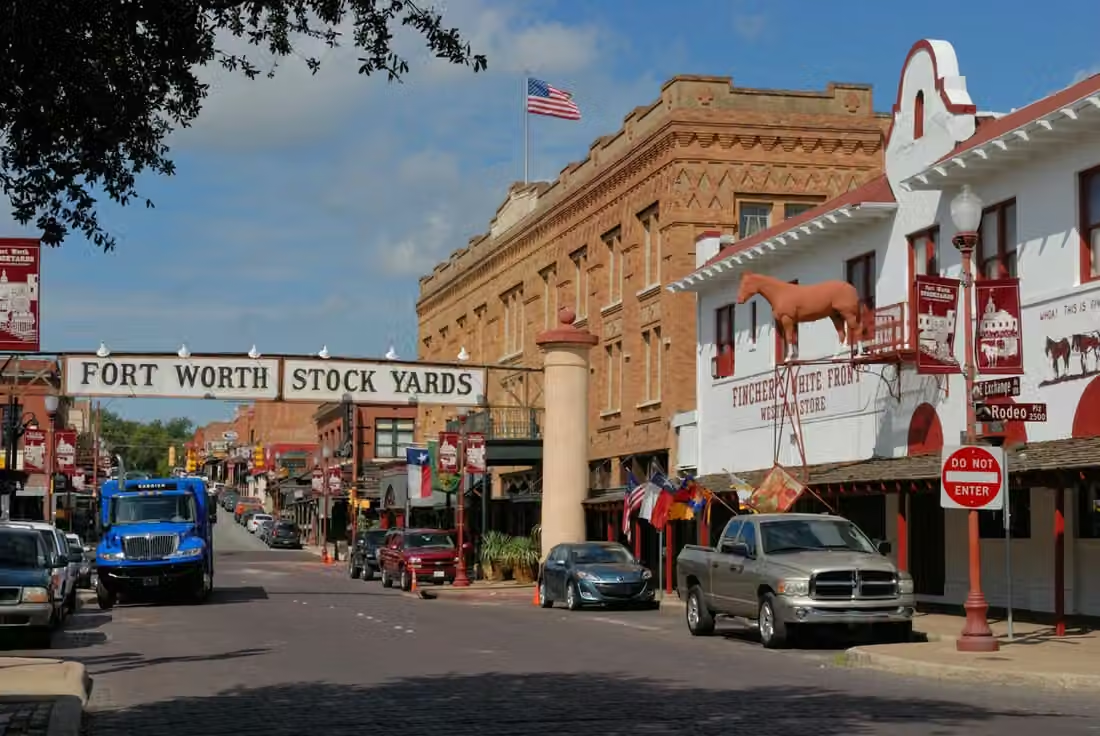
Railway access to Fort Worth made it an important location for livestock transport. Trade, livestock pens, meat processing, and related services subsequently gathered, connecting rural production with the urban economy more closely.
Today's historic district combines old buildings, performances, and dining. The cowboy culture has a familiar stage persona for tourists, but also specific tales of labor, migration, and commerce; together, they complete the story.
Different traditions over a slow fire.
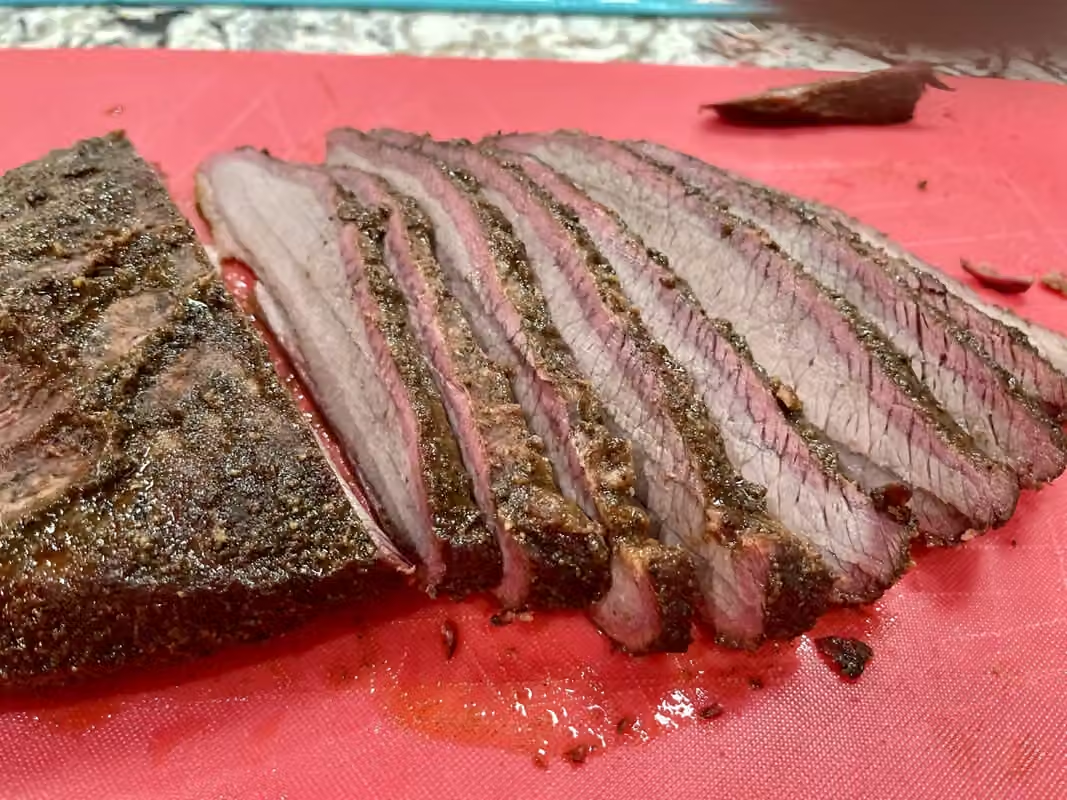
One barbecue tradition is not like another.
Brisket, sausage, ribs, and the smoke of different woods shape many memories of Texas food. Barbecue here is not a fixed recipe belonging to one group; it reflects long exchanges among African American communities, European immigrant butcher shops, Mexican American cooking traditions, and others.
Different regions have their own habits regarding meat, seasonings, and cooking methods. Queueing for meals, portion-cutting of meat, and family gatherings and local store visits are also parts of food culture.
The appeal of dining comes from the taste, but also from consistent daily operations. Procuring ingredients, refrigeration, prolonged cooking, and staffing arrangements all determine whether a restaurant can consistently serve the same meal.
A lively stage. A quieter space.
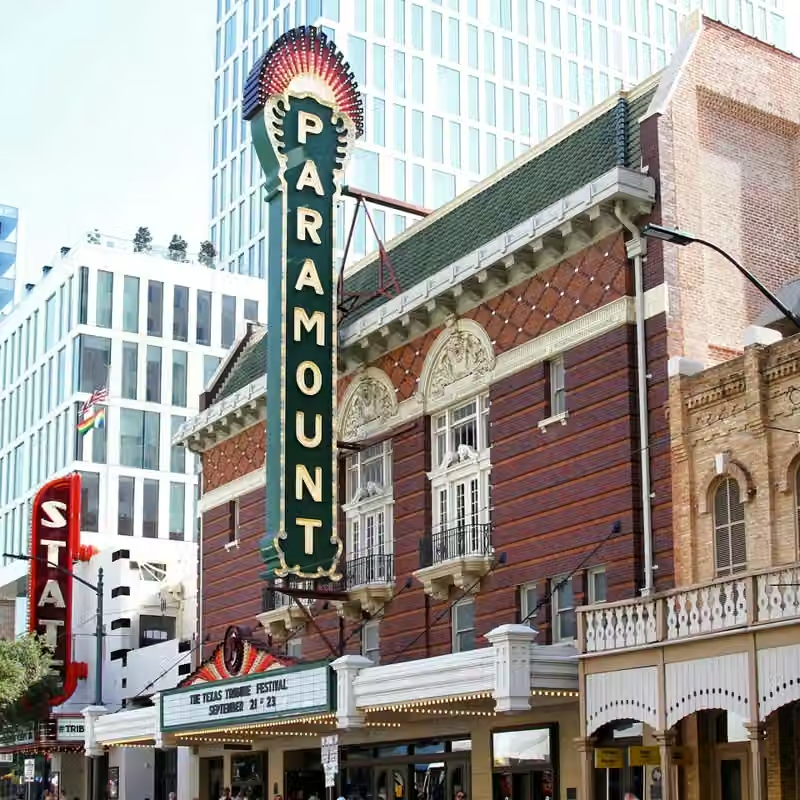
Austin: keeping an old stage alive.
The Paramount Theatre opened under another name in 1915, moving through eras of vaudeville, cinema, and live performance. Preservation does not mean standing still: changing programs, audiences, and city life keep the old theater a living public space.
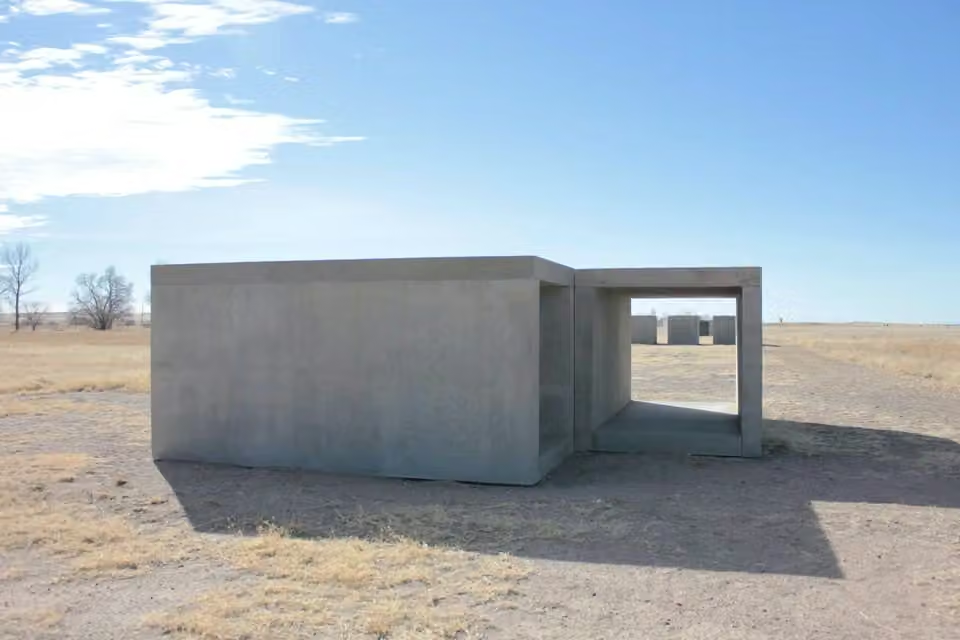
Marfa: space becomes part of the artwork.
Donald Judd transformed the old army barracks into an art space where the works connect with the building's scale, natural light, and surrounding land. Viewing requires time and fosters a long-term connection between the town and its faraway art audience.
At the coast, the rhythm changes.
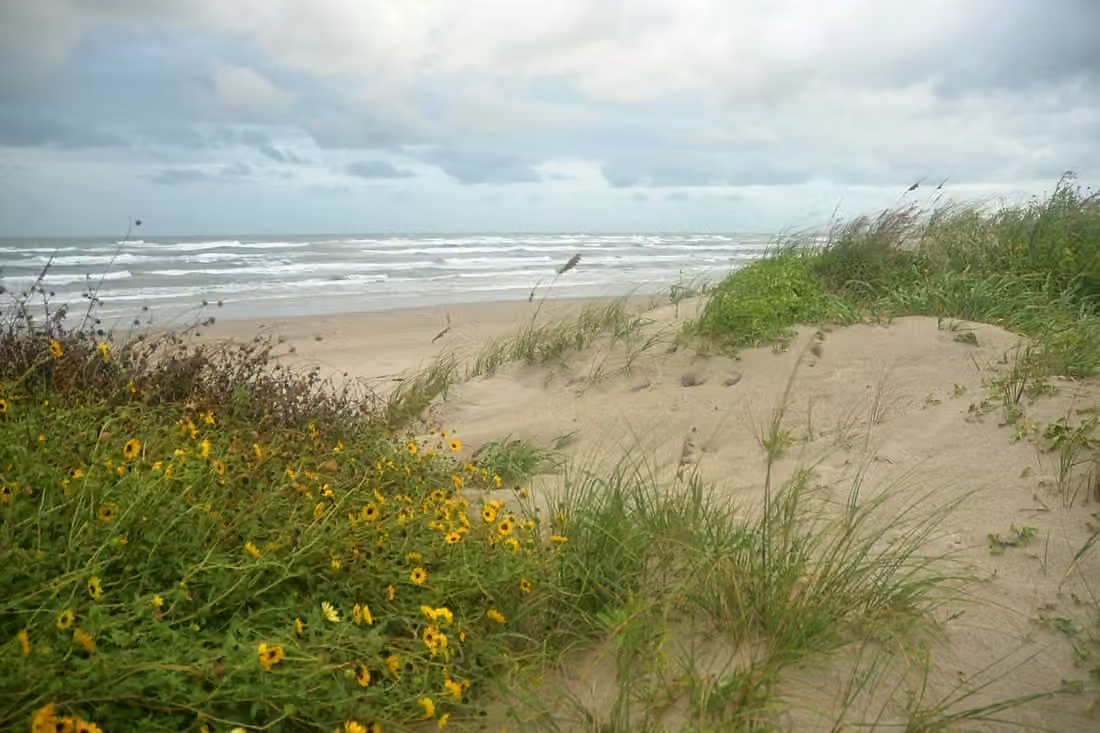
The coastline and western desert of Texas have distinctly different environments. Dunes, beaches, and lagoons connect. Wind, tides, and plants shape the shoreline. Sand dune vegetation helps stabilize the sand and provides habitat for various animals.
Padre Island National Seashore participates in sea turtle research and conservation, focusing on nesting, hatching, and returning to the ocean processes. Tourism and conservation run parallel, and activities such as lighting, vehicle use, and human presence need to be considered for the welfare of wildlife.
A vast market, best understood in parts.
Texas merchandise exports in 2025. The highest total among U.S. states.
Manufacturing has a major role.
Manufactured products accounted for approximately $298.7 billion in exports. Computers and electronic products contributed about $70.7 billion, petroleum and coal products $67.6 billion, and chemicals $55.1 billion. Texas exports span advanced manufacturing, energy processing, and established industrial sectors.
Mexico is the largest destination.
Exports to Mexico totaled approximately $124.7 billion, about 28% of the state’s exports. Cross-border transport, warehousing, customs services and coordinated production connect ports with inland metropolitan areas. Statewide exports are not a measure of orders received by any particular city or business.
US Trade Representative Office, 2025 State Goods Export Data. Exports are statistics for goods trade, excluding all services trade.
Industries & establishments · 2023
The work that keeps communities running.
Healthcare, retail, restaurants, and professional services sustain metropolitan areas and local communities. Beyond large export totals are many establishments serving everyday needs.
The state recorded 670,878 employer establishments and 12,012,629 paid employees. A single company may operate several stores, offices, or factories, so establishments are not a count of registered companies.
U.S. Census Bureau, 2023 County Business Patterns. The series primarily covers private, nonfarm establishments with paid employees. Employment is measured for the pay period that includes March 12. The 2023 release was the latest in this series available when checked; it is not a measure of current monthly employment.
franchise tax exemption threshold
No tax due does not mean no filing required.
The threshold applies to annualized gross income as stipulated and cannot be replaced by net income. Entities below or equal to the threshold do not need to submit a "zero taxable amount report," but still must submit public information reports or ownership information reports as required.
Registered states, actual business locations, and tax obligations need to be separately determined. Hiring staff, selling goods, operating premises, and interstate business may also bring other reporting or licensing requirements; company queries can be completed on this site.
Texas Comptroller of Public Accounts: 2026 filing guidance and thresholds for the 2026–2027 report years.
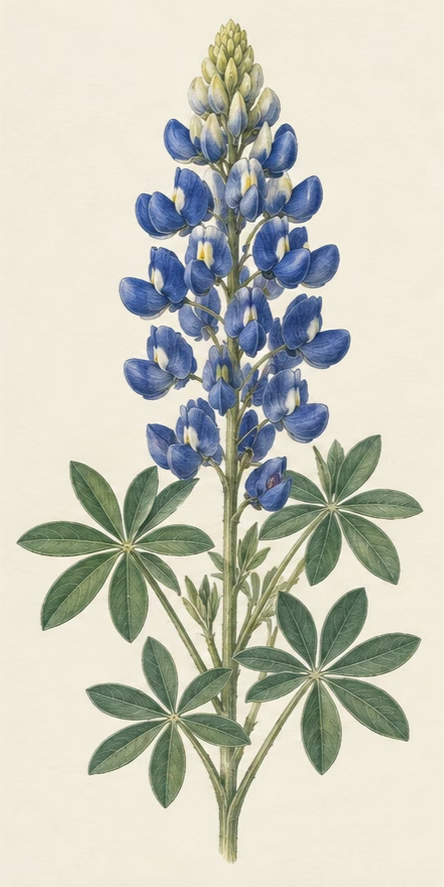
A delicate blue in a vast landscape.
The flower clusters grow upward, with blue petals featuring light-colored details. The floral displays, which appear along roads and fields in spring, allow people to recognize the land of Texas in a different way.
In 1901, the state legislature designated the bluebonnet as the state flower; in 1971, this was expanded to include other varieties of bluebonnet from Texas. The story of the state flower itself also records how people gradually came to recognize local plants.
Flora, rainfall, and habitat determine the annual display. Artistic illustrations capture the forms and colors of the plants, but true spring is always different.
An editorial feature by STATE.REPORT. Image creators and licenses are credited below.
Sources & further reading
U.S. Census Bureau: state population estimates for July 1, 2025.
National Park Service: Sedimentary rocks, volcanism, and erosion in the Big Bend region.
National Park Service: Big Bend's varied ecosystems.
NASA: Mission control, training, and engineering facilities in Houston.
National Park Service: San Antonio's Irrigation System and Community Life.
National Park Service: Indigenous populations, colonial expansion, and historical structures.
Fort Worth Historical Livestock Trading Area: Railways, Trade, and Urban Development.
Texas Historical Commission: Diverse culinary traditions of different communities.
Paramount Theatre: A history of performances and films since 1915.
Chinati Foundation: Relationships Between Works, Old Buildings, and Desert Light.
National Park Service: Sea Turtle Conservation Efforts on Padre Island.
Texas Legislative Reference Library: Resolution designating the state flower of Texas in 1901 and 1971.
Image credits & licenses
Santa Elena - 05.jpg · P. Hughes · CC BY 4.0。
Gfp-texas-houston-skyline-above-the-bridge.jpg · Yinan Chen · Public Domain。
Main entrance, Mission San Jose, San Antonio Texas.jpg · NatBaca · CC0。
ISS Flight Control Room 2006.jpg · Robert Markowitz · Public domain。
0011Fort Worth Stockyards Exchange Ave E Texas.jpg · Mark Fisher · CC BY-SA 3.0。
Smoked Brisket with smoke ring.jpg · Johnsparks75 · CC BY-SA 4.0。
Paramount Theatre Austin TribFest 2023.jpg · Larry D. Moore · CC BY 4.0。
Padre Island National Seashore, dunes, Kleberg Co, TX; 1 Nov 2022.jpg · William L. Farr · CC BY-SA 4.0。
The Chinati Foundation La Fundación Chinati, Marfa, Texas 08.JPG · John Cummings · CC BY-SA 3.0。
Dallas Skyline with Arts District.jpg · Gattacal · CC BY-SA 4.0。