

Vermont
Four seasons. A way of life.
The first steam rises from the sugarhouse. Shop doors open onto small-town streets. Between the mountains and the lake, daily life has a flavor of its own.
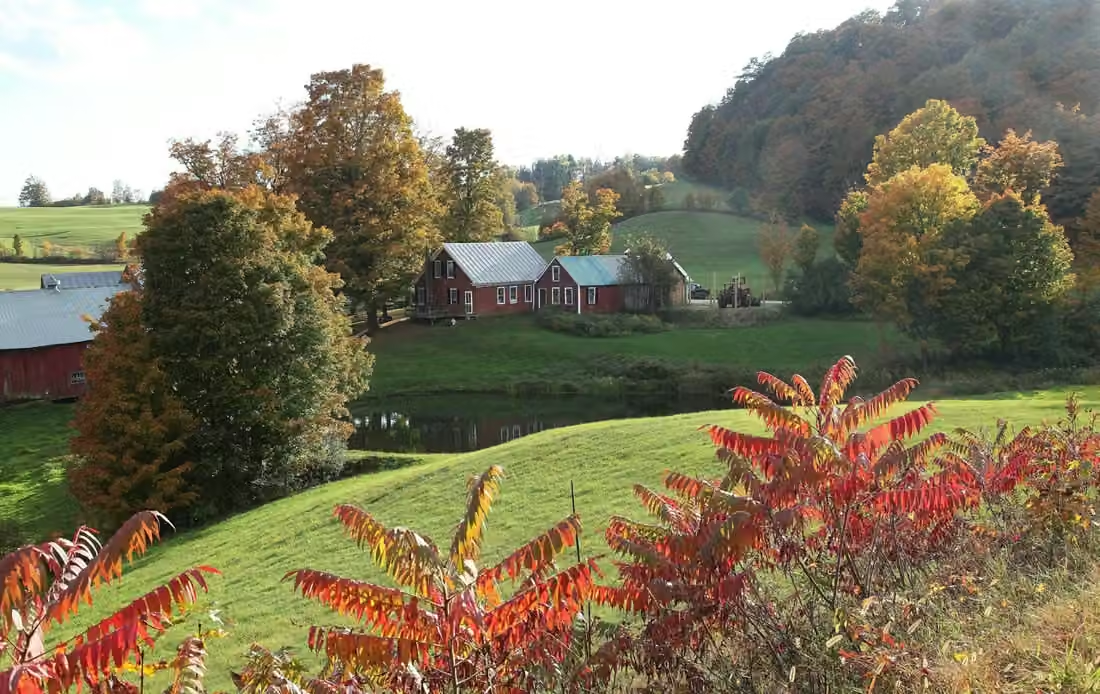
Stay a little longer for the life within the landscape.
Vermont lies in inland New England. The Green Mountains run north to south, with Lake Champlain to the west and the Connecticut River Valley to the east. Forests, pastures, and small towns define the landscape, but they are also working places: woodland needs care, farms plan their production, and town centers bring together shopping, learning, and public life.
Burlington has its waterfront, university, and performance venues; Montpelier is the center of state government. Barre preserves the history of stoneworking and immigrant labor, while the Woodstock area tells stories of forest conservation and rural life. These places are close together, yet each has a different rhythm.
The year’s sweetness begins before the leaves return.
Maple syrup production in 2026
About 52.6% of U.S. productionThe U.S. Department of Agriculture report in June 2026 shows that Vermont's production of maple syrup for the current season increased by approximately 2.7% from 2025. This local industry, which involves harvesting sap from the forest, grading, and bottling, relies on both the season and equipment, expertise, and ongoing research.
The sap, after collection, concentration, and cooking, becomes the syrup on our tables. Modern equipment can remove some water through reverse osmosis before entering the evaporation process. Health of the forest, juicing arrangements, hygiene management, and grading of the finished product are daily tasks for producers.
USDA National Agricultural Statistics Service, Crop Production, June 11, 2026. Shares and growth rates are calculated from the report and rounded; production volume is not sales revenue.
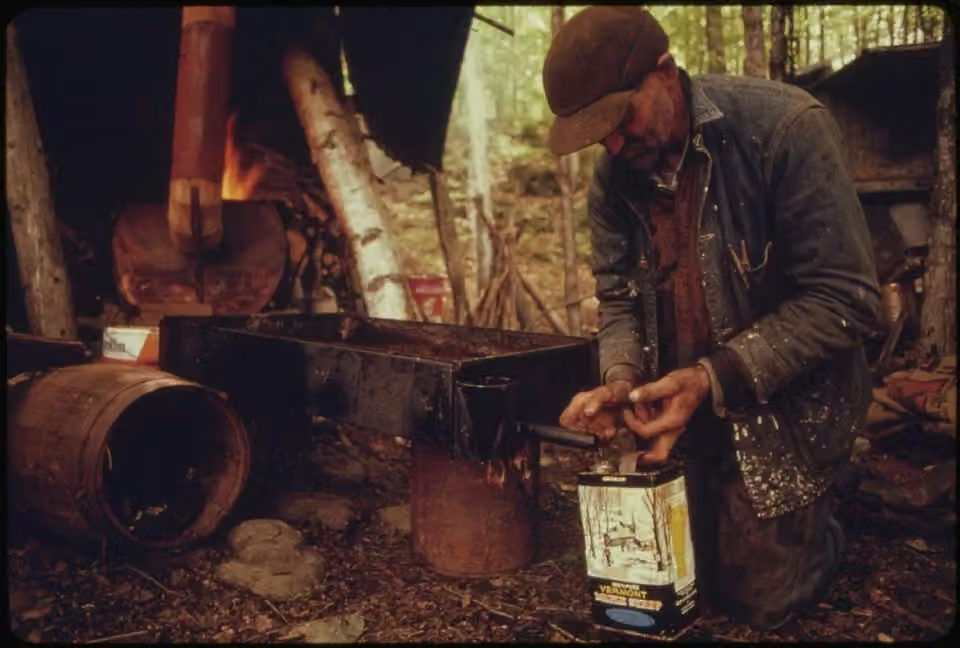
Old skills, new knowledge.
Old photos leave behind the scene of home-style production. Today, the University of Vermont's maple research brings together the growth of trees, sap flow, temperature, and efficiency of equipment. Since 1946, related research has extended from seed to syrup, also paying attention to biodiversity in the maple woods.
Small producers may sell directly from the farm or supply food processors and gift markets. Larger producers also depend on reliable raw materials, equipment maintenance and established sales channels. Every bottle of syrup brings together work in the woodland and the sugarhouse.
Beyond the mountains, open water.
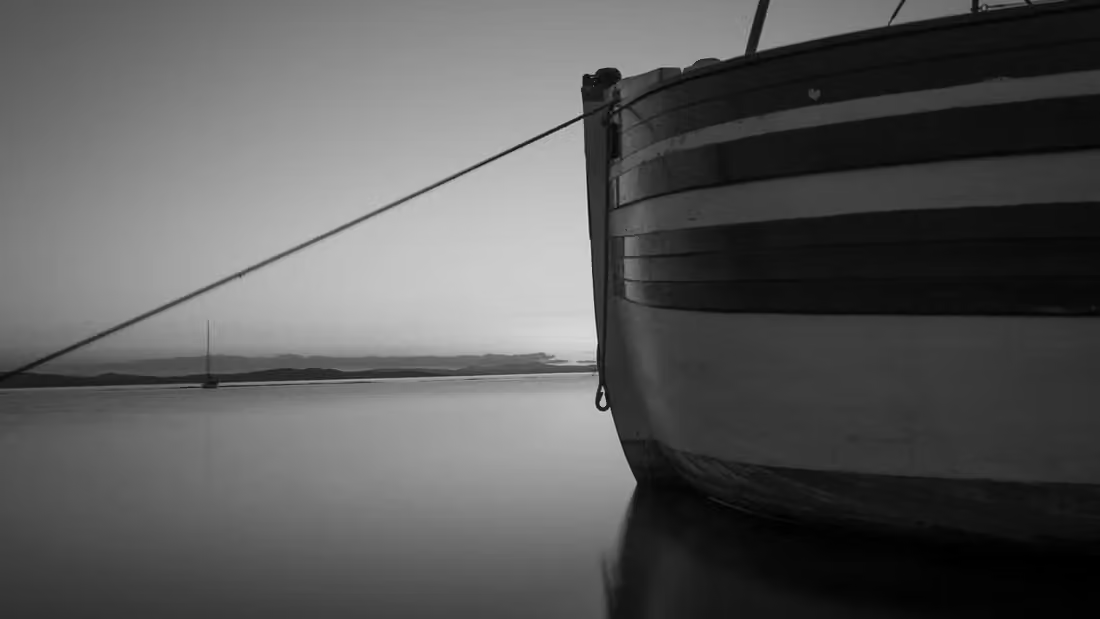
The lakeshore opens the view. Waterways connect this place to a wider world.
Life in the Lake Champlain basin has long been tied to water. Abenaki culture continues here, with fishing, travel, food and memories of the land woven into life around the lake. Indigenous communities today are part of that continuing history.
The Champlain Canal opened in 1823, connecting the lake region with the Hudson River and changing trade and freight transport. Along the lake today, recreation and city life sit alongside questions of water quality, watershed management, and community well-being.
A 272-mile path along the ridges.
The Long Trail runs from Massachusetts to the Canadian border. Built mainly by Green Mountain Club volunteers between 1910 and 1930, it follows the Green Mountains and connects generations of mountain experience.
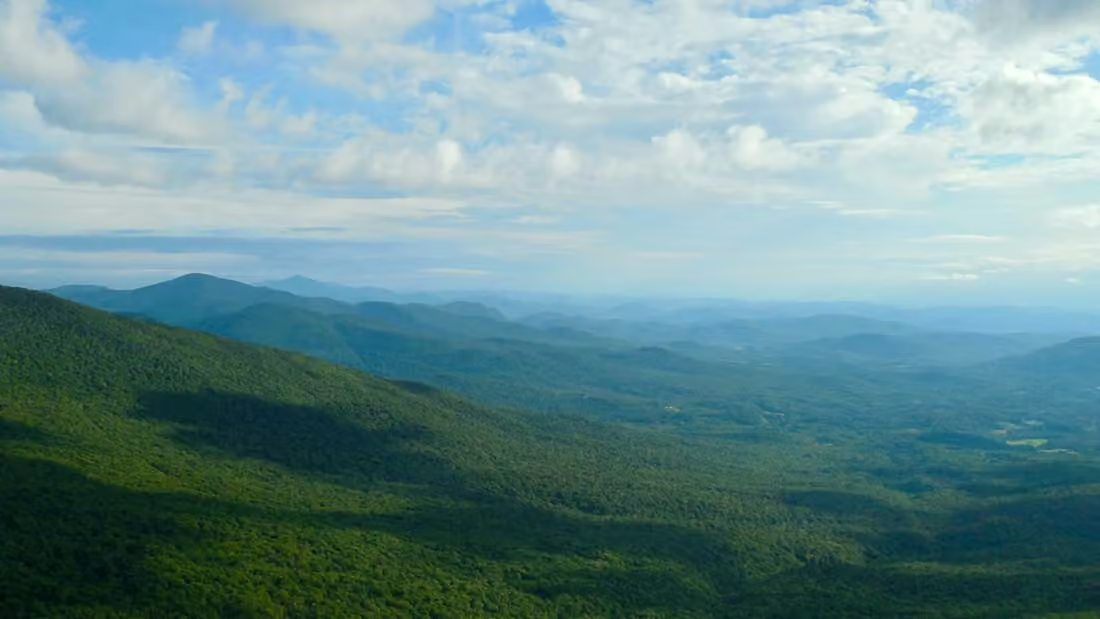
Rock, roots, and slopes give the trail its rugged character. Trail work, drainage, protection of adjoining land, and maintenance of public facilities all help keep it open.
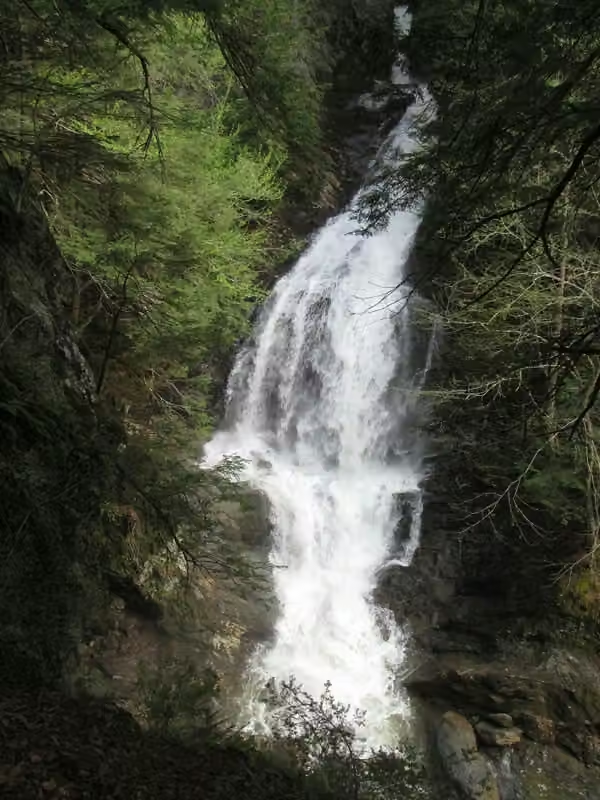
Mountain water gathers along slopes and valleys. The seasons change road and trail conditions, and the same woodland takes on different forms with snowmelt, summer foliage, and autumn color.
Beautiful places need lasting care.
In Woodstock, Marsh-Billings-Rockefeller National Historical Park preserves the history of American forest conservation in its house and woodland. Generations of observation, management, and care show how a forest's future is shaped by choices made over time.
Step inside. The city is playing music.
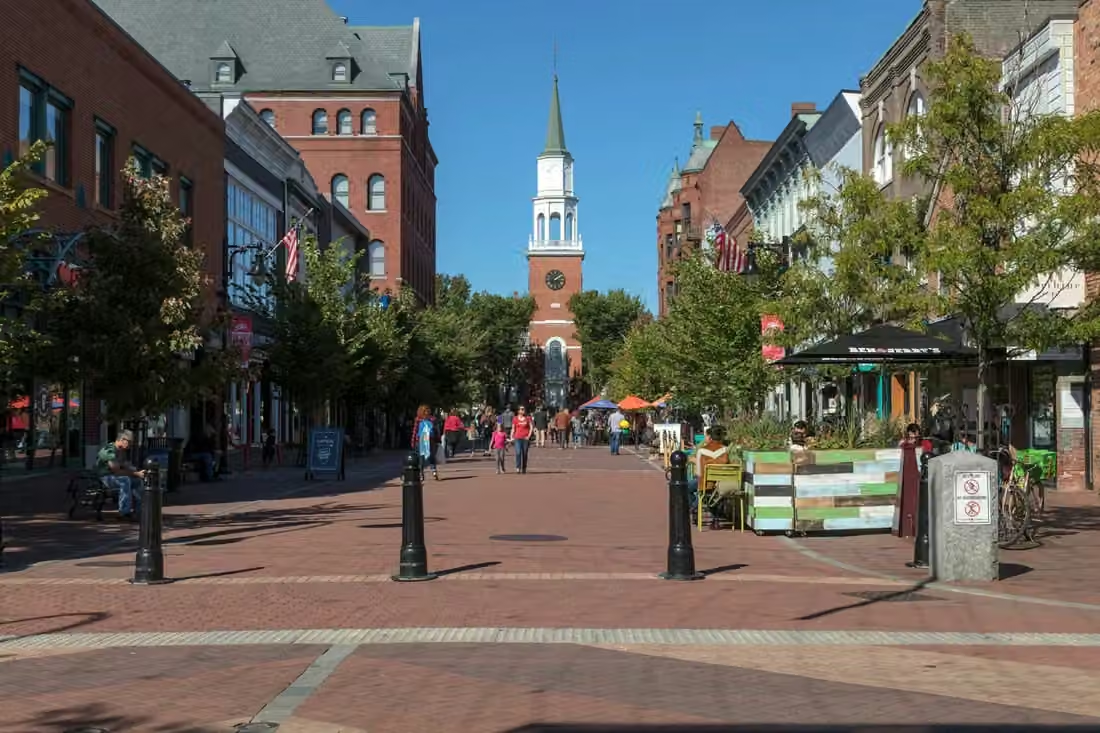
Church Street's shops, tables, and pedestrian spaces bring commercial activities into a scale where people can linger. The daily life of Burlington consists of universities, healthcare, arts, and local services, while the lakefront offers another open public space.
Street businesses depend on foot traffic and whether residents are willing to return. Seasonal events can bring excitement, but stable products, services, and a sense of community keeps the area livable even after the event.
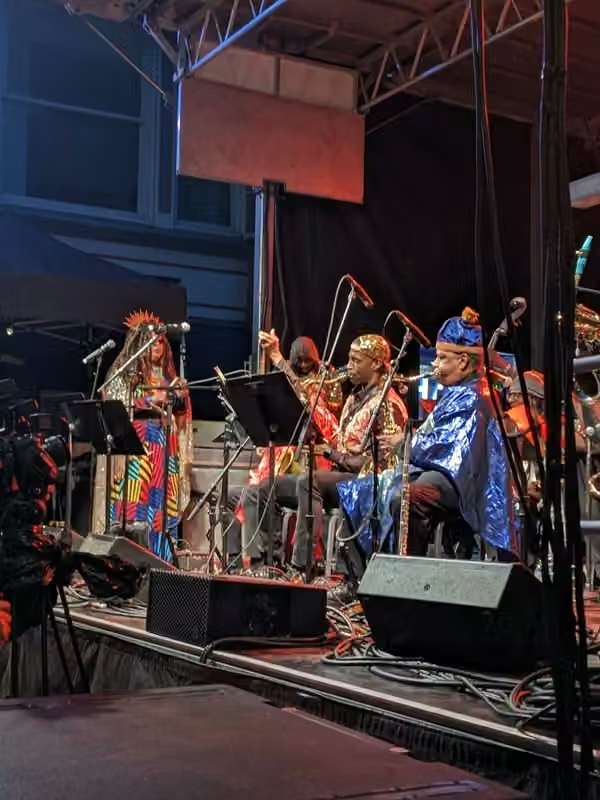
A city with many stages.
The Flynn brings music, dance, theater, and arts education to Vermont. The Burlington Discover Jazz Festival takes performances to the waterfront, neighborhoods, and venues of many sizes, bringing audiences together across the city.
The music festival takes place from June 3rd to the 7th of 2026. The photo here records the 2023 event: a long-running cultural activity that features both new works every year and collaborations with venues, technicians, teaching, and the community that have accumulated over time.
Making useful things—and making them beautiful.
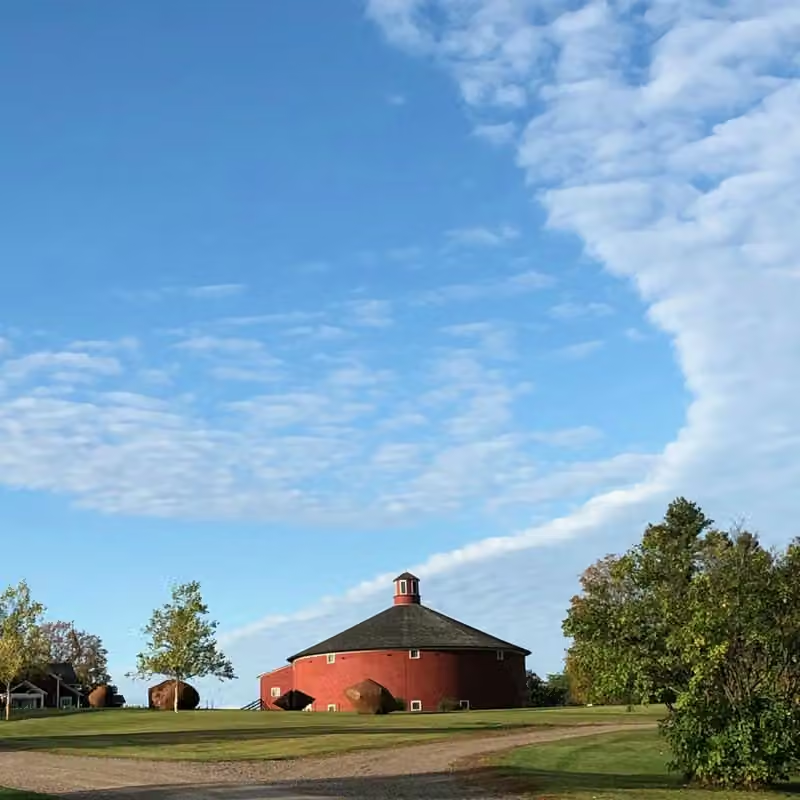
A barn finds a home in a museum.
This round barn was built in 1901 in East Passumpsic and moved to Shelburne Museum in 1985–1986. Its circular design once served the practical aim of saving farm labor; today the building itself helps tell the story of agricultural life.
The folk art collection within the museum brings together signs, wind vanes, wood carvings, and paintings. Many of the objects were originally used for work or daily life, but the makers have left their own judgments in the shapes, colors, and details.
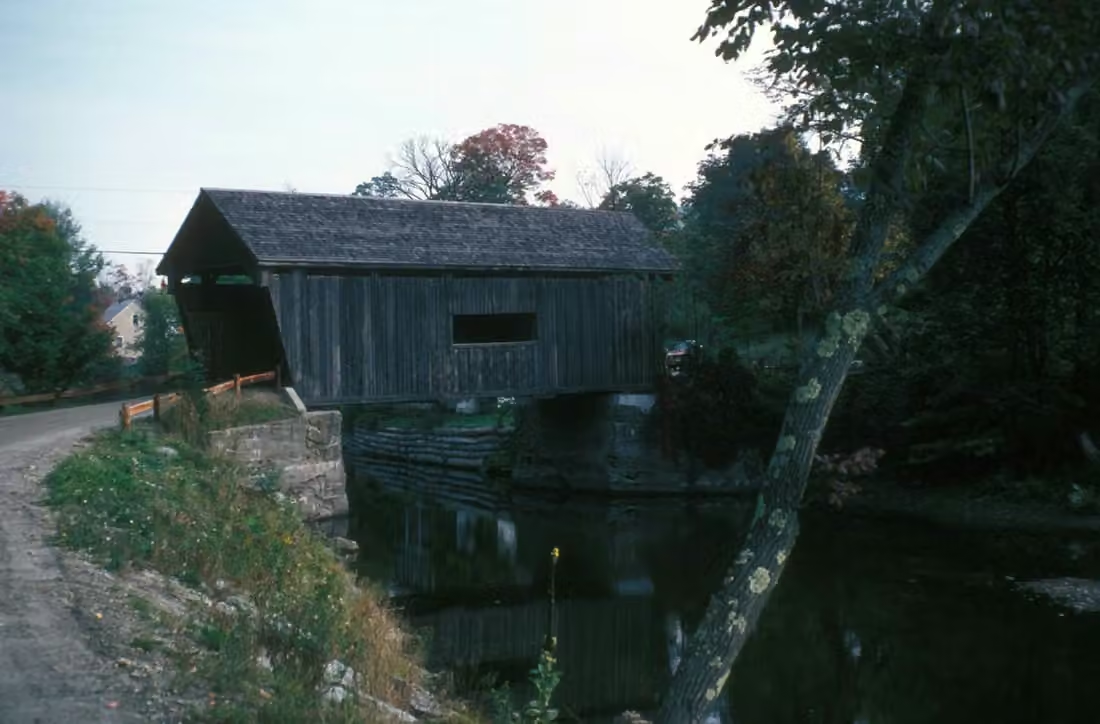
A covered bridge’s roof protects the timber first.
The covered bridge in Vermont uses a wooden truss to bear the load, with the roof protecting the supporting wood from erosion by rain and snow. People appreciate their rustic charm, but the structure itself stems from practical transportation needs and material experience.
The bridges connect the farm, road, and village. Maintaining the historic wooden structure requires understanding the original load-bearing methods and also dealing with floods, weather, and today's usage conditions.
Labor written in granite.
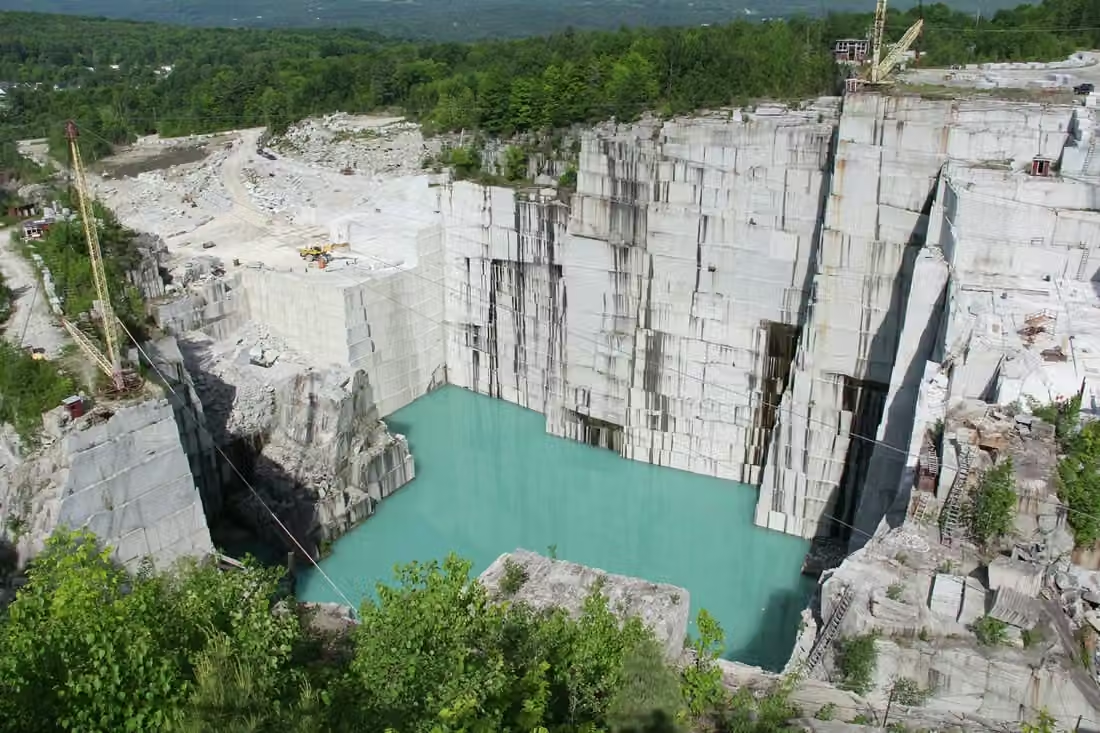
Barre's granite industry drew quarry workers and stonemasons from Scotland, Spain, Italy, and elsewhere. Stone, craftsmanship, and migration helped shape this working city.
From extraction to cutting, polishing, and carving, stone requires different processes, and it leaves a history of industry organizations and labor life. Local characteristics are not only in the mountains and rivers, but also in the memories of factories, unions, and families.
Today, understanding the stone business still requires looking at specific products and services: building materials, commemorative stone works, or custom machining, each having design, transportation, installation, and delivery requirements.
Neighbors sit down to discuss local affairs.
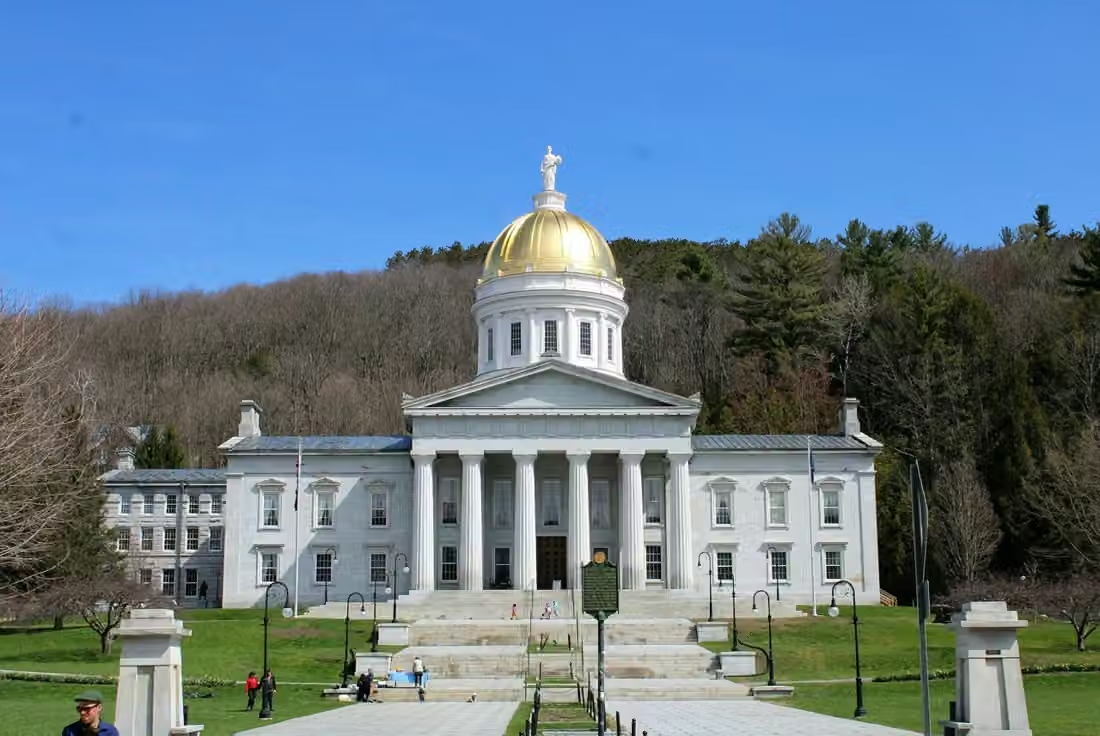
The state government is located in Montpelier and Vermont's local politics also have a more community-oriented scale. Town meetings typically convene on the first Tuesday of March, where residents discuss and decide on local matters.
Different towns use either a show of hands, written ballots, or a combination of both for their votes. Schools, budgets, and public services are not abstract topics; they are direct choices related to the roads we walk on, the facilities we use, and the community arrangements we make every day.
A small state with many economic scales.
From food production to specialist services.
Sugar processing, dairy products, tourism services, and local retail create a familiar commercial landscape featuring local products and scenery. Healthcare, education, manufacturing, and professional services support a more year-round lifestyle. Operations for residents and visitors often differ in operating hours, staffing, and product offerings.
Mountain communities, lakeshores and towns have different markets. Small businesses may begin in a familiar neighborhood or reach customers farther away through delivery, wholesale and professional partnerships. Storage, arrival times and after-sales service still depend on the places involved.
Unemployment in August 2026
This initial value for seasonal adjustment reflects the resident labor market. Hiring by firms also depends on job skills, location, and schedules; state-level proportions cannot show the supply-demand differences for each profession.
Bureau of Labor Statistics, September 18, 2026 release.
Industries & establishments · 2023
The work that keeps communities running.
Healthcare and social assistance, retail, and manufacturing meet different year-round needs. Local industry extends well beyond the products and attractions visitors know best.
The state recorded 20,841 employer establishments and 256,460 paid employees. A single company may operate several stores, offices, or factories, so establishments are not a count of registered companies.
U.S. Census Bureau, 2023 County Business Patterns. The series primarily covers private, nonfarm establishments with paid employees. Employment is measured for the pay period that includes March 12. The 2023 release was the latest in this series available when checked; it is not a measure of current monthly employment.
Put annual maintenance on the business calendar.
Vermont LLC annual reports are due within three months after the end of the fiscal year recorded in their filings; business corporations follow different deadlines. A company using a non-calendar fiscal year should plan its maintenance around that year.
Restaurants, accommodations, food production sites, or other service establishments all involve their respective premises and operational requirements. When selecting the entity form, all responsibilities, business liability, and long-term management arrangements should be considered. The name, registration status, and public records of the entity can be checked on this website.
Vermont Secretary of State annual report guidance, checked in September 2026.
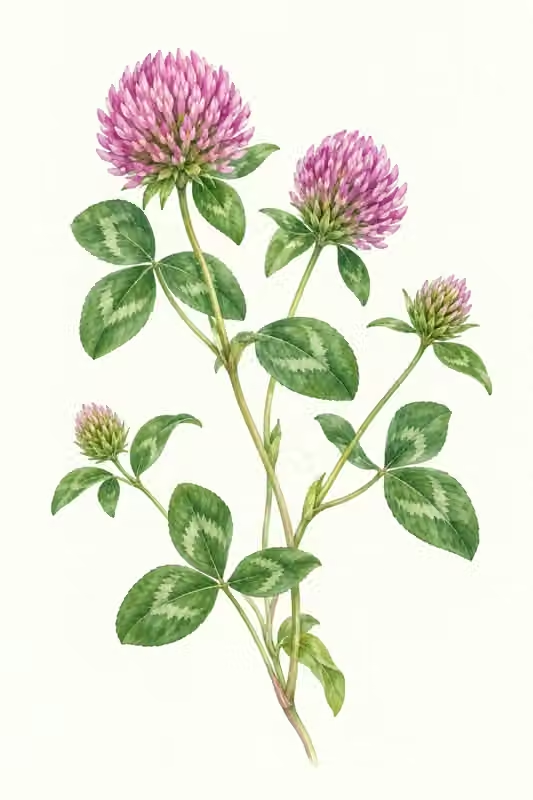
An everyday flower worth noticing.
Red clover's pink-purple flower heads consist of many small florets. Closely associated with livestock farming, forage, and cover crops, the plant also supplies nectar and pollen to pollinating insects.
Partnerships between its roots and nitrogen-fixing bacteria help cycle nutrients through the soil. Vermont's floral emblem honors this modest, enduring connection with rural life.
An editorial feature by STATE.REPORT. Image creators and licenses are credited below.
Sources & further reading
U.S. Census Bureau: state population estimates for July 1, 2025.
University of Vermont: Tree physiology, sap collection, and maple syrup production research.
University of Vermont Extension: Woodland management, concentration, boiling, and grading.
Green Mountain Club: The construction, maintenance, and preservation of hiking trails along the mountains.
Lake Champlain Maritime Museum: Abenaki culture, water transport, and life in the watershed.
Shelburne Museum: The History and Migration of Round Barns.
Shelburne Museum: Collection of folk art and domestic furnishings.
National Park Service: Conservation practices of Marsh, Billings, and Rockefeller.
The Vermont Historical Society: A Study of the Barre Stone Industry and Working Community.
Vermont Secretary of State: Local deliberation and voting procedures.
Vermont Division for Historic Preservation: Timber trusses, roofs, and bridge conservation.
The Flynn Theatre: Music, drama, and arts education.
The Flynn: The 2026 Burlington Discover Jazz Festival program.
University of Vermont: The state flower's history, use as forage, and relationship with soil.
Image credits & licenses
Jenne Farm, Reading, Vermont, 2013.jpg · Jitze Couperus · CC BY 2.0。
View of the Burlington Marketplace 2017-10-01.jpg · Carol M. Highsmith · Public domain。
Moss Glen Falls - Stowe, Vermont - 17887964772.jpg · Dougtone · CC BY-SA 2.0。
2022-04 Vermont State House 01.jpg · Farragutful · CC BY-SA 4.0。
Shelburne Museum Round Barn 2019.jpg · NRavenel · CC BY-SA 4.0。
RESIDENT OF ROXBURY, VERMONT, DRAWS OFF THE FINISHED SYRUP FROM A HOMEMADE EVAPORATOR. INSTEAD OF WORKING IN A SUGAR... - NARA - 555526.jpg · Cooper, Jane, Photographer ( NARA record: 8464740 ) · Public domain。
Granite Quarry.jpg · Mrosen99 · CC BY-SA 4.0。
Silent sunset over lake Champlain.jpg · Marco Nürnberger from Nuremberg, Germany · CC BY 2.0。
MtMansfield SouthernView 20160731.jpg · Niranjan Arminius · CC BY-SA 4.0。
The Sun Ra Arkestra 2023 Burlington Discover Jazz Festival Church Street Marketplace downtown Burlington VT June 2023 01.jpg · Artaxerxes · CC BY-SA 4.0。
WARREN VILLAGE COVERED BRIDGE.jpg · JERRYE & ROY KLOTZ MD · CC BY-SA 3.0。