

Washington
Rain becomes forest. Across the mountains, the fields open out.
From mossy woods and busy harbors to snow peaks and orchards, Washington has more than one shade of green.
Washington State lies on the Pacific coast of the northwestern United States. It is distinct from Washington, D.C., the nation’s capital.
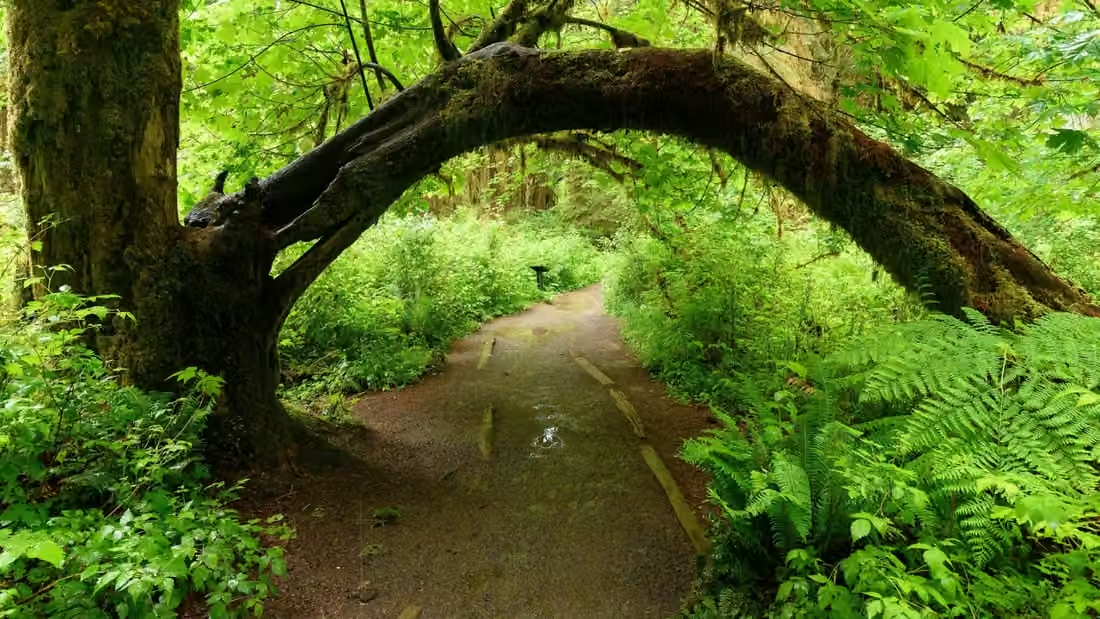
A fallen tree nurtures the next forest.
Moist Pacific air brings heavy rainfall to west-facing valleys on the Olympic Peninsula. Temperate rainforest survives in the Hoh, Quinault, and other valleys, with Sitka spruce and western hemlock forming a high canopy.
Mosses, ferns, and lichens grow on the branches and trunks, creating layered greens across the forest. Logs slowly decay, providing habitat for young plants, fungi, and small animals; some new trees' roots extend towards the ground, crossing over decaying old tree trunks.
This is a forest that continually grows, ages, and rejuvenates. Its richness is not just in the height of the trees, but in the busy, quiet life beneath the undergrowth.
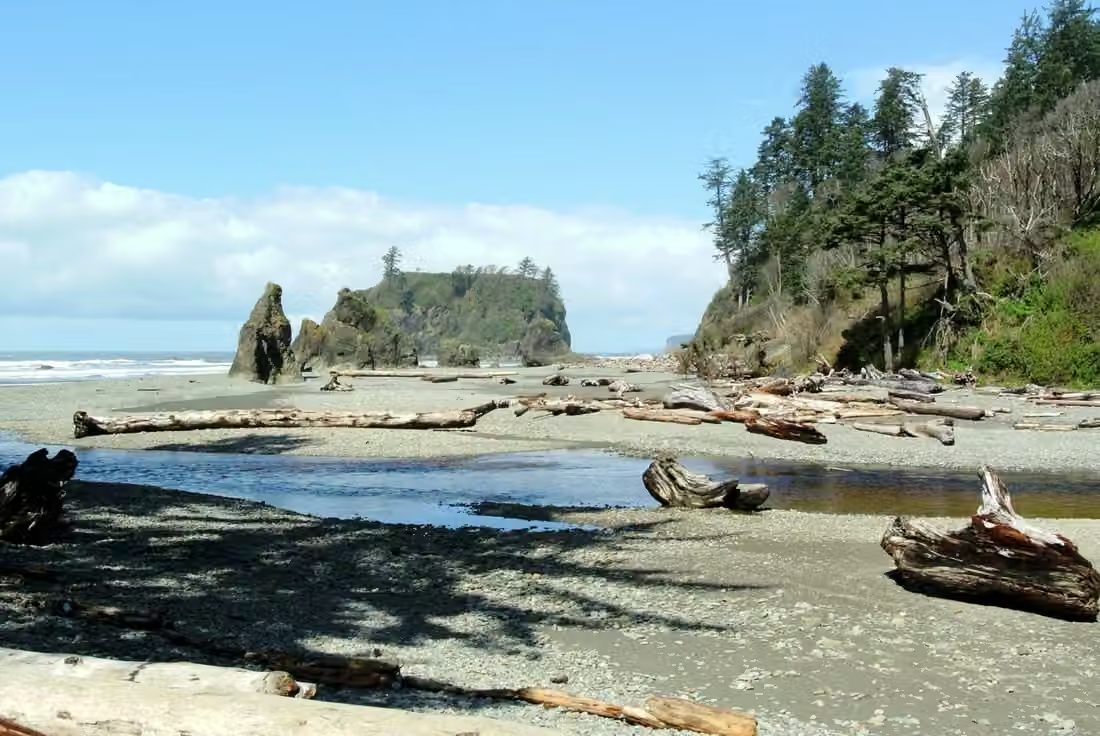
Low tide reveals the coast’s finer details.
Ruby Beach's sea stacks and tide pools are distinctive features of the Olympic coast. Rocks resist wave erosion at different rates, leaving isolated offshore formations and an irregular shoreline.
Beaches, river mouths, and nearshore habitats are interconnected. Observing life in tide pools requires viewing the coast as a changing environment with the tides, rather than a static landscape.
Living cultural ties to these places.
Eight tribes have traditional ties to the land within the boundaries of today's Olympic National Park. Rivers, coasts, and mountains carry memories of food, life, and culture, and the park collaborates with local tribes to protect natural resources and these connections.
City lights illuminate different eras of work.
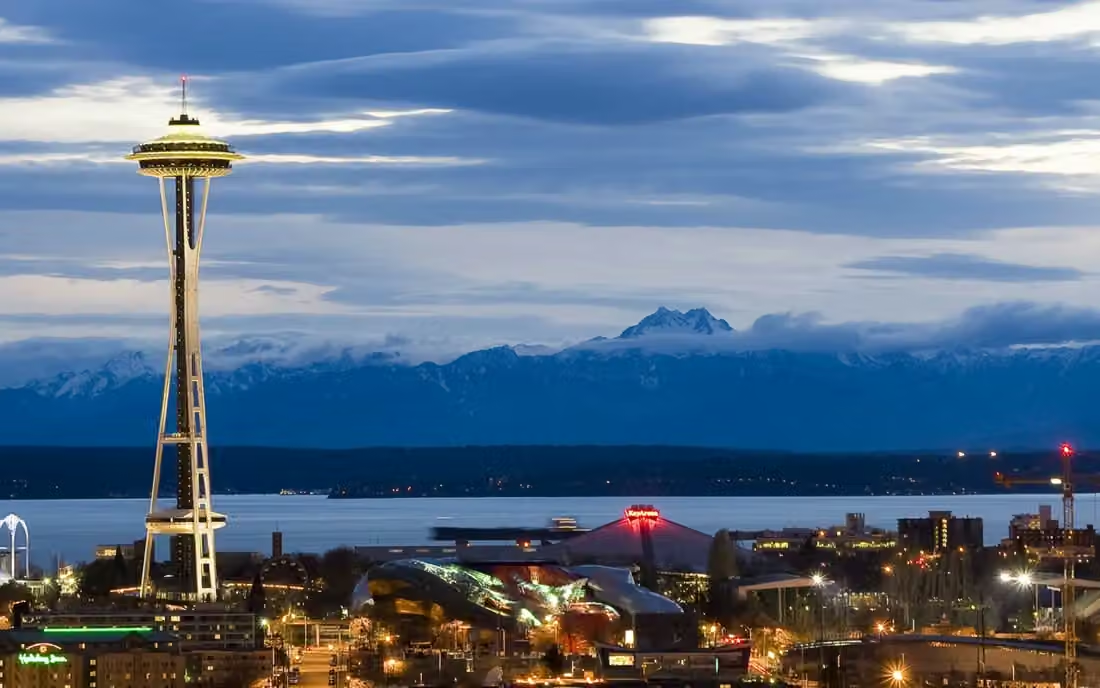
Technology and a seaport share a metropolitan home.
Washington's Department of Commerce identifies information and communication technology, aerospace, maritime industries, and forest products among the state's important sectors. Software and professional services, manufacturing and engineering, ports and logistics each support distinct networks of work.
Thus, Seattle's image encompasses multiple layers. Research and development in office buildings are not far from the cargo handling at the docks; however, the demands for talent, equipment, space, and transportation differ.
An old factory becomes part of public life.
On Lake Union, Gas Works Park retains parts of a former industrial plant within a public park. Lawns, lake views, and the outlines of machinery recall Seattle's energy and manufacturing history.
The reuse of industrial buildings is not just about changing their appearance but also involves preserving remnants, environmental remediation, and long-term maintenance. A city's new life often grows from such old foundations.
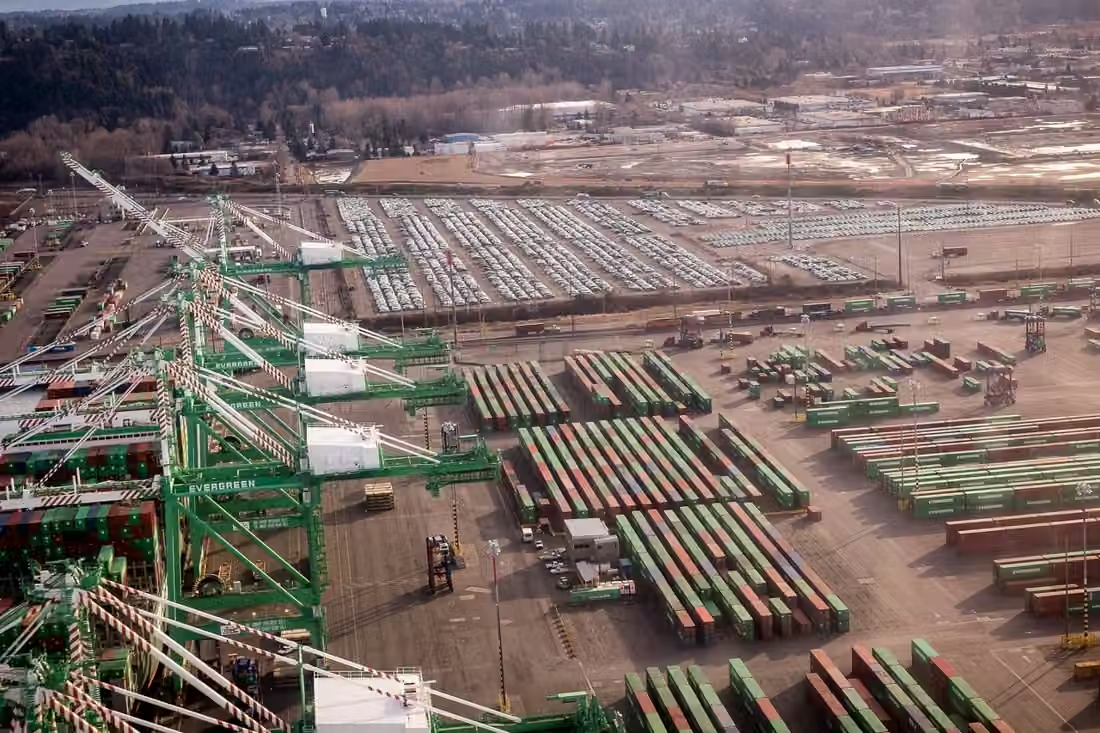
Cargo passes through a port—and through many hands.
Northwest Seaport Alliance cumulative container volume, down 10.9% from the same period a year earlier.
The Northwest Seaport Alliance's August 2026 statistics report 1,908,539 TEUs handled during the first eight months of the year. Loaded international imports fell 13.2% year over year and loaded international exports fell 1.2%, showing different trends in the two directions.
TEUs represent a unit of calculation for container transportation, not for the number of goods or corporate income. The movement of empty containers, the transport of full containers, and domestic routes all serve different purposes and cannot be directly calculated to infer sales of a particular product in a given state.
For logistics and port service companies, the variety of goods, routes, arrival times, and land connections are closer to actual operations. Refrigerated transport, warehousing, equipment maintenance, and cargo scheduling connect the port to the hinterland.
Source: Northwest Seaport Alliance, August 2026 container report, compiled September 15, 2026. Figures include designated privately operated domestic container terminals.
Below the snow peaks, water begins its journey.
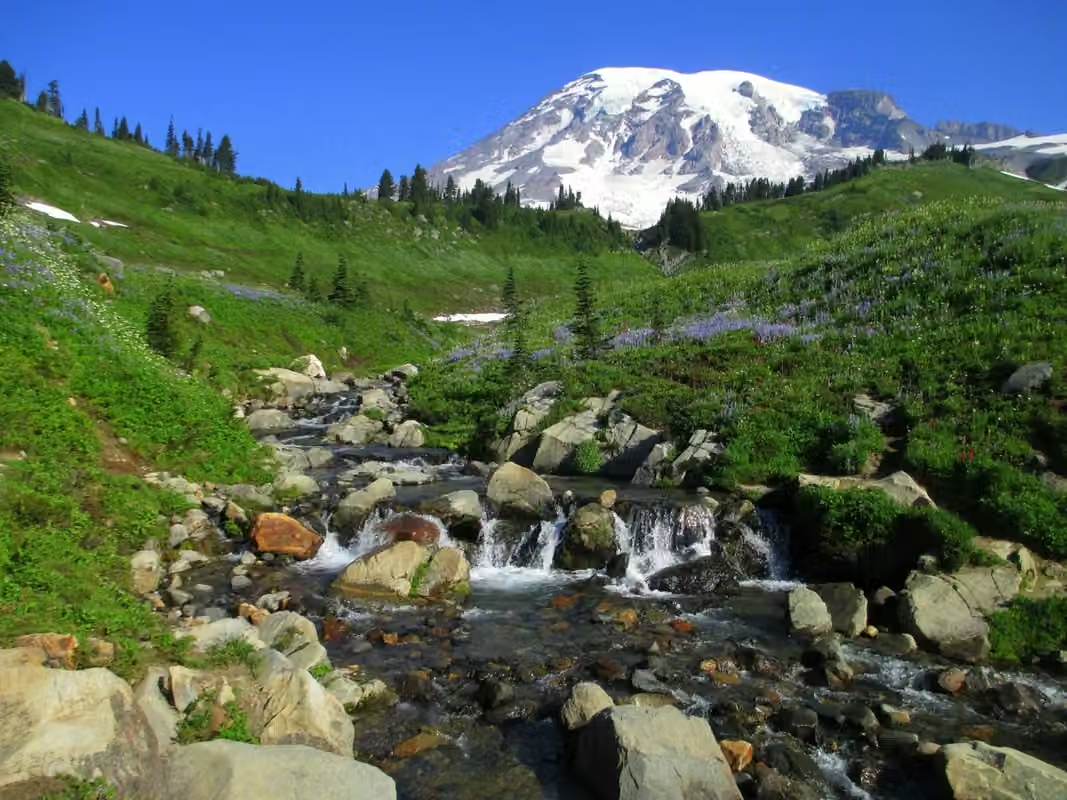
Volcano, glacier, and river: one connected landscape.
Mount Rainier is a volcanic mountain in the Cascade Range. The glaciers and snow cover on its body provide water for multiple rivers flowing out of the park; ice and water also carry debris that shape valleys and riverbeds.
This mountain cannot be reduced to a mere white outline far behind a cityscape. The formation of volcanic landforms, glacial movements, seasonal changes, and river processes all contribute to shaping the surrounding area.
The Cascade Mountains block moist air, resulting in significant precipitation differences between the east and west sides; this is a generalization, with varying impacts from elevation and terrain in different areas.
Wind leaves the soil. Fields color the year.
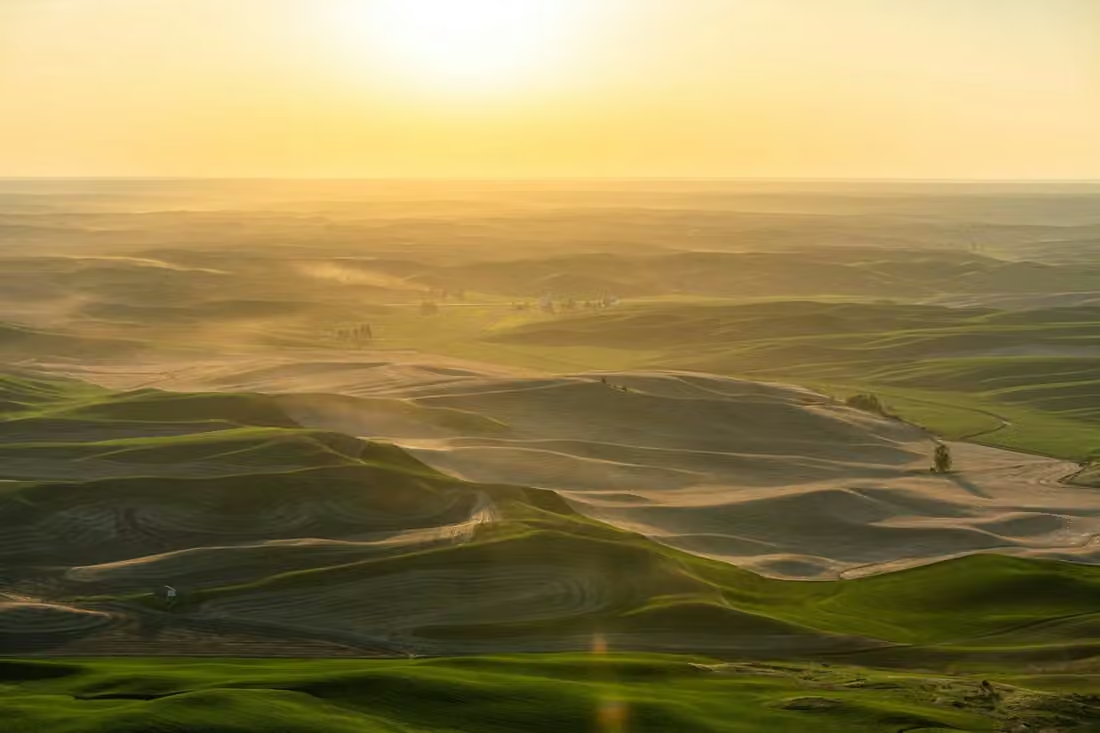
A different green from the rainforest.
Palouse is characterized by deep soil rich in silt derived from wind-blown and deposited loess. The slope, soil, and seasons collectively influence farming practices, and the fields exhibit different colors throughout growth and harvest.
Behind the agricultural scenery lies planting, mechanized farming, soil maintenance, and harvesting arrangements. Hillside farming also requires attention to erosion and water conservation, and a gentle, undulating landscape does not mean that production conditions are uniform everywhere.
Palouse also crosses state lines. Viewing it as an agricultural and geological region rather than just a series of hills in Washington State helps better understand its connections to surrounding towns, grain transportation, and research work.
An apple’s journey takes many kinds of work.
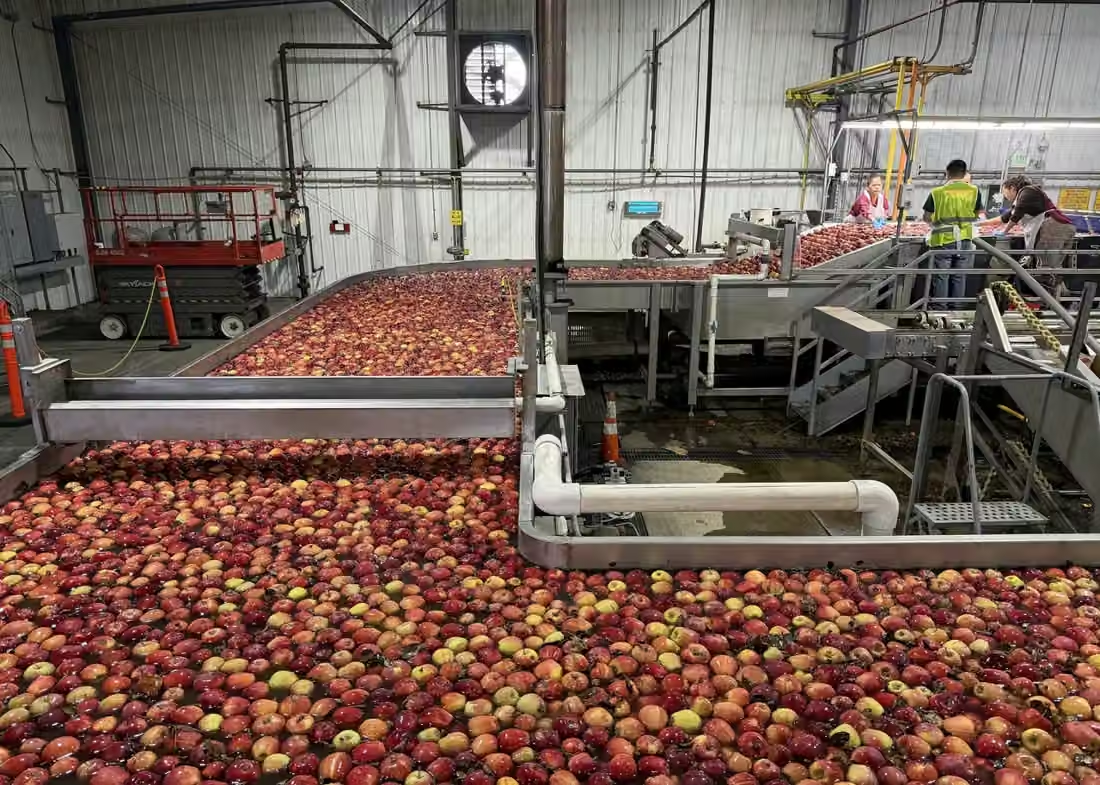
After apple harvest, they go through a process of grading, sorting, and packaging based on variety, quality, and sales schedule. The Washington State University Fruit Crop Information notes that when fruit needs pre-sorting or packaging, it is taken out of refrigerated or modified atmosphere storage and enters the processing line.
This process links the orchard with the cold storage, equipment, packaging materials, and transport. Different stages address different issues: planting focuses on trees and harvest, packaging on specifications and quality, and transport ensures the fruit arrives in suitable conditions to the market.
The state agriculture department, as updated in May 2026 statistics, separates products grown or processed within the state from those exported via ports from other states. Exports of the first category were approximately $7.81 billion in 2025, with apples accounting for $819 million and wheat for $685 million.
This statistic explains international connections in agriculture and processed products; the total products passing through the ports also include supplies from other states. To understand the state's industry, one should first distinguish where products are produced, processed, and shipped from.
Returning the riverbank to the city.
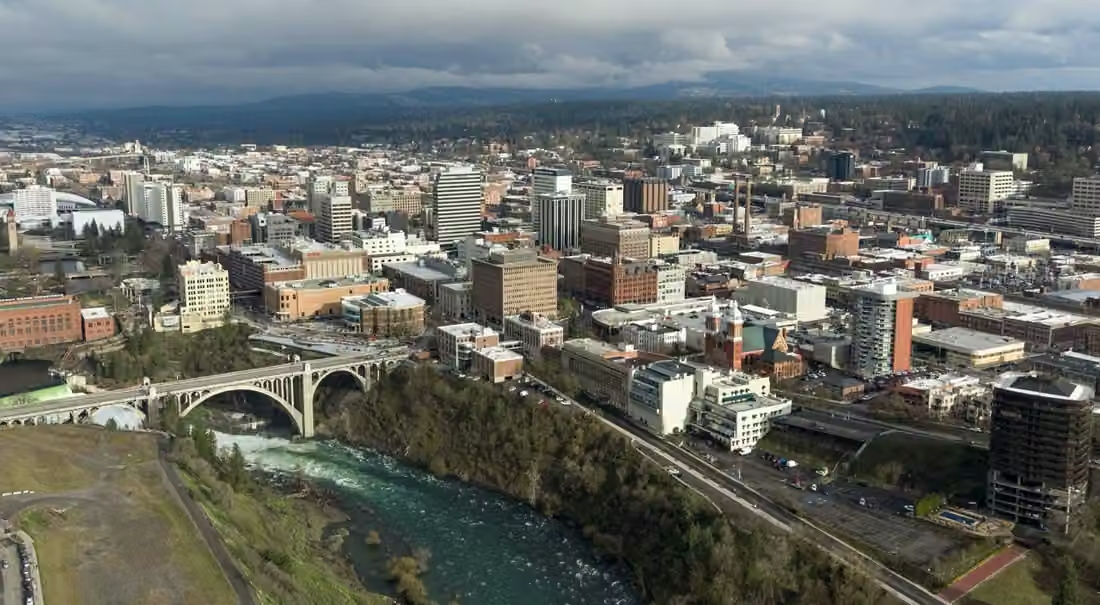
A world’s fair changes a waterfront.
To prepare for the 1974 World's Fair, Spokane cleaned up the river, removed rail infrastructure from the riverbanks, and transformed the formerly busy rail land into public spaces. Today's riverfront park is a significant result of this city transformation.
The land around the falls has long been a gathering place. Industries, railroads, and public parks have altered the use of the riverbank, but they cannot erase the earlier history of the area.
Spokane's services, healthcare, commerce, and culture also give it a role beyond the Seattle metropolitan area. Understanding Washington state requires looking at eastern cities alongside Seattle, rather than focusing solely on the city.
Public life at the southern end of the Sound.
Olympia is Washington’s state capital. Its legislative building was constructed between 1922 and 1928, and the government campus remains part of public life. The capital, seaport metropolis, and eastern regional cities each play different roles in the state.
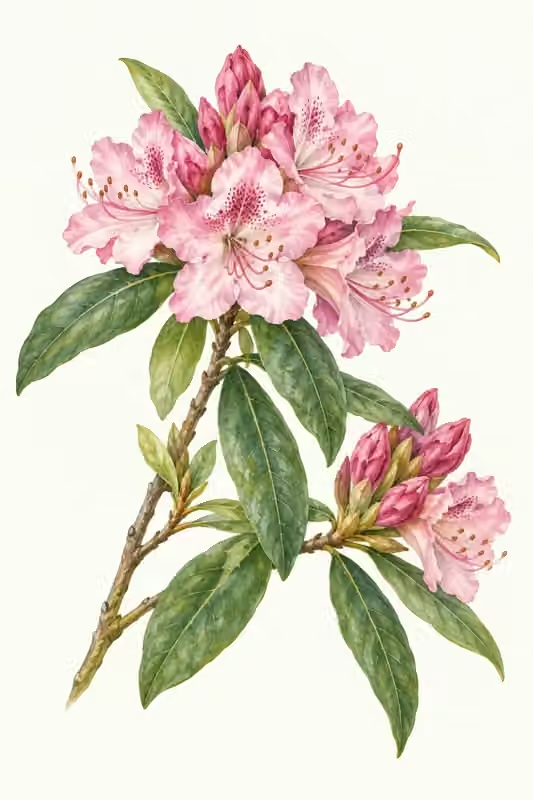
Back in the woods, pink flowers among green leaves.
Rhododendron is the official state flower of Washington. It belongs to the Pacific coastal native plants, with its broad leaves and clusters of flowers echoing the natural details in the forest.
From the Hoh Rain Forest to the Palouse fields, from seaports to apple packing lines, Washington's varied landscapes are connected by water, mountains, transport, and people's work.
Between nature and industry, everyday work.
Industries & establishments · 2023
The work that keeps communities running.
Beyond maritime, IT, and agriculture, healthcare, retail, professional services, and construction also form important employment bases. Establishment data further complete the industry landscape, in addition to reading the previous statistics on port exports and agricultural product exports.
The state recorded 202,177 employer establishments and 3,056,235 paid employees. A single company may operate several stores, offices, or factories, so establishments are not a count of registered companies.
U.S. Census Bureau, 2023 County Business Patterns. The series primarily covers private, nonfarm establishments with paid employees. Employment is measured for the pay period that includes March 12. The 2023 release was the latest in this series available when checked; it is not a measure of current monthly employment.
An editorial feature by STATE.REPORT. Image creators and licenses are credited below.
Sources & further reading
U.S. Census Bureau: state population estimates for July 1, 2025.
National Park Service: Olympic Peninsula Rainforest, Epiphytes, and Downed Timber.
National Park Service: Eight Tribes and Traditional Connections to Park Lands.
National Park Service: Coastal, tidal pools, and nearshore ecosystems.
National Park Service: Sea stacks, rock layers, and coastal erosion.
National Park Service: Volcanoes, glaciers, and watersheds.
US Forest Service: Precipitation differences on either side of the Cascade Mountains.
U.S. Department of Agriculture: Soil formed from loess deposited by wind.
Washington State University: The process from storing apples to sorting and packaging.
Spokane Government: Rail Land, 1974 World's Fair, and Public Spaces.
Seattle City Government: Industrial Heritage Protection and Park Design.
Washington State Department of Enterprise Services: Construction Projects from 1922 to 1928.
Washington State Legislature: State Flower and Symbol.
Image credits & licenses
Hoh Rain Forest Olympic June 2018 008.jpg · King of Hearts · CC BY-SA 4.0。
Seattle Center as night falls.jpg · Jeffery Hayes · CC BY-SA 3.0。
Aerial view of shipping containers, and big container cranes at Tacoma's container port -a.jpg · Brian Harris · Public domain。
Spokane, Washington skyline (cropped).jpg · Quintin Soloviev · CC BY 4.0。
Mount Rainier from above Myrtle Falls in August.JPG · Samuel Kerr · CC BY-SA 3.0。
PalouseFromSteptoeButteMay2023-1.jpg · Caleb Riston · CC0。
Apple packing facility interior.jpg · Quintin Soloviev · CC BY 4.0。
Cedar Creek Abbey Island Ruby Beach.jpg · Adbar · CC BY-SA 3.0。